
(±)-2-Amino-6,7-dihydroxy-1,2,3,4-tetrahydronaphthalene hydrobromide
(±)-2-Amino-6,7-dihydroxy-1,2,3,4-tetrahydronaphthalene hydrobromide (6,7-ADTN hydrobromide), CAS 13575-86-5, is the hydrobromide salt of a catecholamine-like aminotetrahydronaphthalene with empirical formula C10H13NO2 · HBr and a molecular weight of 260.13. Supplied as a solid, it is a well-characterised dopamine receptor agonist used as a reference biochemical and pharmacological tool in neuroscience and cell-signalling research. Tech Serve Solutions supplies it for laboratory and research applications worldwide.
- IUPAC
- 6,7-ADTN hydrobromide
- Synonyms
- 6,7-ADTN hydrobromide(±)-2-Amino-6,7-dihydroxy-1,2,3,4-tetrahydronaphthalene hydrobromide2-Amino-6,7-dihydroxy-1,2,3,4-tetrahydronaphthalene hydrobromide6,7-Dihydroxy-2-aminotetralin hydrobromideADTN hydrobromideC10H13NO2 · HBr
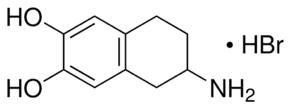
Dopamine receptor research
6,7-ADTN is a recognised agonist at dopamine receptors and is used as a pharmacological tool to probe dopaminergic signalling at the D1- and D2-like receptor families.
Neuroscience and neurotransmission studies
It serves as a reference compound in studies of neurotransmission and central dopaminergic pathways, supporting investigations into receptor function and downstream signalling.
GPCR and cell-signalling assays
As a small-molecule modulator of G protein-coupled receptors, it is applied in cell-signalling and receptor-pharmacology assays examining dopaminergic GPCR activity.
Reference and comparator standard
The defined identity and structure of this catecholamine analogue make it useful as a comparator in structure-activity and method-development work within bioactive small-molecule research.
| Molecular weight | 260.13 |
|---|---|
| Empirical formula | C10H13NO2 · HBr |
| Form | solid |
| Solubility | H2O: >10 mg/mL (Dissolve in oxygen-free water containing 0.1% sodium metabisulfite or other antioxidants.)aqueous base: unstable |
| Storage temperature | 2-8°C |

Hazard statements
- H315Causes skin irritation
- H319Causes serious eye irritation
- H335May cause respiratory irritation
Precautionary statements
- P261Avoid breathing dust, fume, gas or vapours
- P305IF IN EYES
| Protective equipment | dust mask type N95 (US), Eyeshields, Gloves |
|---|---|
| Water hazard class (WGK, DE) | 3 |
| Hazard codes (EU) | Xi |
| Risk statements (R) | 36/37/38 |
| Safety statements (S) | 26-36 |
Hazard information is provided for guidance. Always consult the product Safety Data Sheet (SDS), available on request, before handling.
| Gene Information | human ... DRD1(1812), DRD2(1813), DRD3(1814), DRD4(1815), DRD5(1816) |
|---|---|
| Storage Condition | protect from light |
Documentation
Every batch ships with a Certificate of Analysis covering assay, identity and purity; the grade is confirmed against your enquiry. Safety Data Sheets and technical data sheets are available on request.
Supply & logistics
Samples for technical evaluation; bulk MOQ by grade and packaging. In-stock material ships in 7–10 working days, worldwide, with full export documentation.
What is (±)-2-Amino-6,7-dihydroxy-1,2,3,4-tetrahydronaphthalene hydrobromide used for?
+
It is used as a research biochemical and pharmacological tool. Commonly known as 6,7-ADTN, this catecholamine-like compound acts as a dopamine receptor agonist and is applied in neuroscience, neurotransmission and GPCR cell-signalling studies. It is intended for laboratory research use only.
What is the CAS number and molecular formula of 6,7-ADTN hydrobromide?
+
Its CAS number is 13575-86-5 and its empirical formula (Hill notation) is C10H13NO2 · HBr, corresponding to a molecular weight of 260.13. The MDL number is MFCD00036982.
What grade and purity does Tech Serve Solutions supply?
+
Tech Serve Solutions supplies this compound as a solid for laboratory and research use. It is offered as a research-grade biochemical; we do not represent it as USP, BP, EP or food grade. Exact specifications, including the assay for a given lot, are confirmed on the certificate of analysis at the time of enquiry.
What are the safety and handling requirements?
+
The product carries GHS pictogram GHS07 with the signal word Warning. Hazard statements are H315 (causes skin irritation), H319 (causes serious eye irritation) and H335 (may cause respiratory irritation). Use an N95-type dust mask, eye shields and gloves; observe P261 and P305+P351+P338. Store at 2-8°C and protect from light. It is unstable in aqueous base; dissolve in oxygen-free water containing an antioxidant such as 0.1% sodium metabisulfite. WGK Germany water-hazard class is 3.
How is 6,7-ADTN hydrobromide packed, shipped and exported?
+
It is packed as a solid in tightly closed, light-protected containers suited to the order quantity and shipped under cool, light-protected conditions consistent with 2-8°C storage. Tech Serve Solutions exports globally with full documentation, including the certificate of analysis and safety data sheet.
How do I request a sample or quote?
+
Contact Tech Serve Solutions with your required quantity, packaging and destination, and quote CAS 13575-86-5 or product code 141380. We will respond with availability, specifications, lead time and export terms.
▶ Related products
![(±)-(E)-4-Ethyl-2-[(E)-hydroxyimino]-5-nitro-3-hexenamide (C8H13N3O4) — chemical structure, CAS 138472-01-2; Biochemicals & Reagents, fine chemical supplied by Tech Serve Solutions](/_next/image?url=https%3A%2F%2Fpub-f4d920c906024441a773a96f7098e551.r2.dev%2Fimages%2Fproducts%2F138472-01-2.png&w=3840&q=75)
(±)-(E)-4-Ethyl-2-[(E)-hydroxyimino]-5-nitro-3-hexenamide
C8H13N3O4
Biochemicals & Reagents![(±)-(E)-4-Ethyl-2-[(Z)-hydroxyimino]-5-nitro-3-hexen-1-yl-nicotinamide (C14H18N4O4) — chemical structure, CAS 162626-99-5; Biochemicals & Reagents, fine chemical supplied by Tech Serve Solutions](/_next/image?url=https%3A%2F%2Fpub-f4d920c906024441a773a96f7098e551.r2.dev%2Fimages%2Fproducts%2F162626-99-5.png&w=3840&q=75)
(±)-(E)-4-Ethyl-2-[(Z)-hydroxyimino]-5-nitro-3-hexen-1-yl-nicotinamide
C14H18N4O4
Biochemicals & Reagents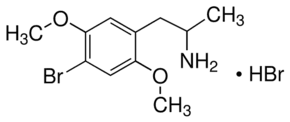
(±)-2,5-Dimethoxy-4-bromoamphetamine hydrobromide
Biochemicals & Reagents
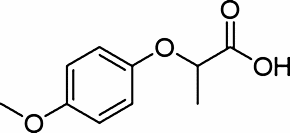
(±)-2-(p-Methoxyphenoxy)propionic acid
C10H12O4
Biochemicals & Reagents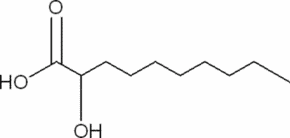
(±)-2-Hydroxydecanoic acid
C10H20O3
Biochemicals & Reagents
(±)-3-Hydroxydecanoic acid
C10H20O3
Biochemicals & Reagents
(±)-3-Hydroxyoctanoic acid
C8H16O3
Biochemicals & Reagents
(±)-4-Bromohomoibotenic acid
C6H7BrN2O4
Biochemicals & Reagents▶ Explore more

Bis(cyclopentadienyl)cobalt(III) hexafluorophosphate
C10H10CoF6P
Catalysis & Inorganic
1-(4-Chlorophenyl)biguanide hydrochloride
ClC6H4NHC(NH)NHC(NH)NH2 · HCl
Chemical Synthesis
Bis(cyclopentadienyl)dimethylzirconium(IV)
Catalysis & Inorganic

1-(4-Chlorophenyl)ethanol
ClC6H4CH(CH3)OH
Chemical Synthesis