Uridine 5′-(trihydrogen diphosphate) sodium salt from Saccharomyces cerevisiae
Uridine 5′-(trihydrogen diphosphate) sodium salt (CAS: 21931-53-3) is a bioactive small molecule with the empirical formula C9H14N2O12P2 · xNa+. This sodium salt derivative of UDP has a molecular weight of 404.16 g/mol (free acid basis). It functions as a purinergic agonist and is utilised in biochemical research, particularly in studies involving cell signalling pathways and enzyme activity. This compound is derived from Saccharomyces cerevisiae.
- IUPAC
- UDP sodium salt,Uridine 5′-(trihydrogen pyrophosphate) sodium salt
- Synonyms
- UDP sodium saltUridine 5′-(trihydrogen pyrophosphate) sodium salt

Purinergic Agonist Research
UDP sodium salt serves as a purinergic agonist, enabling researchers to investigate its effects on cationic flux in various cell types, such as cochlear outer sulcus cells and vestibular transitional cells.
Enzyme Activity Assays
This compound is employed in nucleoside diphosphatase (NDPase) activity assays. It has been specifically used in studies involving rabbit retinae to assess enzyme function.
Cell Biology and Neuroscience
As a bioactive small molecule, UDP sodium salt is relevant in cell biology, particularly within cell signaling and neuroscience research, interacting with various purinergic receptors.
| Molecular weight | 404.16 (free acid basis) |
|---|---|
| Empirical formula | C9H14N2O12P2 · xNa+ |
| Assay | 95-100% |
| Solubility | H2O: soluble100 mg/mL, clear, colorless to very faintly yellow |
| Storage temperature | −20°C |
| Application | UDP has been used as a purinergic agonist to study its effects on absorptive cationic flux in cochlear outer sulcus cells (OSC) and vestibular transitional cells (VTC)1. UDP has also been used for nucleoside diphosphatase (NDPase) activity assays in rabbit retinae2. |


Hazard statements
- H302Harmful if swallowed
- H371May cause damage to organs
Precautionary statements
- P260Do not breathe dust, fume, gas, mist, vapours or spray
| Water hazard class (WGK, DE) | 3 |
|---|---|
| Hazard codes (EU) | Xn |
| Risk statements (R) | 20/21/22-68/20/21/22 |
| Safety statements (S) | 36/37 |
Hazard information is provided for guidance. Always consult the product Safety Data Sheet (SDS), available on request, before handling.
Documentation
Every batch ships with a Certificate of Analysis covering assay, identity and purity; the grade is confirmed against your enquiry. Safety Data Sheets and technical data sheets are available on request.
Supply & logistics
Samples for technical evaluation; bulk MOQ by grade and packaging. In-stock material ships in 7–10 working days, worldwide, with full export documentation.
What is Uridine 5′-(trihydrogen diphosphate) sodium salt used for?
+
Uridine 5′-(trihydrogen diphosphate) sodium salt is used as a purinergic agonist in research to study its effects on cationic flux and in nucleoside diphosphatase (NDPase) activity assays. It is also utilized in cell biology and neuroscience research.
What is the CAS number and formula for Uridine 5′-(trihydrogen diphosphate) sodium salt?
+
The CAS number is 21931-53-3, and the empirical formula is C9H14N2O12P2 · xNa+.
What grade and purity does Tech Serve Solutions supply?
+
Tech Serve Solutions supplies Uridine 5′-(trihydrogen diphosphate) sodium salt with an assay of 95-100%. This product is intended for research use and is not represented as USP, BP, or EP grade.
How should Uridine 5′-(trihydrogen diphosphate) sodium salt be handled safely?
+
This compound carries a Warning signal word with hazard statements H302 (Harmful if swallowed) and H371 (May cause damage to organs). Handle with appropriate personal protective equipment, including gloves and eye protection. Refer to the Safety Data Sheet for detailed handling procedures.
How is Uridine 5′-(trihydrogen diphosphate) sodium salt packed and shipped?
+
This product is stored at -20°C and is soluble in water. TSS exports chemicals globally following all necessary regulations.
How can I request a sample or quote for Uridine 5′-(trihydrogen diphosphate) sodium salt?
+
Please contact the Tech Serve Solutions sales team via our website or direct inquiry channels to request a sample or obtain a quotation for this product.
▶ Related products
![(±)-(E)-4-Ethyl-2-[(E)-hydroxyimino]-5-nitro-3-hexenamide (C8H13N3O4) — chemical structure, CAS 138472-01-2; Biochemicals & Reagents, fine chemical supplied by Tech Serve Solutions](/_next/image?url=https%3A%2F%2Fpub-f4d920c906024441a773a96f7098e551.r2.dev%2Fimages%2Fproducts%2F138472-01-2.png&w=3840&q=75)
(±)-(E)-4-Ethyl-2-[(E)-hydroxyimino]-5-nitro-3-hexenamide
C8H13N3O4
Biochemicals & Reagents![(±)-(E)-4-Ethyl-2-[(Z)-hydroxyimino]-5-nitro-3-hexen-1-yl-nicotinamide (C14H18N4O4) — chemical structure, CAS 162626-99-5; Biochemicals & Reagents, fine chemical supplied by Tech Serve Solutions](/_next/image?url=https%3A%2F%2Fpub-f4d920c906024441a773a96f7098e551.r2.dev%2Fimages%2Fproducts%2F162626-99-5.png&w=3840&q=75)
(±)-(E)-4-Ethyl-2-[(Z)-hydroxyimino]-5-nitro-3-hexen-1-yl-nicotinamide
C14H18N4O4
Biochemicals & Reagents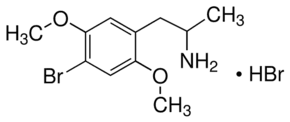
(±)-2,5-Dimethoxy-4-bromoamphetamine hydrobromide
Biochemicals & Reagents
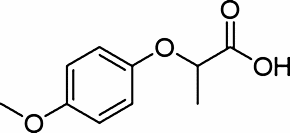
(±)-2-(p-Methoxyphenoxy)propionic acid
C10H12O4
Biochemicals & Reagents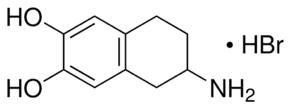
(±)-2-Amino-6,7-dihydroxy-1,2,3,4-tetrahydronaphthalene hydrobromide
C10H13NO2·HBr
Biochemicals & Reagents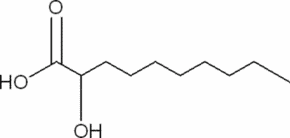
(±)-2-Hydroxydecanoic acid
C10H20O3
Biochemicals & Reagents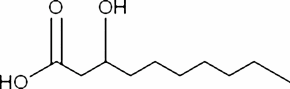
(±)-3-Hydroxydecanoic acid
C10H20O3
Biochemicals & Reagents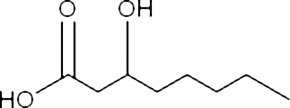
(±)-3-Hydroxyoctanoic acid
C8H16O3
Biochemicals & Reagents