Tris(4,7-diphenyl-1,10-phenanthroline)ruthenium(II) bis(hexafluorophosphate) complex
Tris(4,7-diphenyl-1,10-phenanthroline)ruthenium(II) bis(hexafluorophosphate) complex (CAS: 123148-15-2) is an organometallic compound with a molecular weight of 1388.19 g/mol. This luminescent ruthenium complex is primarily utilised as a sensitive probe for the detection and quantification of molecular oxygen. Its fluorescence intensity and decay time are significantly quenched by oxygen, enabling its application in oxygen sensing technologies.
- Synonyms
- 123148-15-2, C72H48F12N6P2Ru

Oxygen Sensing
Utilised as a luminescent probe for the detection and quantification of molecular oxygen. Its fluorescence is dynamically quenched by oxygen, allowing for measurement of oxygen concentration through changes in intensity or decay time.
Fluorescence Spectroscopy
Features characteristic excitation and emission wavelengths (λex 455 nm; λem 615 nm), making it suitable for spectroscopic studies and as a fluorescent indicator in various research applications.
Materials Conjugation
Recommended for conjugation to solid supports such as polystyrene membranes or beads, facilitating the development of robust oxygen sensing devices and assays.
| Molecular weight | 1388.19 |
|---|---|
| Empirical formula | C72H48F12N6P2Ru |
| Assay | ≥95.0% (HPCE) |
| Grade | for fluorescence |
| Solubility | DMF: solublechloroform: solubleethanol: solublemethanol: soluble |
| Application | Tris(4,7-diphenyl-1,10-phenanthroline)-ruthenium hexafluorophosphate (Ru(dpp)3(PF6)2) has been widely used as a probe for luminescent detection and quantitation of oxygen.1,2 The fluorescence of the dye (abs. λmax 455 nm, luminescence λ max 613 nm) is strongly reduced by molecular oxygen due to dynamic quenching, making Ru(dpp)3(PF6)2 a viable oxygen probe based on either measurement of intensity or decay time. At a partial pressure of 200 hPa the decay time (and intensity) of Ru(dpp)3(PF6)2 decreases by a factor of 2 due to dynamic quenching. Tris(4,7-diphenyl-1,10-phenanthroline)ruthenium hexafluorophosphate is recommended for conjugation to polystyrene membranes or beads. |
| Protective equipment | Eyeshields, Gloves, type N95 (US), type P1 (EN143) respirator filter |
|---|---|
| Water hazard class (WGK, DE) | 3 |
Hazard information is provided for guidance. Always consult the product Safety Data Sheet (SDS), available on request, before handling.
| Fluorescence | λex 455 nm; λem 615 nm in 0.1 M phosphate pH 7.0 |
|---|
Documentation
Every batch ships with a Certificate of Analysis covering assay, identity and purity; the grade is confirmed against your enquiry. Safety Data Sheets and technical data sheets are available on request.
Supply & logistics
Samples for technical evaluation; bulk MOQ by grade and packaging. In-stock material ships in 7–10 working days, worldwide, with full export documentation.
What is Tris(4,7-diphenyl-1,10-phenanthroline)ruthenium(II) bis(hexafluorophosphate) complex used for?
+
This complex is primarily used as a luminescent probe for the detection and quantification of molecular oxygen. Its fluorescence is quenched by oxygen, making it suitable for oxygen sensing applications.
What is the CAS number and formula for this ruthenium complex?
+
The CAS number is 123148-15-2 and the empirical formula (as per Hill notation) is C72H48F12N6P2Ru.
What grade and purity does Tech Serve Solutions supply?
+
Tech Serve Solutions supplies this compound as 'for fluorescence' grade with an assay of ≥95.0% (HPCE). We do not represent it as USP, BP, EP, or any other pharmacopoeia grade.
What are the safety and handling requirements?
+
Safety precautions include wearing eyeshields, gloves, and a type N95 (US) or type P1 (EN143) respirator filter. The compound has a WGK Germany classification of 3, indicating it is hazardous.
How is this chemical packed, shipped, and exported?
+
Tech Serve Solutions packs, ships, and exports this chemical in compliance with all relevant national and international regulations for hazardous materials. Specific packaging details are available upon request.
How can I request a sample or a quote?
+
To request a sample or a quote, please contact our sales department through the website or by phone. Please provide the product name and CAS number (123148-15-2) for prompt service.
▶ Related products
![(±)-(E)-4-Ethyl-2-[(E)-hydroxyimino]-5-nitro-3-hexenamide (C8H13N3O4) — chemical structure, CAS 138472-01-2; Biochemicals & Reagents, fine chemical supplied by Tech Serve Solutions](/_next/image?url=https%3A%2F%2Fpub-f4d920c906024441a773a96f7098e551.r2.dev%2Fimages%2Fproducts%2F138472-01-2.png&w=3840&q=75)
(±)-(E)-4-Ethyl-2-[(E)-hydroxyimino]-5-nitro-3-hexenamide
C8H13N3O4
Biochemicals & Reagents![(±)-(E)-4-Ethyl-2-[(Z)-hydroxyimino]-5-nitro-3-hexen-1-yl-nicotinamide (C14H18N4O4) — chemical structure, CAS 162626-99-5; Biochemicals & Reagents, fine chemical supplied by Tech Serve Solutions](/_next/image?url=https%3A%2F%2Fpub-f4d920c906024441a773a96f7098e551.r2.dev%2Fimages%2Fproducts%2F162626-99-5.png&w=3840&q=75)
(±)-(E)-4-Ethyl-2-[(Z)-hydroxyimino]-5-nitro-3-hexen-1-yl-nicotinamide
C14H18N4O4
Biochemicals & Reagents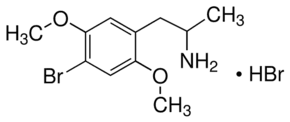
(±)-2,5-Dimethoxy-4-bromoamphetamine hydrobromide
Biochemicals & Reagents
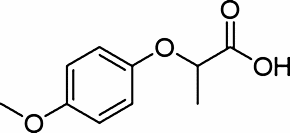
(±)-2-(p-Methoxyphenoxy)propionic acid
C10H12O4
Biochemicals & Reagents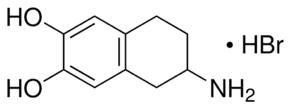
(±)-2-Amino-6,7-dihydroxy-1,2,3,4-tetrahydronaphthalene hydrobromide
C10H13NO2·HBr
Biochemicals & Reagents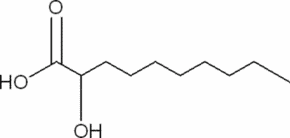
(±)-2-Hydroxydecanoic acid
C10H20O3
Biochemicals & Reagents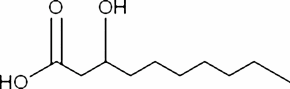
(±)-3-Hydroxydecanoic acid
C10H20O3
Biochemicals & Reagents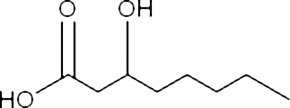
(±)-3-Hydroxyoctanoic acid
C8H16O3
Biochemicals & Reagents