
(−)-Thalidomide
(−)-Thalidomide (CAS: 841-67-8, C13H10N2O4) is a complex organic compound with a molecular weight of 258.23 g/mol. Historically known for its teratogenic effects, it is now utilised in research for its immunomodulatory and anti-angiogenic properties. This white solid is primarily employed in scientific investigations to study its mechanisms of action, particularly in areas of developmental biology and cancer research, and as a reference compound in pharmacological studies.
- IUPAC
- S(−)-2-(2,6-Dioxo-3-piperidinyl)-1H-isoindole-1,3(2H)-dione

Teratogenicity Studies
Used to investigate the teratogenic effects of compounds on embryonic development, such as limb defects, by stabilising PTEN and inducing apoptosis in cellular models.
Angiogenesis Research
Serves as a tool for studying the inhibition of new blood vessel formation, a key process in tumor growth and other physiological conditions.
Pharmacological Research
Employed as a reference compound in studies exploring its immunomodulatory effects and mechanisms of action in various biological systems.
Glutathione-Mediated Resistance Studies
Utilised in research to understand mechanisms of teratogenic resistance in embryonic models, particularly involving glutathione.
| Molecular weight | 258.23 |
|---|---|
| Empirical formula | C13H10N2O4 |
| Assay | >98% |
| Form | solid |
| Colour | white |
| Solubility | DMSO: solubleH2O: insolubleethanol: insoluble |
| Optical activity | [α]23/D −62.6°, c = 2 in DMF(lit.) |
| Application | Thalidomide has been used to study its teratogenic effects in chicken embryos and human embryonic cells. This study reported that thalidomide causes limb defects by stabilizing PTEN, inhibiting the expression of Akt and activating caspase-dependent apoptosis1. Thalidomide has also been used for studying glutathione mediated teratogenic resistance in mouse embryos2. |


Hazard statements
- H302Harmful if swallowed
- H360May damage fertility or the unborn child
Precautionary statements
- P201Obtain special instructions before use
- P308IF exposed or concerned
| Protective equipment | Eyeshields, full-face particle respirator type N100 (US), Gloves, respirator cartridge type N100 (US), type P1 (EN143) respirator filter, type P3 (EN 143) respirator cartridges |
|---|---|
| Transport (UN / ADR) | UN 2811 6.1/PG 2 |
| Water hazard class (WGK, DE) | 3 |
| Hazard codes (EU) | T |
| Risk statements (R) | 61-22 |
| Safety statements (S) | 53-36/37/39-45 |
Hazard information is provided for guidance. Always consult the product Safety Data Sheet (SDS), available on request, before handling.
| Gene Information | human ... LITAF(9516), TNF(7124)mouse ... Nos2(18126)rat ... Nos1(24598) |
|---|
Documentation
Every batch ships with a Certificate of Analysis covering assay, identity and purity; the grade is confirmed against your enquiry. Safety Data Sheets and technical data sheets are available on request.
Supply & logistics
Samples for technical evaluation; bulk MOQ by grade and packaging. In-stock material ships in 7–10 working days, worldwide, with full export documentation.
What is (–)-Thalidomide used for?
+
(–)-Thalidomide is used in scientific research to study its teratogenic effects, immunomodulatory properties, and anti-angiogenic mechanisms, particularly in developmental biology and cancer research.
What are the CAS number and formula for (–)-Thalidomide?
+
The CAS number for (–)-Thalidomide is 841-67-8, and its empirical formula is C13H10N2O4.
What grade and purity does Tech Serve Solutions supply?
+
Tech Serve Solutions supplies (–)-Thalidomide with a purity of >98%. This product is supplied for research and laboratory use and is not represented as USP, BP, EP, or any other pharmacopoeia grade.
How should (–)-Thalidomide be handled safely?
+
(–)-Thalidomide is classified as Danger with hazards H302 (Harmful if swallowed) and H360 (May damage fertility or the unborn child). Handle with appropriate personal protective equipment, including eyeshields, gloves, and suitable respiratory protection (type N100 or P3). Avoid exposure and seek medical advice if necessary.
Is (–)-Thalidomide a controlled substance?
+
(–)-Thalidomide is classified under UN 2811 with hazard class 6.1 and packing group II, indicating it is a toxic substance. Specific national or international controlled substance status should be verified based on local regulations.
How is (–)-Thalidomide packed, shipped, and exported?
+
(–)-Thalidomide is packed as a solid and shipped according to relevant hazardous material regulations, including UN 2811 classification. TSS exports fine chemicals globally.
How can I request a sample or quote for (–)-Thalidomide?
+
To request a sample or a quotation for (–)-Thalidomide, please contact our sales team via the website or by phone, providing your specific requirements and shipping details.
▶ Related products
![(±)-(E)-4-Ethyl-2-[(E)-hydroxyimino]-5-nitro-3-hexenamide (C8H13N3O4) — chemical structure, CAS 138472-01-2; Biochemicals & Reagents, fine chemical supplied by Tech Serve Solutions](/_next/image?url=https%3A%2F%2Fpub-f4d920c906024441a773a96f7098e551.r2.dev%2Fimages%2Fproducts%2F138472-01-2.png&w=3840&q=75)
(±)-(E)-4-Ethyl-2-[(E)-hydroxyimino]-5-nitro-3-hexenamide
C8H13N3O4
Biochemicals & Reagents![(±)-(E)-4-Ethyl-2-[(Z)-hydroxyimino]-5-nitro-3-hexen-1-yl-nicotinamide (C14H18N4O4) — chemical structure, CAS 162626-99-5; Biochemicals & Reagents, fine chemical supplied by Tech Serve Solutions](/_next/image?url=https%3A%2F%2Fpub-f4d920c906024441a773a96f7098e551.r2.dev%2Fimages%2Fproducts%2F162626-99-5.png&w=3840&q=75)
(±)-(E)-4-Ethyl-2-[(Z)-hydroxyimino]-5-nitro-3-hexen-1-yl-nicotinamide
C14H18N4O4
Biochemicals & Reagents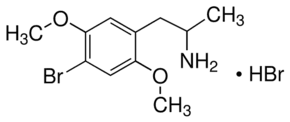
(±)-2,5-Dimethoxy-4-bromoamphetamine hydrobromide
Biochemicals & Reagents
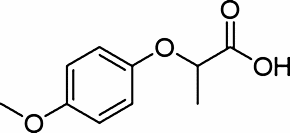
(±)-2-(p-Methoxyphenoxy)propionic acid
C10H12O4
Biochemicals & Reagents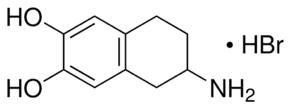
(±)-2-Amino-6,7-dihydroxy-1,2,3,4-tetrahydronaphthalene hydrobromide
C10H13NO2·HBr
Biochemicals & Reagents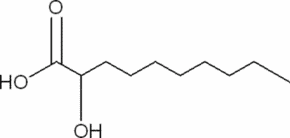
(±)-2-Hydroxydecanoic acid
C10H20O3
Biochemicals & Reagents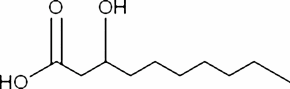
(±)-3-Hydroxydecanoic acid
C10H20O3
Biochemicals & Reagents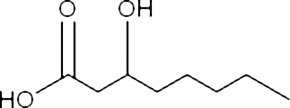
(±)-3-Hydroxyoctanoic acid
C8H16O3
Biochemicals & Reagents▶ Explore more

Bis(cyclopentadienyl)cobalt(III) hexafluorophosphate
C10H10CoF6P
Catalysis & Inorganic
1-(4-Chlorophenyl)biguanide hydrochloride
ClC6H4NHC(NH)NHC(NH)NH2 · HCl
Chemical Synthesis
Bis(cyclopentadienyl)dimethylzirconium(IV)
Catalysis & Inorganic

1-(4-Chlorophenyl)ethanol
ClC6H4CH(CH3)OH
Chemical Synthesis