
Retinol
Retinol (CAS: 68-26-8, Formula: C20H30O, MW: 286.45 g/mol) is a lipid-soluble vitamin crucial for vision, immune function, and skin health. Also known as Vitamin A1, it acts as a potent antioxidant and plays a vital role in cellular differentiation and growth. Its applications span biochemical research, cell biology studies, and nutritional science, making it a valuable reagent for various scientific investigations.
- IUPAC
- Axerophthol,Vitamin A alcohol,Vitamin A,Vitamin A1,all-trans-3,7-Dimethyl-9-(2,6,6-trimethyl-1-cyclohexen-1-yl)-2,4,6,8-nonatetraen-1-ol
- Synonyms
- AxerophtholVitamin A alcoholVitamin AVitamin A1all-trans-3,7-Dimethyl-9-(2,6,6-trimethyl-1-cyclohexen-1-yl)-2,4,6,8-nonatetraen-1-ol
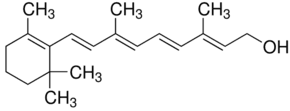
Biochemical and Nutritional Research
Retinol is essential for studying vitamin A metabolism and its role in various physiological processes. It serves as a critical reagent in research focused on vision, immune response, and cellular growth and differentiation.
Cell Biology Studies
As a key regulator of gene expression and cell differentiation, Retinol is widely used in cell biology to investigate developmental pathways and maintain cellular health. Its role in maintaining epithelial tissue integrity is also a common area of study.
Antioxidant Studies
Retinol's potent antioxidant properties make it a valuable compound for research into oxidative stress and its mitigation. It helps protect cells from damage caused by free radicals.
| Molecular weight | 286.45 |
|---|---|
| Empirical formula | C20H30O |
| Assay | ≥95.0% (HPLC) |
| Storage temperature | −20°C |
| Melting point | 61-63 °C(lit.) |


Hazard statements
- H317May cause an allergic skin reaction
- H319Causes serious eye irritation
- H360May damage fertility or the unborn child
- H413May cause long-lasting harmful effects to aquatic life
Precautionary statements
- P201Obtain special instructions before use
- P280Wear protective gloves, clothing and eye/face protection
- P305IF IN EYES
- P308IF exposed or concerned
| Protective equipment | dust mask type N95 (US), Eyeshields, Gloves |
|---|---|
| Water hazard class (WGK, DE) | 3 |
| Hazard codes (EU) | Xn |
| Risk statements (R) | 22-38 |
Hazard information is provided for guidance. Always consult the product Safety Data Sheet (SDS), available on request, before handling.
| Product Line | BioXtra |
|---|---|
| Shipped In | dry ice |
| Absorption | ε/326 nm, isopropanol 2700 u/mg |
Documentation
Every batch ships with a Certificate of Analysis covering assay, identity and purity; the grade is confirmed against your enquiry. Safety Data Sheets and technical data sheets are available on request.
Supply & logistics
Samples for technical evaluation; bulk MOQ by grade and packaging. In-stock material ships in 7–10 working days, worldwide, with full export documentation.
What is Retinol (CAS 68-26-8) used for?
+
Retinol (CAS 68-26-8) is used in biochemical and nutritional research, cell biology studies, and antioxidant research due to its roles in vision, immune function, cell differentiation, and protection against oxidative stress.
What is the CAS number and formula for Retinol?
+
The CAS number for Retinol is 68-26-8, and its molecular formula is C20H30O.
What grade and purity does Tech Serve Solutions supply for Retinol?
+
Tech Serve Solutions supplies Retinol with an assay of ≥95.0% (HPLC). We do not represent this product as USP, BP, or EP grade unless explicitly stated in the product specifications.
How should Retinol be handled and stored?
+
Retinol should be handled with appropriate personal protective equipment, including a dust mask (type N95 US), eyeshields, and gloves. It is sensitive to air and light and must be stored at -20°C, typically shipped in dry ice.
How can I request a quote or sample for Retinol?
+
To request a quote or sample for Retinol, please contact our sales team via the website or by phone, providing your specific requirements and shipping details.
What are the main hazards associated with Retinol?
+
Retinol carries the GHS signal word 'Danger' with hazards including skin sensitisation (H317), serious eye irritation (H319), and potential reproductive harm (H360). It may also cause long-term adverse effects in the aquatic environment (H413).
▶ Related products
![(±)-(E)-4-Ethyl-2-[(E)-hydroxyimino]-5-nitro-3-hexenamide (C8H13N3O4) — chemical structure, CAS 138472-01-2; Biochemicals & Reagents, fine chemical supplied by Tech Serve Solutions](/_next/image?url=https%3A%2F%2Fpub-f4d920c906024441a773a96f7098e551.r2.dev%2Fimages%2Fproducts%2F138472-01-2.png&w=3840&q=75)
(±)-(E)-4-Ethyl-2-[(E)-hydroxyimino]-5-nitro-3-hexenamide
C8H13N3O4
Biochemicals & Reagents![(±)-(E)-4-Ethyl-2-[(Z)-hydroxyimino]-5-nitro-3-hexen-1-yl-nicotinamide (C14H18N4O4) — chemical structure, CAS 162626-99-5; Biochemicals & Reagents, fine chemical supplied by Tech Serve Solutions](/_next/image?url=https%3A%2F%2Fpub-f4d920c906024441a773a96f7098e551.r2.dev%2Fimages%2Fproducts%2F162626-99-5.png&w=3840&q=75)
(±)-(E)-4-Ethyl-2-[(Z)-hydroxyimino]-5-nitro-3-hexen-1-yl-nicotinamide
C14H18N4O4
Biochemicals & Reagents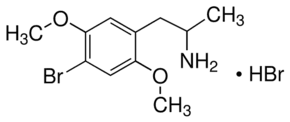
(±)-2,5-Dimethoxy-4-bromoamphetamine hydrobromide
Biochemicals & Reagents
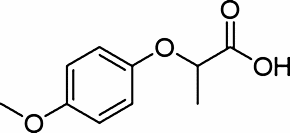
(±)-2-(p-Methoxyphenoxy)propionic acid
C10H12O4
Biochemicals & Reagents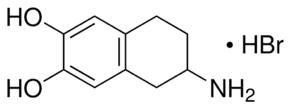
(±)-2-Amino-6,7-dihydroxy-1,2,3,4-tetrahydronaphthalene hydrobromide
C10H13NO2·HBr
Biochemicals & Reagents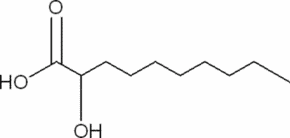
(±)-2-Hydroxydecanoic acid
C10H20O3
Biochemicals & Reagents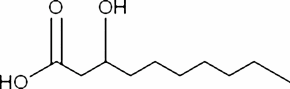
(±)-3-Hydroxydecanoic acid
C10H20O3
Biochemicals & Reagents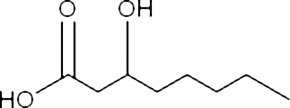
(±)-3-Hydroxyoctanoic acid
C8H16O3
Biochemicals & Reagents▶ Explore more

Bis(cyclopentadienyl)cobalt(III) hexafluorophosphate
C10H10CoF6P
Catalysis & Inorganic
1-(4-Chlorophenyl)biguanide hydrochloride
ClC6H4NHC(NH)NHC(NH)NH2 · HCl
Chemical Synthesis
Bis(cyclopentadienyl)dimethylzirconium(IV)
Catalysis & Inorganic

1-(4-Chlorophenyl)ethanol
ClC6H4CH(CH3)OH
Chemical Synthesis