
Poly-L-ornithine solution
Poly-L-ornithine solution (CAS: 27378-49-0) is a PREMIUM BioReagent essential for cell culture applications. Supplied sterile-filtered at 0.01% concentration, this polyamino acid is valued for its role as a cell attachment factor. It is specifically recommended for the cultivation and study of neural cells, promoting their differentiation and outgrowth. Stored at 2-8°C, it ensures consistent performance in demanding research environments.
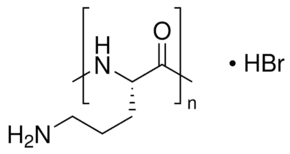
Neural Cell Culture Substratum
Poly-L-ornithine solution serves as an effective substratum for neuronal cell attachment, differentiation, and outgrowth. Its application aids in the study of neural development and function.
Attachment Factor for Adherent Cells
This polyamino acid solution is utilised to enhance the adherence of various cell types to culture surfaces. A recommended concentration for coating is 0.1 mg/ml for 25 cm² flasks.
Biochemical Research Reagent
As a premium BioReagent, Poly-L-ornithine is suitable for a range of biochemical and life science research applications, supporting advancements in cell biology.
| Concentration | 0.01% |
|---|---|
| Storage temperature | 2-8°C |
| Impurities tested | endotoxin, tested |
| Application | Poly-L-ornithine has been used successfully for the attachement and study of neural cell differentiation and outgrowth. Recommended as a cell culture substratum when using 0.5 ml of a 0.1 mg/ml solution to coat 25 cm2. |
| Suitability | suitable for cell culture |
| Quality Level | PREMIUM |
|---|---|
| Product Line | BioReagent |
| Mol Wt | mol wt 30,000-70,000 |
| Sterility | sterile-filtered |
Documentation
Every batch ships with a Certificate of Analysis covering assay, identity and purity; the grade is confirmed against your enquiry. Safety Data Sheets and technical data sheets are available on request.
Supply & logistics
Samples for technical evaluation; bulk MOQ by grade and packaging. In-stock material ships in 7–10 working days, worldwide, with full export documentation.
What is Poly-L-ornithine solution used for?
+
Poly-L-ornithine solution is primarily used as a cell culture substratum to promote the attachment, differentiation, and outgrowth of neural cells and other adherent cell types in research.
What is the CAS number and formula for Poly-L-ornithine solution?
+
The CAS number for Poly-L-ornithine solution is 27378-49-0. The product is a polymer and does not have a simple molecular formula.
What grade and purity does Tech Serve Solutions supply?
+
Tech Serve Solutions supplies Poly-L-ornithine solution as a PREMIUM BioReagent, sterile-filtered at 0.01% concentration. We do not represent this product as USP, BP, or EP grade.
What are the safety and handling precautions for Poly-L-ornithine solution?
+
Poly-L-ornithine solution is classified under GHS with a WGK Germany rating of 3, indicating it is hazardous to water. Handle with appropriate personal protective equipment and avoid release into the environment.
How is Poly-L-ornithine solution shipped and exported?
+
Poly-L-ornithine solution is typically shipped and exported under controlled temperature conditions (2-8°C) to maintain its quality and efficacy.
How can I request a quote or sample for Poly-L-ornithine solution?
+
To request a quote or sample for Poly-L-ornithine solution, please contact the Tech Serve Solutions sales team directly through our website or provided contact information.
▶ Related products
![(±)-(E)-4-Ethyl-2-[(E)-hydroxyimino]-5-nitro-3-hexenamide (C8H13N3O4) — chemical structure, CAS 138472-01-2; Biochemicals & Reagents, fine chemical supplied by Tech Serve Solutions](/_next/image?url=https%3A%2F%2Fpub-f4d920c906024441a773a96f7098e551.r2.dev%2Fimages%2Fproducts%2F138472-01-2.png&w=3840&q=75)
(±)-(E)-4-Ethyl-2-[(E)-hydroxyimino]-5-nitro-3-hexenamide
C8H13N3O4
Biochemicals & Reagents![(±)-(E)-4-Ethyl-2-[(Z)-hydroxyimino]-5-nitro-3-hexen-1-yl-nicotinamide (C14H18N4O4) — chemical structure, CAS 162626-99-5; Biochemicals & Reagents, fine chemical supplied by Tech Serve Solutions](/_next/image?url=https%3A%2F%2Fpub-f4d920c906024441a773a96f7098e551.r2.dev%2Fimages%2Fproducts%2F162626-99-5.png&w=3840&q=75)
(±)-(E)-4-Ethyl-2-[(Z)-hydroxyimino]-5-nitro-3-hexen-1-yl-nicotinamide
C14H18N4O4
Biochemicals & Reagents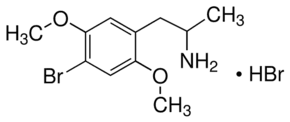
(±)-2,5-Dimethoxy-4-bromoamphetamine hydrobromide
Biochemicals & Reagents
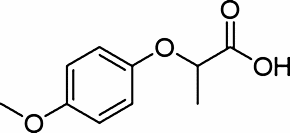
(±)-2-(p-Methoxyphenoxy)propionic acid
C10H12O4
Biochemicals & Reagents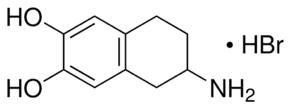
(±)-2-Amino-6,7-dihydroxy-1,2,3,4-tetrahydronaphthalene hydrobromide
C10H13NO2·HBr
Biochemicals & Reagents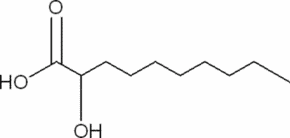
(±)-2-Hydroxydecanoic acid
C10H20O3
Biochemicals & Reagents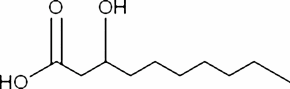
(±)-3-Hydroxydecanoic acid
C10H20O3
Biochemicals & Reagents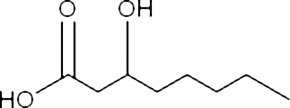
(±)-3-Hydroxyoctanoic acid
C8H16O3
Biochemicals & Reagents▶ Explore more

Bis(cyclopentadienyl)cobalt(III) hexafluorophosphate
C10H10CoF6P
Catalysis & Inorganic
1-(4-Chlorophenyl)biguanide hydrochloride
ClC6H4NHC(NH)NHC(NH)NH2 · HCl
Chemical Synthesis
Bis(cyclopentadienyl)dimethylzirconium(IV)
Catalysis & Inorganic

1-(4-Chlorophenyl)ethanol
ClC6H4CH(CH3)OH
Chemical Synthesis