
Poly-L-lysine hydrobromide
Poly-L-lysine hydrobromide (CAS 25988-63-0) is a synthetic homopolymer of the amino acid L-lysine, presented as its hydrobromide salt. It is characterised by a high molecular weight range, typically between 70,000 to 150,000 g/mol. This water-soluble polymer is widely employed in biochemical research and as a reagent for various applications, particularly in cell culture and biological studies. It is stored at -20°C.
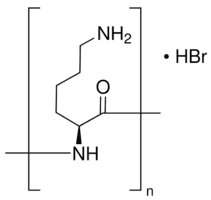
Cell Culture Substrate
Poly-L-lysine hydrobromide is used to coat surfaces for cell culture, enhancing the adhesion of cells, especially those that are weakly adherent. Its positive charge promotes electrostatic interactions with negatively charged cell membranes.
Gene Delivery Vector Component
It can be incorporated into systems for non-viral gene delivery, where its polycationic nature aids in complexing with nucleic acids for cellular uptake.
Biochemical Reagent
This polymer serves as a versatile reagent in various biochemical and biotechnological research settings. Its properties are useful for studying protein interactions and cell surface phenomena.
| Storage temperature | −20°C |
|---|
| Protective equipment | Eyeshields, Gloves, type N95 (US), type P1 (EN143) respirator filter |
|---|---|
| Water hazard class (WGK, DE) | 3 |
Hazard information is provided for guidance. Always consult the product Safety Data Sheet (SDS), available on request, before handling.
| Mol Wt | mol wt 70,000-150,000 |
|---|
Documentation
Every batch ships with a Certificate of Analysis covering assay, identity and purity; the grade is confirmed against your enquiry. Safety Data Sheets and technical data sheets are available on request.
Supply & logistics
Samples for technical evaluation; bulk MOQ by grade and packaging. In-stock material ships in 7–10 working days, worldwide, with full export documentation.
What is Poly-L-lysine hydrobromide used for?
+
Poly-L-lysine hydrobromide is primarily used as a cell culture substrate to enhance cell adhesion and as a component in gene delivery systems. It also serves as a versatile reagent in biochemical research.
What is the CAS number and formula for Poly-L-lysine hydrobromide?
+
The CAS number for Poly-L-lysine hydrobromide is 25988-63-0. The chemical formula is not provided as it is a polymer with variable chain lengths.
What grade and purity does Tech Serve Solutions supply?
+
Tech Serve Solutions supplies Poly-L-lysine hydrobromide with a molecular weight range of 70,000-150,000 g/mol. This is suitable for research and technical applications. TSS does not represent this product as USP, BP, or EP grade.
How should Poly-L-lysine hydrobromide be handled and stored?
+
Handling requires appropriate personal protective equipment, including eyeshields, gloves, and a type N95 (US) or P1 (EN143) respirator filter. It should be stored at -20°C to maintain stability.
Is Poly-L-lysine hydrobromide a controlled substance?
+
Based on the provided data, Poly-L-lysine hydrobromide is not classified as a controlled substance.
How is Poly-L-lysine hydrobromide packed and shipped?
+
Poly-L-lysine hydrobromide is carefully packed to ensure safe transit and is available for global export by Tech Serve Solutions.
How can I request a sample or quote?
+
To request a sample or a quotation for Poly-L-lysine hydrobromide, please contact the Tech Serve Solutions sales team directly through our website or provided contact information.
▶ Related products
![(±)-(E)-4-Ethyl-2-[(E)-hydroxyimino]-5-nitro-3-hexenamide (C8H13N3O4) — chemical structure, CAS 138472-01-2; Biochemicals & Reagents, fine chemical supplied by Tech Serve Solutions](/_next/image?url=https%3A%2F%2Fpub-f4d920c906024441a773a96f7098e551.r2.dev%2Fimages%2Fproducts%2F138472-01-2.png&w=3840&q=75)
(±)-(E)-4-Ethyl-2-[(E)-hydroxyimino]-5-nitro-3-hexenamide
C8H13N3O4
Biochemicals & Reagents![(±)-(E)-4-Ethyl-2-[(Z)-hydroxyimino]-5-nitro-3-hexen-1-yl-nicotinamide (C14H18N4O4) — chemical structure, CAS 162626-99-5; Biochemicals & Reagents, fine chemical supplied by Tech Serve Solutions](/_next/image?url=https%3A%2F%2Fpub-f4d920c906024441a773a96f7098e551.r2.dev%2Fimages%2Fproducts%2F162626-99-5.png&w=3840&q=75)
(±)-(E)-4-Ethyl-2-[(Z)-hydroxyimino]-5-nitro-3-hexen-1-yl-nicotinamide
C14H18N4O4
Biochemicals & Reagents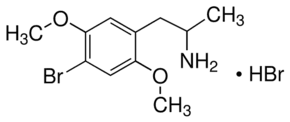
(±)-2,5-Dimethoxy-4-bromoamphetamine hydrobromide
Biochemicals & Reagents
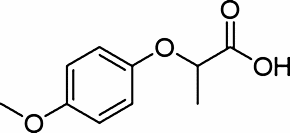
(±)-2-(p-Methoxyphenoxy)propionic acid
C10H12O4
Biochemicals & Reagents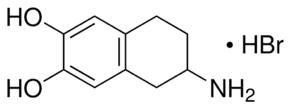
(±)-2-Amino-6,7-dihydroxy-1,2,3,4-tetrahydronaphthalene hydrobromide
C10H13NO2·HBr
Biochemicals & Reagents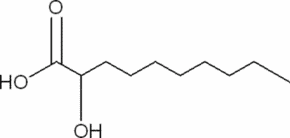
(±)-2-Hydroxydecanoic acid
C10H20O3
Biochemicals & Reagents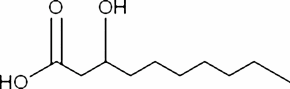
(±)-3-Hydroxydecanoic acid
C10H20O3
Biochemicals & Reagents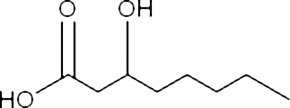
(±)-3-Hydroxyoctanoic acid
C8H16O3
Biochemicals & Reagents▶ Explore more

Bis(cyclopentadienyl)cobalt(III) hexafluorophosphate
C10H10CoF6P
Catalysis & Inorganic
1-(4-Chlorophenyl)biguanide hydrochloride
ClC6H4NHC(NH)NHC(NH)NH2 · HCl
Chemical Synthesis
Bis(cyclopentadienyl)dimethylzirconium(IV)
Catalysis & Inorganic

1-(4-Chlorophenyl)ethanol
ClC6H4CH(CH3)OH
Chemical Synthesis