
Poly(ethylene glycol)
Poly(ethylene glycol) (CAS: 25322-68-3), with the linear formula H(OCH2CH2)nOH and an average molecular weight of 6000, is a versatile polymer widely utilised in various scientific and industrial applications. It is recognised for its water solubility and biocompatibility. Tech Serve Solutions supplies this compound as a SAJ first grade material, suitable for research and development purposes, including hybridoma production.
- IUPAC
- PEG

Hybridoma Technology
Poly(ethylene glycol) is specifically indicated as suitable for hybridoma production, a crucial technique in biotechnology for generating monoclonal antibodies. Its presence aids in cell fusion processes.
Biochemical Research
As a core bioreagent, PEG finds application in numerous biochemical studies and assays. Its properties as a non-ionic detergent and its solubility characteristics make it valuable in protein crystallisation and solubilisation.
Pharmaceutical and Cosmetic Formulations
While specific grades are often required, PEG's general properties as a solvent, emulsifier, and viscosity modifier lend themselves to potential uses in pharmaceutical and cosmetic product development, pending grade suitability.
Laboratory Reagent
This polymer serves as a general laboratory reagent, utilised in various experimental setups owing to its predictable chemical behaviour and solubility in aqueous solutions.
| Linear formula | H(OCH2CH2)nOH |
|---|---|
| Grade | SAJ first grade |
| Density | 1.13 g/mL at 25 °C |
| Refractive index | n20/D 1.4539 |
| Solubility | H2O: soluble50 mg/mL at 20 °C, clear, colorless |
| pH | 5.5-7.0 (25 °C, 50 mg/mL in H2O) |
| Concentration | 50 % (w/v) |
| Melting point | -65 °C(lit.) |
| Vapour pressure | <0.01 mmHg (20 °C) |
| Vapour density | >1 (vs air) |
| Autoignition temp | 581 °F |
| Viscosity | 4.3 cSt(210 °F)(lit.) |
| Storage temperature | 2-8°C |
| Contains / stabiliser | 200-500 ppm BHT as inhibitor |
| Impurities tested | endotoxin, tested |
| Suitability | suitable for hybridoma |
Precautionary statements
- P273Avoid release to the environment
- P280Wear protective gloves, clothing and eye/face protection
- P312Call a POISON CENTER if you feel unwell
| Protective equipment | Eyeshields, Gloves, type N95 (US), type P1 (EN143) respirator filter |
|---|---|
| Water hazard class (WGK, DE) | 1 |
| Anion traces | chloride (Cl-): ≤50 mg/kgsulfate (SO42-): ≤50 mg/kg |
Hazard information is provided for guidance. Always consult the product Safety Data Sheet (SDS), available on request, before handling.
| Mol Wt | average Mw 6000mol wt 7400-9000 |
|---|---|
| Availability | available only in Japan |
| Transition Temp | Tg −67 °CTm 65 °C |
| Uv Absorption | λ: 260 nm Amax: 0.09λ: 280 nm Amax: 0.03 |
| Sterility | sterile-filtered |
| Hydroxyl Value | 340‑394 mg KOH/g |
Documentation
Every batch ships with a Certificate of Analysis covering assay, identity and purity; the grade is confirmed against your enquiry. Safety Data Sheets and technical data sheets are available on request.
Supply & logistics
Samples for technical evaluation; bulk MOQ by grade and packaging. In-stock material ships in 7–10 working days, worldwide, with full export documentation.
What is Poly(ethylene glycol) used for?
+
Poly(ethylene glycol) is used in hybridoma technology for cell fusion, as a biochemical reagent, in various laboratory applications, and potentially in pharmaceutical and cosmetic formulations. This SAJ first grade is suitable for research purposes, including hybridoma production.
What are the CAS number and formula for Poly(ethylene glycol)?
+
The CAS number for Poly(ethylene glycol) is 25322-68-3, and its linear formula is H(OCH2CH2)nOH.
What grade and purity does Tech Serve Solutions supply?
+
Tech Serve Solutions supplies Poly(ethylene glycol) as SAJ first grade, with an average Mw of 6000. The provided data does not indicate USP, BP, or EP pharmacopoeia compliance.
How should Poly(ethylene glycol) be handled and stored?
+
Handle Poly(ethylene glycol) with appropriate personal protective equipment, including eyeshields and gloves. A type N95 (US) or type P1 (EN143) respirator filter is recommended. Store at temperatures between 2-8°C.
Is Poly(ethylene glycol) available for export?
+
This specific product is available only in Japan; therefore, export is not available for this item.
How can I request a sample or quote for Poly(ethylene glycol)?
+
Please contact Tech Serve Solutions directly through our website or sales department to request a sample or obtain a quotation for Poly(ethylene glycol).
▶ Related products
![(±)-(E)-4-Ethyl-2-[(E)-hydroxyimino]-5-nitro-3-hexenamide (C8H13N3O4) — chemical structure, CAS 138472-01-2; Biochemicals & Reagents, fine chemical supplied by Tech Serve Solutions](/_next/image?url=https%3A%2F%2Fpub-f4d920c906024441a773a96f7098e551.r2.dev%2Fimages%2Fproducts%2F138472-01-2.png&w=3840&q=75)
(±)-(E)-4-Ethyl-2-[(E)-hydroxyimino]-5-nitro-3-hexenamide
C8H13N3O4
Biochemicals & Reagents![(±)-(E)-4-Ethyl-2-[(Z)-hydroxyimino]-5-nitro-3-hexen-1-yl-nicotinamide (C14H18N4O4) — chemical structure, CAS 162626-99-5; Biochemicals & Reagents, fine chemical supplied by Tech Serve Solutions](/_next/image?url=https%3A%2F%2Fpub-f4d920c906024441a773a96f7098e551.r2.dev%2Fimages%2Fproducts%2F162626-99-5.png&w=3840&q=75)
(±)-(E)-4-Ethyl-2-[(Z)-hydroxyimino]-5-nitro-3-hexen-1-yl-nicotinamide
C14H18N4O4
Biochemicals & Reagents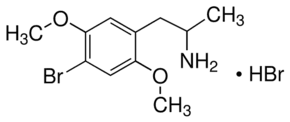
(±)-2,5-Dimethoxy-4-bromoamphetamine hydrobromide
Biochemicals & Reagents
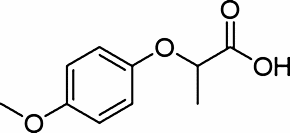
(±)-2-(p-Methoxyphenoxy)propionic acid
C10H12O4
Biochemicals & Reagents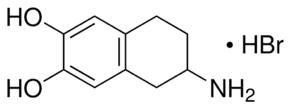
(±)-2-Amino-6,7-dihydroxy-1,2,3,4-tetrahydronaphthalene hydrobromide
C10H13NO2·HBr
Biochemicals & Reagents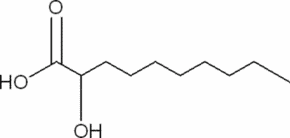
(±)-2-Hydroxydecanoic acid
C10H20O3
Biochemicals & Reagents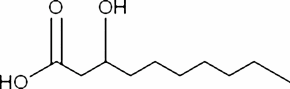
(±)-3-Hydroxydecanoic acid
C10H20O3
Biochemicals & Reagents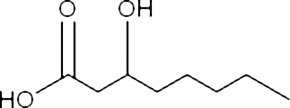
(±)-3-Hydroxyoctanoic acid
C8H16O3
Biochemicals & Reagents▶ Explore more

Bis(cyclopentadienyl)cobalt(III) hexafluorophosphate
C10H10CoF6P
Catalysis & Inorganic
1-(4-Chlorophenyl)biguanide hydrochloride
ClC6H4NHC(NH)NHC(NH)NH2 · HCl
Chemical Synthesis
Bis(cyclopentadienyl)dimethylzirconium(IV)
Catalysis & Inorganic

1-(4-Chlorophenyl)ethanol
ClC6H4CH(CH3)OH
Chemical Synthesis