
Poly-D-lysine hydrobromide
Poly-D-lysine hydrobromide (CAS: 27964-99-4) is a synthetic polyamino acid used as a cell culture substratum. This lyophilized powder, with a molecular weight of 70,000-150,000, functions as an attachment factor, promoting cell adhesion to surfaces. It is particularly useful when working with cells sensitive to L-lysine or those that digest poly-L-lysine. Supplied by Tech Serve Solutions for research applications.

Cell Culture Substratum
Poly-D-lysine hydrobromide serves as an effective coating for cell culture surfaces, enhancing cell attachment and growth. It is recommended to use 0.5 - 1.0 mL of a 0.1 mg/mL solution to coat 25 cm² surfaces.
Attachment Factor
As a D-lysine polymer, it acts as a reliable attachment factor, crucial for studies involving cells that may exhibit high uptake or digestion of L-lysine-based polymers. Its positively charged nature promotes adherence of negatively charged cells.
Surface Modification
The polymer can be used to modify surfaces, creating a more hospitable environment for a variety of cell types in research settings. Higher molecular weight variants offer more attachment sites per molecule.
| Linear formula | D-Lys-(D-Lys)n-D-Lys · xHBr |
|---|---|
| Form | lyophilized powder |
| Storage temperature | −20°C |
| Application | Poly-D-lysine polymers can be used in preparing surfaces for cell attachment. The D-lysine polymers can also be used with cells that digest poly-L-lysine polymers and cause an excessive uptake of L-lysine. This product is recommended as a cell culture substratum when using 0.5 - 1.0 mL of a 0.1 mg/mL solution to coat 25 cm2. Lower molecular weight versions of the product are less viscous, but high more molecular weight versions provide more attachment sites per molecule. |
| Protective equipment | Eyeshields, Gloves, type N95 (US), type P1 (EN143) respirator filter |
|---|---|
| Water hazard class (WGK, DE) | 3 |
Hazard information is provided for guidance. Always consult the product Safety Data Sheet (SDS), available on request, before handling.
| Product Line | BioReagent |
|---|---|
| Mol Wt | mol wt 70,000-150,000 |
Documentation
Every batch ships with a Certificate of Analysis covering assay, identity and purity; the grade is confirmed against your enquiry. Safety Data Sheets and technical data sheets are available on request.
Supply & logistics
Samples for technical evaluation; bulk MOQ by grade and packaging. In-stock material ships in 7–10 working days, worldwide, with full export documentation.
What is Poly-D-lysine hydrobromide used for?
+
Poly-D-lysine hydrobromide is primarily used as a cell culture substratum and attachment factor to promote cell adhesion to surfaces in research applications.
What is the CAS number and formula for Poly-D-lysine hydrobromide?
+
The CAS number for Poly-D-lysine hydrobromide is 27964-99-4. Its linear formula is <sc>D</sc>-Lys-(<sc>D</sc>-Lys)<sub>n</sub>-<sc>D</sc>-Lys · xHBr.
What grade and purity does Tech Serve Solutions supply?
+
Tech Serve Solutions supplies Poly-D-lysine hydrobromide as a BioReagent. We do not represent this product as USP, BP, EP or any other pharmacopoeia grade.
How should Poly-D-lysine hydrobromide be handled safely?
+
When handling Poly-D-lysine hydrobromide, it is essential to use personal protective equipment including eyeshields and gloves. A type N95 (US) or type P1 (EN143) respirator filter should be used. The substance has a WGK Germany rating of 3.
How is Poly-D-lysine hydrobromide shipped?
+
Poly-D-lysine hydrobromide is typically lyophilized and shipped under refrigeration. Please contact our export department for specific international shipping details.
How can I request a quote or sample?
+
To request a quote or a sample of Poly-D-lysine hydrobromide, please visit the product page on our website and use the 'Request a Quote' or 'Request Sample' button, or contact our sales team directly.
▶ Related products
![(±)-(E)-4-Ethyl-2-[(E)-hydroxyimino]-5-nitro-3-hexenamide (C8H13N3O4) — chemical structure, CAS 138472-01-2; Biochemicals & Reagents, fine chemical supplied by Tech Serve Solutions](/_next/image?url=https%3A%2F%2Fpub-f4d920c906024441a773a96f7098e551.r2.dev%2Fimages%2Fproducts%2F138472-01-2.png&w=3840&q=75)
(±)-(E)-4-Ethyl-2-[(E)-hydroxyimino]-5-nitro-3-hexenamide
C8H13N3O4
Biochemicals & Reagents![(±)-(E)-4-Ethyl-2-[(Z)-hydroxyimino]-5-nitro-3-hexen-1-yl-nicotinamide (C14H18N4O4) — chemical structure, CAS 162626-99-5; Biochemicals & Reagents, fine chemical supplied by Tech Serve Solutions](/_next/image?url=https%3A%2F%2Fpub-f4d920c906024441a773a96f7098e551.r2.dev%2Fimages%2Fproducts%2F162626-99-5.png&w=3840&q=75)
(±)-(E)-4-Ethyl-2-[(Z)-hydroxyimino]-5-nitro-3-hexen-1-yl-nicotinamide
C14H18N4O4
Biochemicals & Reagents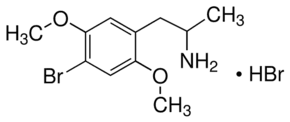
(±)-2,5-Dimethoxy-4-bromoamphetamine hydrobromide
Biochemicals & Reagents
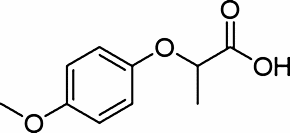
(±)-2-(p-Methoxyphenoxy)propionic acid
C10H12O4
Biochemicals & Reagents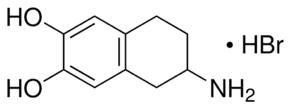
(±)-2-Amino-6,7-dihydroxy-1,2,3,4-tetrahydronaphthalene hydrobromide
C10H13NO2·HBr
Biochemicals & Reagents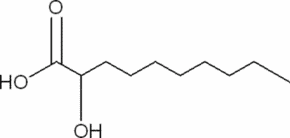
(±)-2-Hydroxydecanoic acid
C10H20O3
Biochemicals & Reagents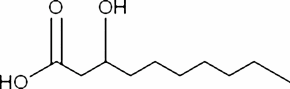
(±)-3-Hydroxydecanoic acid
C10H20O3
Biochemicals & Reagents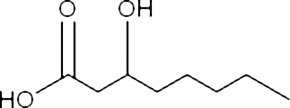
(±)-3-Hydroxyoctanoic acid
C8H16O3
Biochemicals & Reagents▶ Explore more

Bis(cyclopentadienyl)cobalt(III) hexafluorophosphate
C10H10CoF6P
Catalysis & Inorganic
1-(4-Chlorophenyl)biguanide hydrochloride
ClC6H4NHC(NH)NHC(NH)NH2 · HCl
Chemical Synthesis
Bis(cyclopentadienyl)dimethylzirconium(IV)
Catalysis & Inorganic

1-(4-Chlorophenyl)ethanol
ClC6H4CH(CH3)OH
Chemical Synthesis