
Poly(D,L-lactide)
Poly(D,L-lactide) (CAS: 26023-30-3), a biodegradable polymer with a molar mass ranging from 75,000 to 120,000 g/mol, is derived from the racemic mixture of D- and L-lactide monomers. This amorphous polymer exhibits a glass transition temperature (Tg) of 32.9°C. Its biodegradability and biocompatibility make it a valuable material in various scientific and industrial applications, particularly in areas requiring controlled degradation over time. It is typically stored at -20°C.
- Synonyms
- (C3H4O2)n

Drug Delivery Systems
Poly(D,L-lactide) is widely employed in the development of advanced drug delivery systems due to its biocompatibility and tunable degradation rates. It can encapsulate therapeutic agents, releasing them gradually in vivo, which is crucial for sustained treatment.
Biomedical Devices
This biodegradable polymer serves as a key material for manufacturing various biomedical devices, including sutures, implants, and tissue engineering scaffolds. Its ability to degrade safely within the body eliminates the need for removal surgery.
Research and Development
In research settings, Poly(D,L-lactide) is used for developing novel materials and exploring polymer science. Its properties allow for versatile manipulation in laboratory experiments and material science investigations.
| Linear formula | (C3H4O2)n |
|---|---|
| Storage temperature | −20°C |
| Melting point | 262 °C(lit.) |
| Protective equipment | Eyeshields, Gloves, type N95 (US), type P1 (EN143) respirator filter |
|---|---|
| Water hazard class (WGK, DE) | 3 |
Hazard information is provided for guidance. Always consult the product Safety Data Sheet (SDS), available on request, before handling.
| Mol Wt | mol wt 75,000-120,000 |
|---|---|
| Transition Temp | Tg 32.9 °C |
Documentation
Every batch ships with a Certificate of Analysis covering assay, identity and purity; the grade is confirmed against your enquiry. Safety Data Sheets and technical data sheets are available on request.
Supply & logistics
Samples for technical evaluation; bulk MOQ by grade and packaging. In-stock material ships in 7–10 working days, worldwide, with full export documentation.
What is Poly(D,L-lactide) used for?
+
Poly(D,L-lactide) is utilised in drug delivery systems, biomedical devices such as sutures and implants, and in materials science research due to its biodegradability and biocompatibility.
What are the CAS number and formula for Poly(D,L-lactide)?
+
The CAS number for Poly(D,L-lactide) is 26023-30-3, and its linear formula is (C3H4O2)n.
What grade and purity does Tech Serve Solutions supply for Poly(D,L-lactide)?
+
Tech Serve Solutions supplies Poly(D,L-lactide) with a viscosity of 0.55-0.75 dL/g. TSS does not represent this product as USP, BP, or EP grade; it is intended for research and technical applications.
How should Poly(D,L-lactide) be handled and stored?
+
Handling requires appropriate personal protective equipment, including eyeshields, gloves, and a type N95 respirator filter. Storage should be maintained at -20°C to preserve its integrity.
How is Poly(D,L-lactide) packed and shipped?
+
Poly(D,L-lactide) is carefully packed and exported by Tech Serve Solutions, adhering to all relevant shipping regulations for chemical compounds.
How can I request a sample or quote for Poly(D,L-lactide)?
+
To request a sample or a quotation for Poly(D,L-lactide), please contact our sales team through our website or by phone.
▶ Related products
![(±)-(E)-4-Ethyl-2-[(E)-hydroxyimino]-5-nitro-3-hexenamide (C8H13N3O4) — chemical structure, CAS 138472-01-2; Biochemicals & Reagents, fine chemical supplied by Tech Serve Solutions](/_next/image?url=https%3A%2F%2Fpub-f4d920c906024441a773a96f7098e551.r2.dev%2Fimages%2Fproducts%2F138472-01-2.png&w=3840&q=75)
(±)-(E)-4-Ethyl-2-[(E)-hydroxyimino]-5-nitro-3-hexenamide
C8H13N3O4
Biochemicals & Reagents![(±)-(E)-4-Ethyl-2-[(Z)-hydroxyimino]-5-nitro-3-hexen-1-yl-nicotinamide (C14H18N4O4) — chemical structure, CAS 162626-99-5; Biochemicals & Reagents, fine chemical supplied by Tech Serve Solutions](/_next/image?url=https%3A%2F%2Fpub-f4d920c906024441a773a96f7098e551.r2.dev%2Fimages%2Fproducts%2F162626-99-5.png&w=3840&q=75)
(±)-(E)-4-Ethyl-2-[(Z)-hydroxyimino]-5-nitro-3-hexen-1-yl-nicotinamide
C14H18N4O4
Biochemicals & Reagents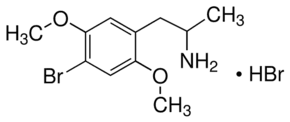
(±)-2,5-Dimethoxy-4-bromoamphetamine hydrobromide
Biochemicals & Reagents
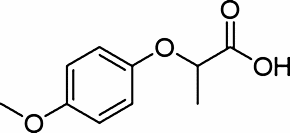
(±)-2-(p-Methoxyphenoxy)propionic acid
C10H12O4
Biochemicals & Reagents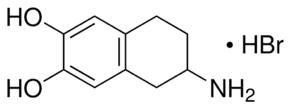
(±)-2-Amino-6,7-dihydroxy-1,2,3,4-tetrahydronaphthalene hydrobromide
C10H13NO2·HBr
Biochemicals & Reagents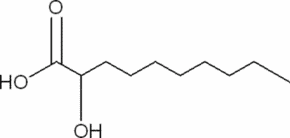
(±)-2-Hydroxydecanoic acid
C10H20O3
Biochemicals & Reagents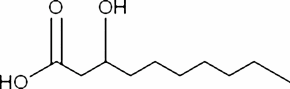
(±)-3-Hydroxydecanoic acid
C10H20O3
Biochemicals & Reagents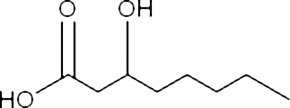
(±)-3-Hydroxyoctanoic acid
C8H16O3
Biochemicals & Reagents▶ Explore more

Bis(cyclopentadienyl)cobalt(III) hexafluorophosphate
C10H10CoF6P
Catalysis & Inorganic
1-(4-Chlorophenyl)biguanide hydrochloride
ClC6H4NHC(NH)NHC(NH)NH2 · HCl
Chemical Synthesis
Bis(cyclopentadienyl)dimethylzirconium(IV)
Catalysis & Inorganic

1-(4-Chlorophenyl)ethanol
ClC6H4CH(CH3)OH
Chemical Synthesis