
Orotic acid potassium salt
Orotic acid potassium salt (CAS 24598-73-0), with the chemical formula C5H3N2O4K and a molecular weight of 194.19 g/mol, is a significant intermediate in pyrimidine biosynthesis. It serves as a key starting material in biochemical research, particularly for studying enzyme kinetics and bioproduction pathways. Its applications extend to investigating cellular signalling mechanisms related to lipogenesis.
- IUPAC
- 6-Carboxy-2,4-dihydroxypyrimidine,Uracil-6-carboxylic acid
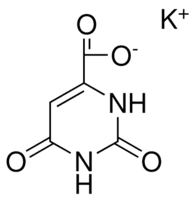
Biochemical Research
Used to study the specificity and kinetics of orotate phosphoribosyltransferase (OPRT), an enzyme crucial in pyrimidine biosynthesis. It helps elucidate the mechanisms of pyrophosphate and orotidine 5′-monophosphate formation.
Bioproduction of Uridine Monophosphate
Serves as a starting material for the potential commercial bioproduction of uridine 5′-monophosphate (UMP) using microbial systems such as *Corynebacterium ammoniagenes* or *Saccharomyces cerevisiae*.
Cellular Signalling Studies
Aids in researching the AMPK/SREBP-1 dependent cell signalling pathway. It is employed to understand the transcriptional regulation mechanisms that influence hepatic lipogenesis.
| Molecular weight | 194.19 |
|---|---|
| Linear formula | C5H3N2O4K |
| Assay | ≥99% |
| Application | Orotic acid (OA) is an intermediate in de novo pyrimidine biosynthesis that may be used to study the specificity and kinetics of orotate phosphoribosyltransferase (OPRT) which catalyzes the reversible phosphoribosyl transfer from 5′-phospho-α-d-ribose 1′-diphosphate (PRPP) to orotic acid (OA), forming pyrophosphate and orotidine 5′-monophosphate (OMP). Orotic acid is used as a starting material for the potential commercial bioproduction of uridine 5′-monophosphate (UMP) by microbes such as Corynebacterium ammoniagenes (ATCC 6872) or Saccharomyces cerevisiae. OA may be used to study the AMPK/SREBP-1 dependent cell signaling pathway and transcription regulation mechanisms that induce hepatic lipogenesis. |
| Protective equipment | Eyeshields, Gloves, type N95 (US), type P1 (EN143) respirator filter |
|---|---|
| Water hazard class (WGK, DE) | 2 |
Hazard information is provided for guidance. Always consult the product Safety Data Sheet (SDS), available on request, before handling.
Documentation
Every batch ships with a Certificate of Analysis covering assay, identity and purity; the grade is confirmed against your enquiry. Safety Data Sheets and technical data sheets are available on request.
Supply & logistics
Samples for technical evaluation; bulk MOQ by grade and packaging. In-stock material ships in 7–10 working days, worldwide, with full export documentation.
What is Orotic acid potassium salt used for?
+
Orotic acid potassium salt is used in biochemical research to study pyrimidine biosynthesis, enzyme kinetics (specifically OPRT), cellular signalling pathways like AMPK/SREBP-1, and for the bioproduction of uridine 5′-monophosphate.
What is the CAS number and chemical formula for Orotic acid potassium salt?
+
The CAS number is 24598-73-0, and the chemical formula is C5H3N2O4K.
What grade and purity does Tech Serve Solutions supply?
+
Tech Serve Solutions supplies Orotic acid potassium salt with an assay of ≥99%. We do not represent this product as USP, BP, or EP grade.
What are the safety considerations when handling Orotic acid potassium salt?
+
When handling Orotic acid potassium salt, it is essential to wear safety eyewear and gloves. A respirator filter of type N95 (US) or P1 (EN143) is recommended. The substance is classified under WGK-Germany 2.
How is Orotic acid potassium salt shipped and exported?
+
Tech Serve Solutions, as a specialist global supplier and exporter since 1998, handles the shipping and export of Orotic acid potassium salt in compliance with international regulations.
How can I request a quote or sample for Orotic acid potassium salt?
+
To request a quote or a sample of Orotic acid potassium salt, please contact our sales department through the website or designated contact channels.
▶ Related products
![(±)-(E)-4-Ethyl-2-[(E)-hydroxyimino]-5-nitro-3-hexenamide (C8H13N3O4) — chemical structure, CAS 138472-01-2; Biochemicals & Reagents, fine chemical supplied by Tech Serve Solutions](/_next/image?url=https%3A%2F%2Fpub-f4d920c906024441a773a96f7098e551.r2.dev%2Fimages%2Fproducts%2F138472-01-2.png&w=3840&q=75)
(±)-(E)-4-Ethyl-2-[(E)-hydroxyimino]-5-nitro-3-hexenamide
C8H13N3O4
Biochemicals & Reagents![(±)-(E)-4-Ethyl-2-[(Z)-hydroxyimino]-5-nitro-3-hexen-1-yl-nicotinamide (C14H18N4O4) — chemical structure, CAS 162626-99-5; Biochemicals & Reagents, fine chemical supplied by Tech Serve Solutions](/_next/image?url=https%3A%2F%2Fpub-f4d920c906024441a773a96f7098e551.r2.dev%2Fimages%2Fproducts%2F162626-99-5.png&w=3840&q=75)
(±)-(E)-4-Ethyl-2-[(Z)-hydroxyimino]-5-nitro-3-hexen-1-yl-nicotinamide
C14H18N4O4
Biochemicals & Reagents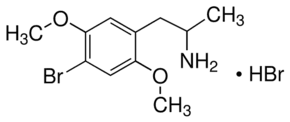
(±)-2,5-Dimethoxy-4-bromoamphetamine hydrobromide
Biochemicals & Reagents
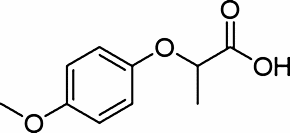
(±)-2-(p-Methoxyphenoxy)propionic acid
C10H12O4
Biochemicals & Reagents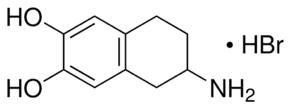
(±)-2-Amino-6,7-dihydroxy-1,2,3,4-tetrahydronaphthalene hydrobromide
C10H13NO2·HBr
Biochemicals & Reagents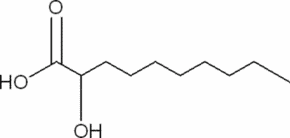
(±)-2-Hydroxydecanoic acid
C10H20O3
Biochemicals & Reagents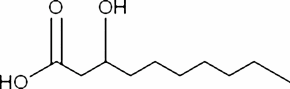
(±)-3-Hydroxydecanoic acid
C10H20O3
Biochemicals & Reagents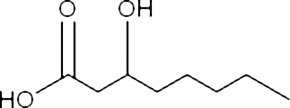
(±)-3-Hydroxyoctanoic acid
C8H16O3
Biochemicals & Reagents▶ Explore more

Bis(cyclopentadienyl)cobalt(III) hexafluorophosphate
C10H10CoF6P
Catalysis & Inorganic
1-(4-Chlorophenyl)biguanide hydrochloride
ClC6H4NHC(NH)NHC(NH)NH2 · HCl
Chemical Synthesis
Bis(cyclopentadienyl)dimethylzirconium(IV)
Catalysis & Inorganic

1-(4-Chlorophenyl)ethanol
ClC6H4CH(CH3)OH
Chemical Synthesis