
JC-1
JC-1 (CAS: 3520-43-2), a cyanine dye with the empirical formula C25H27Cl4IN4 and a molecular weight of 652.23, is a vital tool in cell biology research. This lipophilic probe exhibits dual-emission properties, allowing for the measurement of mitochondrial membrane potential. At low potentials, it exists as a green-fluorescent monomer, transitioning to red-fluorescent J-aggregates at higher potentials. This shift provides a sensitive and quantitative method for assessing mitochondrial function and cellular health.
- IUPAC
- 5,5′,6,6′-Tetrachloro-1,1′,3,3′-tetraethyl-imidacarbocyanine iodide,5,5′,6,6′-Tetrachloro-1,1′,3,3′-tetraethylbenzimidazolocarbocyanine iodide,CBIC2(3)
- Synonyms
- 5,5′,6,6′-Tetrachloro-1,1′,3,3′-tetraethyl-imidacarbocyanine iodide5,5′,6,6′-Tetrachloro-1,1′,3,3′-tetraethylbenzimidazolocarbocyanine iodideCBIC2(3)

Mitochondrial Membrane Potential Measurement
JC-1 is widely utilized to assess the integrity and function of mitochondria by quantifying changes in their membrane potential. Its ability to form fluorescent J-aggregates at higher potentials allows researchers to differentiate between healthy and compromised mitochondrial activity.
Cell Health and Viability Assessment
By monitoring mitochondrial membrane potential, JC-1 can serve as an indicator of overall cell health and can be employed in studies investigating apoptosis or cellular stress. Changes in the red-to-green fluorescence ratio correlate with cell viability.
Drug Screening and Development
In pharmaceutical research, JC-1 is applied to screen compounds that may affect mitochondrial function. This includes evaluating the impact of potential therapeutics on cellular energy production and integrity.
Flow Cytometry and Microscopy
The dual-emission properties of JC-1 make it suitable for both flow cytometry and fluorescence microscopy, enabling quantitative analysis of mitochondrial membrane potential at the single-cell level or in tissue samples.
| Molecular weight | 652.23 |
|---|---|
| Empirical formula | C25H27Cl4IN4 |
| Assay | ≥90% (HPCE) |
| Form | solid |
| Application | A dual-emission potential-sensitive probe that can be used to measure mitochondrial membrane potential. JC-1 is a green-fluorescent (λex 520 nm) monomer at low membrane potential. At higher potentials, JC-1 forms red-fluorescent (λem 596 nm) \"J-aggregates,\" which exhibit broad excitation and very narrow emission spectra. The ratio of red to green fluorescence of JC-1 is dependent only on membrane potential, and not influenced by mitochondrial size, shape, or density. |
| Protective equipment | Eyeshields, Gloves, type N95 (US), type P1 (EN143) respirator filter |
|---|---|
| Water hazard class (WGK, DE) | 3 |
Hazard information is provided for guidance. Always consult the product Safety Data Sheet (SDS), available on request, before handling.
| Absorption | extinction/511-517 nm, methanol ≥175000 |
|---|---|
| Fluorescence | λex 520 nm; λem 596 nm in 0.1 M Tris pH 8.0 |
Documentation
Every batch ships with a Certificate of Analysis covering assay, identity and purity; the grade is confirmed against your enquiry. Safety Data Sheets and technical data sheets are available on request.
Supply & logistics
Samples for technical evaluation; bulk MOQ by grade and packaging. In-stock material ships in 7–10 working days, worldwide, with full export documentation.
What is JC-1 used for?
+
JC-1 is primarily used as a dual-emission fluorescent probe to measure mitochondrial membrane potential in biological research. It helps assess mitochondrial function, cell health, and the effects of various compounds on cellular energetics.
What is the CAS number and formula for JC-1?
+
The CAS number for JC-1 is 3520-43-2, and its empirical formula is C25H27Cl4IN4.
What grade and purity does Tech Serve Solutions supply?
+
Tech Serve Solutions supplies JC-1 with a minimum purity of ≥90% (HPCE). We do not represent this product as USP, BP, or EP grade; it is intended for research and laboratory use.
How should JC-1 be handled and stored?
+
Handle JC-1 with appropriate personal protective equipment, including eyeshields and gloves. A type N95 (US) or type P1 (EN143) respirator filter is recommended. The WGK Germany classification is 3, indicating a hazard to water. Store in accordance with recommended laboratory practices for chemical reagents.
How is JC-1 packed, shipped, and exported?
+
JC-1 is carefully packed to ensure safe transit and is available for global export. Specific packaging details will be provided upon inquiry, adhering to international shipping regulations for chemical substances.
How can I request a sample or quote for JC-1?
+
To request a sample or a quote for JC-1, please contact our sales team through the TSS website or by direct enquiry, providing your contact details and the quantity required.
▶ Related products
![(±)-(E)-4-Ethyl-2-[(E)-hydroxyimino]-5-nitro-3-hexenamide (C8H13N3O4) — chemical structure, CAS 138472-01-2; Biochemicals & Reagents, fine chemical supplied by Tech Serve Solutions](/_next/image?url=https%3A%2F%2Fpub-f4d920c906024441a773a96f7098e551.r2.dev%2Fimages%2Fproducts%2F138472-01-2.png&w=3840&q=75)
(±)-(E)-4-Ethyl-2-[(E)-hydroxyimino]-5-nitro-3-hexenamide
C8H13N3O4
Biochemicals & Reagents![(±)-(E)-4-Ethyl-2-[(Z)-hydroxyimino]-5-nitro-3-hexen-1-yl-nicotinamide (C14H18N4O4) — chemical structure, CAS 162626-99-5; Biochemicals & Reagents, fine chemical supplied by Tech Serve Solutions](/_next/image?url=https%3A%2F%2Fpub-f4d920c906024441a773a96f7098e551.r2.dev%2Fimages%2Fproducts%2F162626-99-5.png&w=3840&q=75)
(±)-(E)-4-Ethyl-2-[(Z)-hydroxyimino]-5-nitro-3-hexen-1-yl-nicotinamide
C14H18N4O4
Biochemicals & Reagents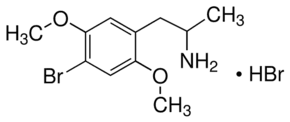
(±)-2,5-Dimethoxy-4-bromoamphetamine hydrobromide
Biochemicals & Reagents
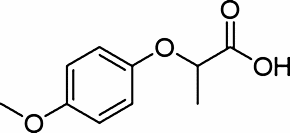
(±)-2-(p-Methoxyphenoxy)propionic acid
C10H12O4
Biochemicals & Reagents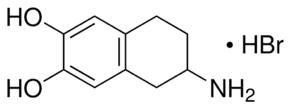
(±)-2-Amino-6,7-dihydroxy-1,2,3,4-tetrahydronaphthalene hydrobromide
C10H13NO2·HBr
Biochemicals & Reagents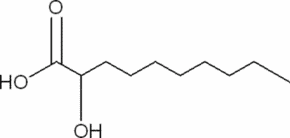
(±)-2-Hydroxydecanoic acid
C10H20O3
Biochemicals & Reagents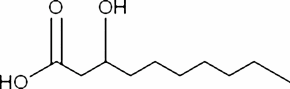
(±)-3-Hydroxydecanoic acid
C10H20O3
Biochemicals & Reagents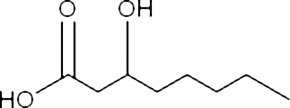
(±)-3-Hydroxyoctanoic acid
C8H16O3
Biochemicals & Reagents▶ Explore more

Bis(cyclopentadienyl)cobalt(III) hexafluorophosphate
C10H10CoF6P
Catalysis & Inorganic
1-(4-Chlorophenyl)biguanide hydrochloride
ClC6H4NHC(NH)NHC(NH)NH2 · HCl
Chemical Synthesis
Bis(cyclopentadienyl)dimethylzirconium(IV)
Catalysis & Inorganic

1-(4-Chlorophenyl)ethanol
ClC6H4CH(CH3)OH
Chemical Synthesis