
Haloperidol
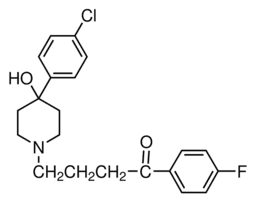
Haloperidol (CAS: 52-86-8) is a white to off-white crystalline powder with a molecular weight of 375.86 g/mol. As a potent butyrophenone antipsychotic, it functions primarily as a dopamine D2 receptor antagonist. This compound is widely utilised in neurological research for its well-defined pharmacological actions and serves as a critical reference standard in analytical chemistry and pharmaceutical development.
- IUPAC
- 4-[4-(4-Chlorophenyl)-4-hydroxy-1-piperidinyl]-1-(4-fluorophenyl)-1-butanone,4-[4-(4-Chlorophenyl)-4-hydroxypiperidino]-4′-fluorobutyrophenone,4-[4-(p-Chlorophenyl)-4-hydroxypiperidino]-4′-fluorobutyrophenone
- Synonyms
- 4-[4-(4-Chlorophenyl)-4-hydroxy-1-piperidinyl]-1-(4-fluorophenyl)-1-butanone4-[4-(4-Chlorophenyl)-4-hydroxypiperidino]-4′-fluorobutyrophenone4-[4-(p-Chlorophenyl)-4-hydroxypiperidino]-4′-fluorobutyrophenone
Pharmacological Research Tool
Haloperidol is extensively employed in neuropharmacology to investigate dopamine receptor pathways and their role in various neurological conditions. Its selective antagonism of D2 receptors makes it invaluable for in vitro and in vivo studies.
Analytical Reference Standard
This compound serves as a crucial reference standard for the quality control and quantitative analysis of pharmaceutical formulations. Its availability ensures accurate identification and assay of haloperidol in drug products.
Drug Discovery and Development
Haloperidol is used as a lead compound or comparator in the development of novel antipsychotic agents and other central nervous system-acting drugs. Its established efficacy and side-effect profile provide a benchmark for new therapeutic candidates.
| Molecular weight | 375.86 |
|---|---|
| Empirical formula | C21H23ClFNO2 |
| Form | powder |
| Colour | white |
| Solubility | 45% (w/v) aq 2-hydroxypropyl-β-cyclodextrin: soluble0.39 mg/mL0.1 M HCl: soluble3 mg/mLDMSO: solubleH2O: insolubleethanol: soluble |


Hazard statements
- H301Toxic if swallowed
- H315Causes skin irritation
- H317May cause an allergic skin reaction
- H319Causes serious eye irritation
- H335May cause respiratory irritation
- H361Suspected of damaging fertility or the unborn child
Precautionary statements
- P261Avoid breathing dust, fume, gas or vapours
- P280Wear protective gloves, clothing and eye/face protection
- P301IF SWALLOWED
- P305IF IN EYES
| Transport (UN / ADR) | UN 2811 6.1 / PGIII |
|---|---|
| Water hazard class (WGK, DE) | 3 |
| Hazard codes (EU) | T |
| Risk statements (R) | 60-61-25-36/37/38-43 |
| Safety statements (S) | 53-26-36/37/39-45 |
Hazard information is provided for guidance. Always consult the product Safety Data Sheet (SDS), available on request, before handling.
Documentation
Every batch ships with a Certificate of Analysis covering assay, identity and purity; the grade is confirmed against your enquiry. Safety Data Sheets and technical data sheets are available on request.
Supply & logistics
Samples for technical evaluation; bulk MOQ by grade and packaging. In-stock material ships in 7–10 working days, worldwide, with full export documentation.
What is Haloperidol used for?
+
Haloperidol is used in pharmacological research as a dopamine D2 receptor antagonist and as an analytical reference standard in the development and quality control of pharmaceutical products.
What is the CAS number and molecular formula for Haloperidol?
+
The CAS number for Haloperidol is 52-86-8, and its empirical formula (Hill notation) is C21H23ClFNO2.
What grade and purity does Tech Serve Solutions supply?
+
Tech Serve Solutions supplies Haloperidol typically as a research or technical grade chemical. Purity is specified on the Certificate of Analysis. We do not represent this product as USP, BP, EP, or pharmacopoeia grade unless explicitly stated in the product documentation.
How should Haloperidol be handled safely?
+
Haloperidol is classified as a dangerous substance. Handle with appropriate personal protective equipment (gloves, eye protection) and ensure adequate ventilation. It is toxic if swallowed and can cause skin irritation, allergic skin reactions, eye irritation, and respiratory irritation. Refer to the Safety Data Sheet for comprehensive handling instructions and emergency procedures.
Is Haloperidol a controlled substance?
+
Based on the provided data, Haloperidol (CAS: 52-86-8) is classified with hazard codes T (Toxic) and RIDADR UN 2811 6.1 / PGIII, indicating significant toxicity, but it is not explicitly listed as a controlled substance in this information.
How is Haloperidol packed, shipped, and exported?
+
Haloperidol is carefully packed in compliance with international shipping regulations for hazardous materials. TSS exports globally, ensuring all necessary documentation and adherence to transport guidelines for chemicals of this hazard classification.
How can I request a sample or quote for Haloperidol?
+
To request a sample or a quotation for Haloperidol, please contact our sales department through the website or by phone, providing your specific requirements and delivery details.
▶ Related products
![(±)-(E)-4-Ethyl-2-[(E)-hydroxyimino]-5-nitro-3-hexenamide (C8H13N3O4) — chemical structure, CAS 138472-01-2; Biochemicals & Reagents, fine chemical supplied by Tech Serve Solutions](/_next/image?url=https%3A%2F%2Fpub-f4d920c906024441a773a96f7098e551.r2.dev%2Fimages%2Fproducts%2F138472-01-2.png&w=3840&q=75)
(±)-(E)-4-Ethyl-2-[(E)-hydroxyimino]-5-nitro-3-hexenamide
C8H13N3O4
Biochemicals & Reagents![(±)-(E)-4-Ethyl-2-[(Z)-hydroxyimino]-5-nitro-3-hexen-1-yl-nicotinamide (C14H18N4O4) — chemical structure, CAS 162626-99-5; Biochemicals & Reagents, fine chemical supplied by Tech Serve Solutions](/_next/image?url=https%3A%2F%2Fpub-f4d920c906024441a773a96f7098e551.r2.dev%2Fimages%2Fproducts%2F162626-99-5.png&w=3840&q=75)
(±)-(E)-4-Ethyl-2-[(Z)-hydroxyimino]-5-nitro-3-hexen-1-yl-nicotinamide
C14H18N4O4
Biochemicals & Reagents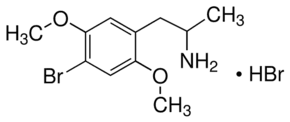
(±)-2,5-Dimethoxy-4-bromoamphetamine hydrobromide
Biochemicals & Reagents
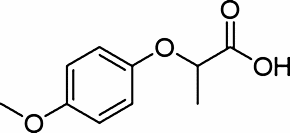
(±)-2-(p-Methoxyphenoxy)propionic acid
C10H12O4
Biochemicals & Reagents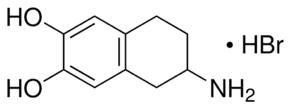
(±)-2-Amino-6,7-dihydroxy-1,2,3,4-tetrahydronaphthalene hydrobromide
C10H13NO2·HBr
Biochemicals & Reagents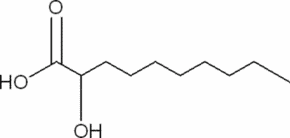
(±)-2-Hydroxydecanoic acid
C10H20O3
Biochemicals & Reagents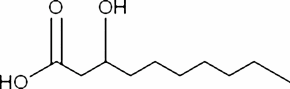
(±)-3-Hydroxydecanoic acid
C10H20O3
Biochemicals & Reagents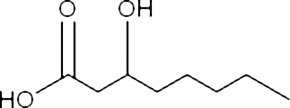
(±)-3-Hydroxyoctanoic acid
C8H16O3
Biochemicals & Reagents▶ Explore more

Bis(cyclopentadienyl)cobalt(III) hexafluorophosphate
C10H10CoF6P
Catalysis & Inorganic
1-(4-Chlorophenyl)biguanide hydrochloride
ClC6H4NHC(NH)NHC(NH)NH2 · HCl
Chemical Synthesis
Bis(cyclopentadienyl)dimethylzirconium(IV)
Catalysis & Inorganic

1-(4-Chlorophenyl)ethanol
ClC6H4CH(CH3)OH
Chemical Synthesis