
Ethyl acetate
Ethyl acetate (CAS 141-78-6), with the molecular formula CH3COOC2H5 and a molecular weight of 88.11 g/mol, is a clear, colourless liquid with a characteristic fruity odour. As a highly effective and versatile solvent, it finds widespread use in diverse industrial applications. Its excellent solvency power makes it suitable for various manufacturing processes, including coatings, adhesives, and printing inks.
- IUPAC
- EtOAc
- Synonyms
- Ethyl esterAcetic acid ethyl esterEthyl ethanoateVinegar naphtha

Solvent Applications
Ethyl acetate is extensively used as a solvent in the production of lacquers, varnishes, coatings, and inks due to its ability to dissolve a wide range of resins and polymers. It is also employed in the extraction and purification of pharmaceuticals and in the manufacturing of adhesives.
Chemical Intermediate
It serves as a key intermediate in organic synthesis for the production of various chemical compounds. Its reactivity allows for its use in esterification reactions and in the synthesis of other valuable chemicals.
Cleaning and Degreasing
Its solvent properties make it effective for cleaning and degreasing applications in industrial settings. It can be used to remove oils, greases, and other contaminants from surfaces.
Laboratory Reagent
In laboratories, Ethyl acetate is commonly used as a solvent for chromatography, recrystallisation, and as a reaction medium in various analytical and synthetic procedures.
| Molecular weight | 88.11 |
|---|---|
| Linear formula | CH3COOC2H5 |
| Assay | ≥99.5% |
| Grade | ACS reagent |
| Colour | APHA: ≤10 |
| Boiling point | 76.5-77.5 °C(lit.) |
| Density | 0.902 g/mL at 25 °C(lit.) |
| Melting point | −84 °C(lit.) |
| Refractive index | n20/D 1.3720(lit.) |
| Vapour pressure | 73 mmHg (20 °C) |
| Vapour density | 3 (20 °C, vs air) |
| Autoignition temp | 801 °F |
| Impurities tested | ≤0.0005% free alkali (as NH3)≤0.0005% non-volatile matter≤0.03% water (Karl Fischer) |
| Suitability | passes test for suitability for LC-MS |


Hazard statements
- H225Highly flammable liquid and vapour
- H319Causes serious eye irritation
- H336May cause drowsiness or dizziness
Precautionary statements
- P210Keep away from heat, sparks and open flames. No smoking
- P261Avoid breathing dust, fume, gas or vapours
- P305IF IN EYES
| Protective equipment | Eyeshields, Faceshields, full-face respirator (US), Gloves, multi-purpose combination respirator cartridge (US), type ABEK (EN14387) respirator filter |
|---|---|
| Flash point | -3 °C / 26.6 °F |
| Transport (UN / ADR) | UN 1173 3 / PGII |
| Water hazard class (WGK, DE) | 1 |
| Hazard codes (EU) | F,Xi |
| Risk statements (R) | 11-36-66-67 |
| Safety statements (S) | 16-26-33 |
| Supplemental hazards | Repeated exposure may cause skin dryness or cracking. |
| Cation traces | Ca: ≤0.1 mg/kgK: ≤0.1 mg/kgMg: ≤0.1 mg/kgNa: ≤0.1 mg/kg |
Hazard information is provided for guidance. Always consult the product Safety Data Sheet (SDS), available on request, before handling.
| Expl Lim | 2.2-11.5 %, 38 °F |
|---|---|
| Evapn Residue | ≤0.0030% |
| Transmittance | 260 nm, ≤50%300 nm, ≤98% |
Documentation
Every batch ships with a Certificate of Analysis covering assay, identity and purity; the grade is confirmed against your enquiry. Safety Data Sheets and technical data sheets are available on request.
Supply & logistics
Samples for technical evaluation; bulk MOQ by grade and packaging. In-stock material ships in 7–10 working days, worldwide, with full export documentation.
What is Ethyl acetate primarily used for?
+
Ethyl acetate is primarily used as a versatile solvent in industries such as coatings, inks, adhesives, and pharmaceuticals. It also functions as a chemical intermediate in organic synthesis and as a laboratory reagent.
What is the CAS number and chemical formula for Ethyl acetate?
+
The CAS number for Ethyl acetate is 141-78-6, and its linear chemical formula is CH3COOC2H5.
What grade and purity does Tech Serve Solutions supply?
+
Tech Serve Solutions supplies Ethyl acetate in ACS reagent grade with an assay of ≥99.5%. We do not represent this product as USP, BP, or EP grade unless explicitly stated.
What are the main safety concerns when handling Ethyl acetate?
+
Ethyl acetate is a highly flammable liquid and vapour (H225) and can cause serious eye irritation (H319) and drowsiness or dizziness (H336). Repeated exposure may cause skin dryness or cracking. Always handle with appropriate personal protective equipment in a well-ventilated area.
How is Ethyl acetate packed and exported by Tech Serve Solutions?
+
Ethyl acetate is available in various packaging options, including amber glass bottles, carbon steel flex-spout cans, and drums, suitable for export.
How can I request a quote or sample of Ethyl acetate?
+
To request a quote or sample of Ethyl acetate, please contact our sales team through our website or by phone. Please specify the quantity and grade required.
▶ Related products
![(±)-(E)-4-Ethyl-2-[(E)-hydroxyimino]-5-nitro-3-hexenamide (C8H13N3O4) — chemical structure, CAS 138472-01-2; Biochemicals & Reagents, fine chemical supplied by Tech Serve Solutions](/_next/image?url=https%3A%2F%2Fpub-f4d920c906024441a773a96f7098e551.r2.dev%2Fimages%2Fproducts%2F138472-01-2.png&w=3840&q=75)
(±)-(E)-4-Ethyl-2-[(E)-hydroxyimino]-5-nitro-3-hexenamide
C8H13N3O4
Biochemicals & Reagents![(±)-(E)-4-Ethyl-2-[(Z)-hydroxyimino]-5-nitro-3-hexen-1-yl-nicotinamide (C14H18N4O4) — chemical structure, CAS 162626-99-5; Biochemicals & Reagents, fine chemical supplied by Tech Serve Solutions](/_next/image?url=https%3A%2F%2Fpub-f4d920c906024441a773a96f7098e551.r2.dev%2Fimages%2Fproducts%2F162626-99-5.png&w=3840&q=75)
(±)-(E)-4-Ethyl-2-[(Z)-hydroxyimino]-5-nitro-3-hexen-1-yl-nicotinamide
C14H18N4O4
Biochemicals & Reagents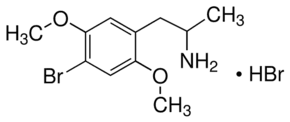
(±)-2,5-Dimethoxy-4-bromoamphetamine hydrobromide
Biochemicals & Reagents
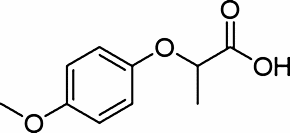
(±)-2-(p-Methoxyphenoxy)propionic acid
C10H12O4
Biochemicals & Reagents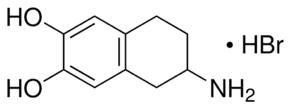
(±)-2-Amino-6,7-dihydroxy-1,2,3,4-tetrahydronaphthalene hydrobromide
C10H13NO2·HBr
Biochemicals & Reagents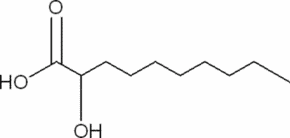
(±)-2-Hydroxydecanoic acid
C10H20O3
Biochemicals & Reagents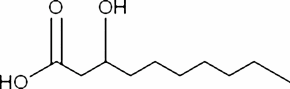
(±)-3-Hydroxydecanoic acid
C10H20O3
Biochemicals & Reagents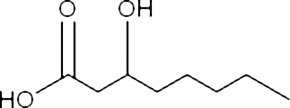
(±)-3-Hydroxyoctanoic acid
C8H16O3
Biochemicals & Reagents▶ Explore more

Bis(cyclopentadienyl)cobalt(III) hexafluorophosphate
C10H10CoF6P
Catalysis & Inorganic
1-(4-Chlorophenyl)biguanide hydrochloride
ClC6H4NHC(NH)NHC(NH)NH2 · HCl
Chemical Synthesis
Bis(cyclopentadienyl)dimethylzirconium(IV)
Catalysis & Inorganic

1-(4-Chlorophenyl)ethanol
ClC6H4CH(CH3)OH
Chemical Synthesis