
Ethidium bromide
Ethidium bromide (CAS: 1239-45-8; C21H20BrN3; MW: 394.31) is a fluorescent intercalating agent widely employed as a nucleic acid stain. It exhibits a significantly enhanced fluorescence when bound to double-stranded DNA and RNA, making it invaluable for visualizing nucleic acids in gel electrophoresis. Tech Serve Solutions supplies Ethidium bromide for critical laboratory research applications.
- IUPAC
- 3,8-Diamino-5-ethyl-6-phenylphenanthridinium bromide,EtBr,Homidium bromide
- Synonyms
- 3,8-Diamino-5-ethyl-6-phenylphenanthridinium bromideEtBrHomidium bromide
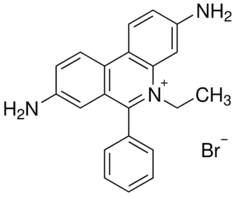
Nucleic Acid Visualization in Electrophoresis
Ethidium bromide is the standard stain for agarose and polyacrylamide gel electrophoresis. Its ability to intercalate into DNA and RNA, coupled with a marked increase in fluorescence upon binding, allows for clear visualization of nucleic acid bands.
Cell Biology Research
This compound is utilized in various cell biology studies, including apoptosis detection and cell cycle analysis, owing to its interaction with nucleic acids. Its fluorescent properties aid in quantifying cellular changes and events.
Fluorescent Probes and Stains
As a fluorescent stain, Ethidium bromide serves as a critical reagent in molecular biology laboratories for research purposes. It is integral to protocols requiring the detection or quantification of nucleic acids.
| Molecular weight | 394.31 |
|---|---|
| Empirical formula | C21H20BrN3 |
| Assay | ~95% (HPLC) |
| Concentration | 10 mg/mL in H2O |
| Application | Ethidium bromide (EtBr) is the most commonly used nucleic acid stain for PAGE or agarose gel electrophoresis. The fluorescence of EtBr increases 21-fold upon binding to double-stranded RNA and 25-fold on binding double-stranded DNA so that destaining the background is not necessary with a low stain concentration (10 |
| Suitability | suitable for gel electrophoresis |
| Melting point | 260-262 °C (dec.)(lit.) |


Hazard statements
- H302Harmful if swallowed
- H330Fatal if inhaled
- H341Suspected of causing genetic defects
Precautionary statements
- P260Do not breathe dust, fume, gas, mist, vapours or spray
- P281Use personal protective equipment as required
- P284Wear respiratory protection
- P310Immediately call a POISON CENTER or doctor
| Protective equipment | Eyeshields, Faceshields, full-face particle respirator type N100 (US), Gloves, respirator cartridge type N100 (US), type P1 (EN143) respirator filter, type P3 (EN 143) respirator cartridges |
|---|---|
| Transport (UN / ADR) | UN 2811PIH 6.1 / PGI |
| Water hazard class (WGK, DE) | 3 |
| Hazard codes (EU) | T+ |
| Risk statements (R) | 22-26-68 |
| Safety statements (S) | 28-36/37-45-63 |
Hazard information is provided for guidance. Always consult the product Safety Data Sheet (SDS), available on request, before handling.
Documentation
Every batch ships with a Certificate of Analysis covering assay, identity and purity; the grade is confirmed against your enquiry. Safety Data Sheets and technical data sheets are available on request.
Supply & logistics
Samples for technical evaluation; bulk MOQ by grade and packaging. In-stock material ships in 7–10 working days, worldwide, with full export documentation.
What is Ethidium bromide used for?
+
Ethidium bromide (CAS: 1239-45-8) is primarily used as a fluorescent stain for visualizing DNA and RNA in gel electrophoresis, and in cell biology research for applications such as apoptosis and cell cycle analysis.
What is the CAS number and formula for Ethidium bromide?
+
The CAS number for Ethidium bromide is 1239-45-8, and its empirical formula is C21H20BrN3.
What grade and purity does Tech Serve Solutions supply?
+
Tech Serve Solutions supplies Ethidium bromide with an assay of ~95% (HPLC), suitable for gel electrophoresis. We do not represent this product as USP, BP, or EP grade.
What are the main safety concerns when handling Ethidium bromide?
+
Ethidium bromide is hazardous, classified with Danger signal word and carries hazard statements H302 (Harmful if swallowed), H330 (Fatal if inhaled), and H341 (Suspected of causing genetic defects). Strict adherence to safety protocols, including appropriate personal protective equipment (PPE) such as gloves, eyeshields, and respiratory protection (e.g., N100 respirator), is essential.
Is Ethidium bromide a controlled substance?
+
The provided data does not indicate that Ethidium bromide is a controlled substance. However, users should always verify local regulations.
How is Ethidium bromide packaged and shipped?
+
Ethidium bromide is packaged and shipped according to relevant dangerous goods regulations (UN 2811, PIH 6.1 / PG II). Please contact us for specific packaging and shipping details for your region.
How can I request a quote or sample for Ethidium bromide?
+
To request a quote or sample for Ethidium bromide, please contact our sales department via the website or direct inquiry, providing your specific requirements.
▶ Related products
![(±)-(E)-4-Ethyl-2-[(E)-hydroxyimino]-5-nitro-3-hexenamide (C8H13N3O4) — chemical structure, CAS 138472-01-2; Biochemicals & Reagents, fine chemical supplied by Tech Serve Solutions](/_next/image?url=https%3A%2F%2Fpub-f4d920c906024441a773a96f7098e551.r2.dev%2Fimages%2Fproducts%2F138472-01-2.png&w=3840&q=75)
(±)-(E)-4-Ethyl-2-[(E)-hydroxyimino]-5-nitro-3-hexenamide
C8H13N3O4
Biochemicals & Reagents![(±)-(E)-4-Ethyl-2-[(Z)-hydroxyimino]-5-nitro-3-hexen-1-yl-nicotinamide (C14H18N4O4) — chemical structure, CAS 162626-99-5; Biochemicals & Reagents, fine chemical supplied by Tech Serve Solutions](/_next/image?url=https%3A%2F%2Fpub-f4d920c906024441a773a96f7098e551.r2.dev%2Fimages%2Fproducts%2F162626-99-5.png&w=3840&q=75)
(±)-(E)-4-Ethyl-2-[(Z)-hydroxyimino]-5-nitro-3-hexen-1-yl-nicotinamide
C14H18N4O4
Biochemicals & Reagents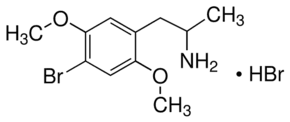
(±)-2,5-Dimethoxy-4-bromoamphetamine hydrobromide
Biochemicals & Reagents
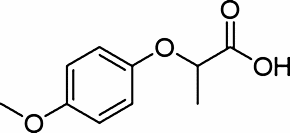
(±)-2-(p-Methoxyphenoxy)propionic acid
C10H12O4
Biochemicals & Reagents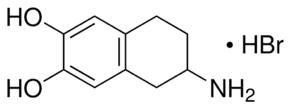
(±)-2-Amino-6,7-dihydroxy-1,2,3,4-tetrahydronaphthalene hydrobromide
C10H13NO2·HBr
Biochemicals & Reagents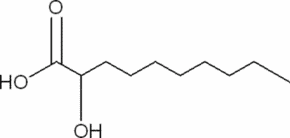
(±)-2-Hydroxydecanoic acid
C10H20O3
Biochemicals & Reagents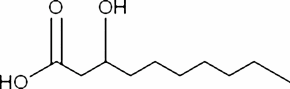
(±)-3-Hydroxydecanoic acid
C10H20O3
Biochemicals & Reagents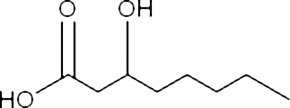
(±)-3-Hydroxyoctanoic acid
C8H16O3
Biochemicals & Reagents▶ Explore more

Bis(cyclopentadienyl)cobalt(III) hexafluorophosphate
C10H10CoF6P
Catalysis & Inorganic
1-(4-Chlorophenyl)biguanide hydrochloride
ClC6H4NHC(NH)NHC(NH)NH2 · HCl
Chemical Synthesis
Bis(cyclopentadienyl)dimethylzirconium(IV)
Catalysis & Inorganic

1-(4-Chlorophenyl)ethanol
ClC6H4CH(CH3)OH
Chemical Synthesis