
Ethephon
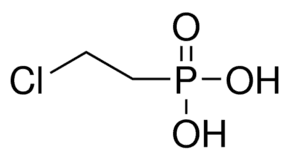
Ethephon (CAS: 16672-87-0), chemically known as 2-Chloroethylphosphonic acid, is a significant plant growth regulator. With a molecular weight of 144.49 g/mol, it is primarily utilised to influence plant development, promoting senescence and fruit ripening. Ethephon also finds applications in research as a phosphorylating agent and in studies investigating butyrylcholinesterase inhibition. TSS supplies Ethephon for various research and analytical purposes.
- IUPAC
- 2-Chloroethylphosphonic acid,Ethephon
- Synonyms
- 2-Chloroethylphosphonic acid
Plant Growth Regulation
Ethephon is widely employed to stimulate physiological changes in plants, including the induction of flowering, fruit ripening, and senescence. Its application can help synchronise crop maturity for efficient harvesting.
Biochemical Research
As a phosphorylating agent, Ethephon is used in biochemical studies. It also serves as a reference compound in analytical procedures for detecting its presence in biological samples and for investigating its inhibitory effects on butyrylcholinesterase.
Plant Biotechnology Studies
In plant biotechnology, Ethephon is utilised to manipulate plant development pathways. It can be a tool for researchers studying plant responses to hormonal signalling and for optimising plant tissue culture conditions.
| Molecular weight | 144.49 |
|---|---|
| Linear formula | ClCH2CH2P(O)(OH)2 |
| Assay | ≥96% (titration) |
| Storage temperature | 2-8°C |
| Application | Ethephon (2-Chloroethylphosphonic acid), a widely used plant growth regulator that induces scenescence and fruiting may be used to study its properties as a plant growth regulator, phosphorylating agent and as a butyrylcholinesterase inhibitor. Ethephon may be used as a reference compound in procedures designed to detect ethephon in biological materials. |
| Melting point | 70-72 °C(lit.) |


Hazard statements
- H312Harmful in contact with skin
- H314Causes severe skin burns and eye damage
- H332Harmful if inhaled
- H412Harmful to aquatic life with long-lasting effects
Precautionary statements
- P273Avoid release to the environment
- P280Wear protective gloves, clothing and eye/face protection
- P305IF IN EYES
- P310Immediately call a POISON CENTER or doctor
| Protective equipment | Eyeshields, Faceshields, full-face particle respirator type N100 (US), Gloves, respirator cartridge type N100 (US), type P1 (EN143) respirator filter, type P3 (EN 143) respirator cartridges |
|---|---|
| Transport (UN / ADR) | UN 2928 6.1/PG 2 |
| Water hazard class (WGK, DE) | 2 |
| Hazard codes (EU) | C |
| Risk statements (R) | 20/21-34-52/53 |
| Safety statements (S) | 26-28-36/37/39-45-61 |
Hazard information is provided for guidance. Always consult the product Safety Data Sheet (SDS), available on request, before handling.
Documentation
Every batch ships with a Certificate of Analysis covering assay, identity and purity; the grade is confirmed against your enquiry. Safety Data Sheets and technical data sheets are available on request.
Supply & logistics
Samples for technical evaluation; bulk MOQ by grade and packaging. In-stock material ships in 7–10 working days, worldwide, with full export documentation.
What is Ethephon used for?
+
Ethephon (CAS: 16672-87-0) is primarily used as a plant growth regulator to induce senescence and fruit ripening. It also serves as a phosphorylating agent and butyrylcholinesterase inhibitor in research settings, and as a reference compound for its detection in biological materials.
What are the CAS number and formula for Ethephon?
+
The CAS number for Ethephon is 16672-87-0. Its linear formula is ClCH₂CH₂P(O)(OH)₂.
What grade and purity does Tech Serve Solutions supply?
+
Tech Serve Solutions supplies Ethephon with an assay of ≥96% (titration). We do not represent this product as meeting any pharmacopoeia standards such as USP, BP, or EP.
What are the primary safety concerns when handling Ethephon?
+
Ethephon is classified as corrosive and harmful if swallowed, in contact with skin, or if inhaled. It also causes severe skin burns and eye damage and is harmful to aquatic life with long-lasting effects. Appropriate personal protective equipment, including eyeshields, gloves, and respiratory protection (N100 or P3), is essential. Refer to the Safety Data Sheet for full handling precautions.
How is Ethephon typically packaged and shipped?
+
Ethephon is stored at 2-8°C. TSS offers this chemical for global export, packaged to ensure stability and safety during transit, adhering to international shipping regulations for hazardous materials.
How can I request a sample or quote for Ethephon?
+
To request a sample or a quotation for Ethephon, please contact the TSS sales team through our website or via direct inquiry, providing your specific requirements.
▶ Related products

Acrylamide
Molecular Biology

Agarose
Molecular Biology

N,N′-Methylenebisacrylamide
Molecular Biology

Zinc sulfate solution
Molecular Biology

(±)-Jasmonic acid
C12H18O3
Molecular Biology
(−)-cis,trans-Abscisic acid
Molecular Biology

(2,4-Dichlorophenoxy)acetic acid sodium salt monohydrate
Molecular Biology

(2R,5R)-Bis(hydroxymethyl)-(3R,4R)-dihydroxypyrrolidine
Molecular Biology
▶ Explore more

Bis(cyclopentadienyl)cobalt(III) hexafluorophosphate
C10H10CoF6P
Catalysis & Inorganic
1-(4-Chlorophenyl)biguanide hydrochloride
ClC6H4NHC(NH)NHC(NH)NH2 · HCl
Chemical Synthesis
Bis(cyclopentadienyl)dimethylzirconium(IV)
Catalysis & Inorganic

1-(4-Chlorophenyl)ethanol
ClC6H4CH(CH3)OH
Chemical Synthesis