
DISBAC2(3), Voltage Sensitive Probe
DISBAC2(3) (CAS 47623-98-3) is a voltage-sensitive probe with the empirical formula C19H24N4O4S2 and a molecular weight of 436.55. This lipophilic fluorescent indicator is employed in single-cell fluorescence imaging to monitor changes in transmembrane conductance and potential. Its specific spectral properties make it a valuable tool in cell biology research, particularly for studying membrane dynamics.
- IUPAC
- 5-[3-(1,3-Diethylhexahydro-4,6-dioxo-2-thioxo-5-pyrimidinyl)-2-propen-1-ylidene]-1,3-diethyldihydro-2-thioxo-4,6(1H,5H)-pyrimidinedione,Bis(1,3-diethylthiobarbituric acid)trimethine oxonol
- Synonyms
- 5-[3-(1,3-Diethylhexahydro-4,6-dioxo-2-thioxo-5-pyrimidinyl)-2-propen-1-ylidene]-1,3-diethyldihydro-2-thioxo-4,6(1H,5H)-pyrimidinedione,Bis(1,3-diethylthiobarbituric acid)trimethine oxonol
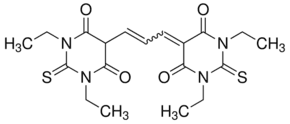
Transmembrane Potential Imaging
DISBAC2(3) is utilised for the precise, single-cell fluorescence imaging of transmembrane potential changes. It allows researchers to visualise and quantify alterations in the electrical potential across cell membranes.
Transmembrane Conductance Studies
This voltage-sensitive probe is effective for assessing changes in transmembrane conductance. It provides insights into the ion flow and electrical properties of cellular membranes.
Cell Biology Research
As a fluorescent indicator, DISBAC2(3) supports various cell biology investigations, including those focused on membrane research and the behaviour of stem cells during differentiation.
| Molecular weight | 436.55 |
|---|---|
| Empirical formula | C19H24N4O4S2 |
| Assay | ≥98% (HPLC) |
| Storage temperature | −20°C |
| Application | DISBAC2(3), Voltage Sensitive Probe is used for single-cell fluorescence imaging of transmembrane conductance and potential change. |
| Suitability | complies for Infrared spectrum |
| Fluorescence | λex 535 nm; λem 560 nm in DMSO |
|---|
Documentation
Every batch ships with a Certificate of Analysis covering assay, identity and purity; the grade is confirmed against your enquiry. Safety Data Sheets and technical data sheets are available on request.
Supply & logistics
Samples for technical evaluation; bulk MOQ by grade and packaging. In-stock material ships in 7–10 working days, worldwide, with full export documentation.
What is DISBAC2(3) used for?
+
DISBAC2(3) is used for single-cell fluorescence imaging of transmembrane conductance and potential change, finding applications in cell biology and stem cell research.
What is the CAS number and formula for DISBAC2(3)?
+
The CAS number for DISBAC2(3) is 47623-98-3, and its empirical formula is C19H24N4O4S2.
What grade and purity does Tech Serve Solutions supply?
+
Tech Serve Solutions supplies DISBAC2(3) with an assay of ≥98% (HPLC). We do not represent this product as USP, BP, EP, or any other pharmacopoeial grade.
What are the safety considerations for handling DISBAC2(3)?
+
DISBAC2(3) has a WGK Germany rating of 3, indicating it is hazardous to water. Users should consult the Safety Data Sheet (SDS) for detailed handling procedures and hazard information before use.
How is DISBAC2(3) supplied and exported by TSS?
+
DISBAC2(3) is supplied by TSS under standard laboratory conditions and is available for global export, adhering to all relevant shipping regulations for chemical substances.
How can I request a sample or quote for DISBAC2(3)?
+
To request a sample or a quote for DISBAC2(3), please contact the TSS sales team through our website or direct contact information.
▶ Related products
![(±)-(E)-4-Ethyl-2-[(E)-hydroxyimino]-5-nitro-3-hexenamide (C8H13N3O4) — chemical structure, CAS 138472-01-2; Biochemicals & Reagents, fine chemical supplied by Tech Serve Solutions](/_next/image?url=https%3A%2F%2Fpub-f4d920c906024441a773a96f7098e551.r2.dev%2Fimages%2Fproducts%2F138472-01-2.png&w=3840&q=75)
(±)-(E)-4-Ethyl-2-[(E)-hydroxyimino]-5-nitro-3-hexenamide
C8H13N3O4
Biochemicals & Reagents![(±)-(E)-4-Ethyl-2-[(Z)-hydroxyimino]-5-nitro-3-hexen-1-yl-nicotinamide (C14H18N4O4) — chemical structure, CAS 162626-99-5; Biochemicals & Reagents, fine chemical supplied by Tech Serve Solutions](/_next/image?url=https%3A%2F%2Fpub-f4d920c906024441a773a96f7098e551.r2.dev%2Fimages%2Fproducts%2F162626-99-5.png&w=3840&q=75)
(±)-(E)-4-Ethyl-2-[(Z)-hydroxyimino]-5-nitro-3-hexen-1-yl-nicotinamide
C14H18N4O4
Biochemicals & Reagents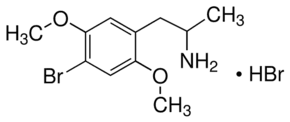
(±)-2,5-Dimethoxy-4-bromoamphetamine hydrobromide
Biochemicals & Reagents
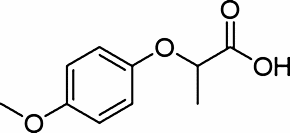
(±)-2-(p-Methoxyphenoxy)propionic acid
C10H12O4
Biochemicals & Reagents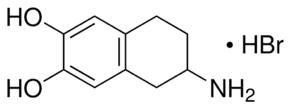
(±)-2-Amino-6,7-dihydroxy-1,2,3,4-tetrahydronaphthalene hydrobromide
C10H13NO2·HBr
Biochemicals & Reagents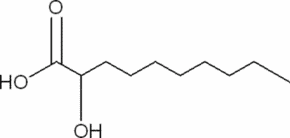
(±)-2-Hydroxydecanoic acid
C10H20O3
Biochemicals & Reagents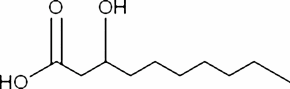
(±)-3-Hydroxydecanoic acid
C10H20O3
Biochemicals & Reagents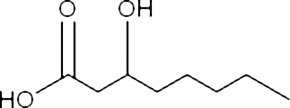
(±)-3-Hydroxyoctanoic acid
C8H16O3
Biochemicals & Reagents▶ Explore more

Bis(cyclopentadienyl)cobalt(III) hexafluorophosphate
C10H10CoF6P
Catalysis & Inorganic
1-(4-Chlorophenyl)biguanide hydrochloride
ClC6H4NHC(NH)NHC(NH)NH2 · HCl
Chemical Synthesis
Bis(cyclopentadienyl)dimethylzirconium(IV)
Catalysis & Inorganic

1-(4-Chlorophenyl)ethanol
ClC6H4CH(CH3)OH
Chemical Synthesis