
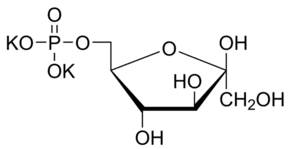
D-Fructose 6-phosphate dipotassium salt
D-Fructose 6-phosphate dipotassium salt (CAS: 103213-47-4; Formula: C6H11O9PK2) is a white to off-white amorphous powder. This biochemical is a key intermediate in glycolysis, playing a crucial role in cellular energy metabolism. It is widely utilised in biochemical research, particularly in studies of carbohydrate metabolism, enzyme kinetics, and cell signalling pathways. Its purity ensures reliable results in enzymatic assays and metabolic studies.
Biochemical Research
Used as a substrate or standard in enzymatic assays related to glycolysis and other metabolic pathways. Essential for studying enzyme kinetics and mechanisms.
Metabolic Pathway Studies
Investigates cellular energy production and regulation. Crucial for understanding the role of fructose phosphates in various biological processes.
Cell Biology Research
Employed in cell culture experiments to study the effects of glycolytic intermediates on cell growth, function, and signalling.
Enzyme Inhibitor Screening
Serves as a reference compound in the discovery and development of new enzyme inhibitors for therapeutic purposes.
| Molecular weight | 336.32 |
|---|---|
| Linear formula | C6H11O9PK2 |
| Assay | ≥97% (enzymatic) |
| Form | amorphous powder |
| Solubility | H2O: soluble100 mg/mL, clear to slightly hazy, colorless to faintly yellow |
| Storage temperature | −20°C |
| Impurities tested | ≤0.05 mol % fructose 1,6-diphosphate≤1.5 mol % glucose 6-phosphate |
Documentation
Every batch ships with a Certificate of Analysis covering assay, identity and purity; the grade is confirmed against your enquiry. Safety Data Sheets and technical data sheets are available on request.
Supply & logistics
Samples for technical evaluation; bulk MOQ by grade and packaging. In-stock material ships in 7–10 working days, worldwide, with full export documentation.
What is D-Fructose 6-phosphate dipotassium salt primarily used for?
+
D-Fructose 6-phosphate dipotassium salt is primarily used in biochemical research, particularly for studying glycolysis and other metabolic pathways, enzyme kinetics, and cell biology.
What are the CAS number and chemical formula for D-Fructose 6-phosphate dipotassium salt?
+
The CAS number is 103213-47-4 and the chemical formula is C6H11O9PK2.
What grade and purity does Tech Serve Solutions supply?
+
Tech Serve Solutions supplies D-Fructose 6-phosphate dipotassium salt with a purity of ≥97% (enzymatic). This product is not supplied as USP, BP, EP, or pharmacopoeia grade.
What are the main impurities in this product?
+
The main impurities are ≤0.05 mol % fructose 1,6-diphosphate and ≤1.5 mol % glucose 6-phosphate.
What are the safety and handling considerations for this chemical?
+
According to the provided data, this chemical has a WGK Germany rating of 3, indicating it is hazardous to water. Appropriate laboratory safety precautions should be taken, including wearing protective equipment and handling in a well-ventilated area.
How is D-Fructose 6-phosphate dipotassium salt packed, shipped, and exported?
+
Tech Serve Solutions is a global supplier and exporter of fine chemicals. Specific packaging and shipping details can be provided upon request, adhering to international regulations.
How can I request a sample or quote for D-Fructose 6-phosphate dipotassium salt?
+
Please contact our sales team directly through our website or by phone to request a sample or obtain a quotation for D-Fructose 6-phosphate dipotassium salt.
▶ Related products
![(±)-(E)-4-Ethyl-2-[(E)-hydroxyimino]-5-nitro-3-hexenamide (C8H13N3O4) — chemical structure, CAS 138472-01-2; Biochemicals & Reagents, fine chemical supplied by Tech Serve Solutions](/_next/image?url=https%3A%2F%2Fpub-f4d920c906024441a773a96f7098e551.r2.dev%2Fimages%2Fproducts%2F138472-01-2.png&w=3840&q=75)
(±)-(E)-4-Ethyl-2-[(E)-hydroxyimino]-5-nitro-3-hexenamide
C8H13N3O4
Biochemicals & Reagents![(±)-(E)-4-Ethyl-2-[(Z)-hydroxyimino]-5-nitro-3-hexen-1-yl-nicotinamide (C14H18N4O4) — chemical structure, CAS 162626-99-5; Biochemicals & Reagents, fine chemical supplied by Tech Serve Solutions](/_next/image?url=https%3A%2F%2Fpub-f4d920c906024441a773a96f7098e551.r2.dev%2Fimages%2Fproducts%2F162626-99-5.png&w=3840&q=75)
(±)-(E)-4-Ethyl-2-[(Z)-hydroxyimino]-5-nitro-3-hexen-1-yl-nicotinamide
C14H18N4O4
Biochemicals & Reagents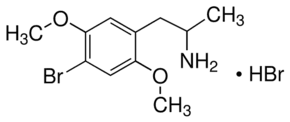
(±)-2,5-Dimethoxy-4-bromoamphetamine hydrobromide
Biochemicals & Reagents
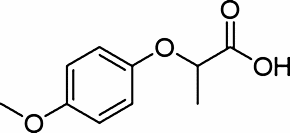
(±)-2-(p-Methoxyphenoxy)propionic acid
C10H12O4
Biochemicals & Reagents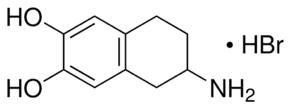
(±)-2-Amino-6,7-dihydroxy-1,2,3,4-tetrahydronaphthalene hydrobromide
C10H13NO2·HBr
Biochemicals & Reagents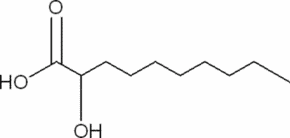
(±)-2-Hydroxydecanoic acid
C10H20O3
Biochemicals & Reagents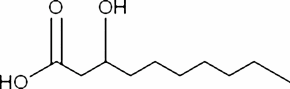
(±)-3-Hydroxydecanoic acid
C10H20O3
Biochemicals & Reagents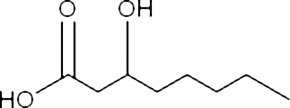
(±)-3-Hydroxyoctanoic acid
C8H16O3
Biochemicals & Reagents▶ Explore more

Bis(cyclopentadienyl)cobalt(III) hexafluorophosphate
C10H10CoF6P
Catalysis & Inorganic
1-(4-Chlorophenyl)biguanide hydrochloride
ClC6H4NHC(NH)NHC(NH)NH2 · HCl
Chemical Synthesis
Bis(cyclopentadienyl)dimethylzirconium(IV)
Catalysis & Inorganic

1-(4-Chlorophenyl)ethanol
ClC6H4CH(CH3)OH
Chemical Synthesis