
Chloroacetic acid
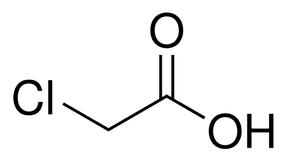
Chloroacetic acid (CAS 79-11-8), also known as monochloroacetic acid or MCA, is a chlorinated carboxylic acid with the formula ClCH2COOH and a molar mass of 94.50 g/mol. It is a colourless to white crystalline solid (melting point 60-63 C) that is highly reactive and strongly corrosive. A versatile alkylating and carboxymethylating intermediate, it is used to manufacture carboxymethyl cellulose, agrochemicals, surfactants, dyes and a wide range of fine chemicals. Tech Serve Solutions supplies and exports it worldwide.
- IUPAC
- Monochloroacetic acid
- Synonyms
- Chloroacetic acidMonochloroacetic acidMCAMonochloroethanoic acidChloroethanoic acid2-Chloroacetic acidClCH2COOH
Carboxymethylation intermediate
Chloroacetic acid is a principal carboxymethylating agent, most notably in the production of carboxymethyl cellulose (CMC). Its reactive C-Cl bond introduces the carboxymethyl group onto hydroxyl-bearing substrates.
Agrochemical synthesis
It serves as a building block in the manufacture of herbicides and other crop-protection actives, including phenoxyacetic-acid and glycine-derived chemistries, where it supplies the acetic-acid moiety.
Surfactants and personal-care ingredients
The compound is used to prepare amphoteric and anionic surfactants, such as betaines and ether carboxylates, for detergents, cosmetics and industrial cleaning formulations.
Dyes, pigments and pharmaceutical intermediates
Chloroacetic acid is an alkylating reagent in the synthesis of dyes, thioglycolic acid and assorted pharmaceutical and fine-chemical intermediates that require an acetic-acid handle.
Laboratory reagent
Supplied at high assay, it is used in research and analytical work as a reactive synthetic reagent and as an acidic, halogen-bearing intermediate in organic synthesis.
| Molecular weight | 94.50 |
|---|---|
| Linear formula | ClCH2COOH |
| Assay | ≥99.0% |
| Boiling point | 189 °C(lit.) |
| Vapour pressure | 0.75 mmHg (20 °C) |
| Vapour density | 3.26 (vs air) |
| Impurities tested | ≤0.01% Carbonyl compounds (as acetone)≤0.01% Carbonyl compunds (other than acetone)≤0.01% insolubles |
| Melting point | 60-63 °C(lit.) |


Hazard statements
- H301Toxic if swallowed
- H311Toxic in contact with skin
- H314Causes severe skin burns and eye damage
- H331Toxic if inhaled
- H400Very toxic to aquatic life
Precautionary statements
- P260Do not breathe dust, fume, gas, mist, vapours or spray
- P273Avoid release to the environment
- P280Wear protective gloves, clothing and eye/face protection
- P284Wear respiratory protection
- P301IF SWALLOWED
- P305IF IN EYES
| Protective equipment | dust mask type N95 (US), Eyeshields, Faceshields, full-face particle respirator type N100 (US), Gloves, respirator cartridge type N100 (US), type P1 (EN143) respirator filter, type P2 (EN 143) respirator cartridges, type P3 (EN 143) respirator cartridges |
|---|---|
| Flash point | 126 °C / 258.8 °F |
| Transport (UN / ADR) | UN 1751 6.1/PG 2 |
| Water hazard class (WGK, DE) | 2 |
| Hazard codes (EU) | T,N |
| Risk statements (R) | 23/24/25-34-50 |
| Safety statements (S) | 26-36/37/39-45-61-63 |
| Cation traces | Fe: ≤0.002%heavy metals (as Pb): ≤0.001% |
| Anion traces | chloride (Cl-): ≤0.01%sulfate (SO42-): ≤0.02% |
| Ignition residue | <0.02% |
Hazard information is provided for guidance. Always consult the product Safety Data Sheet (SDS), available on request, before handling.
Documentation
Every batch ships with a Certificate of Analysis covering assay, identity and purity; the grade is confirmed against your enquiry. Safety Data Sheets and technical data sheets are available on request.
Supply & logistics
Samples for technical evaluation; bulk MOQ by grade and packaging. In-stock material ships in 7–10 working days, worldwide, with full export documentation.
What is Chloroacetic acid used for?
+
Chloroacetic acid is mainly used as a chemical intermediate. Key applications include manufacturing carboxymethyl cellulose, agrochemicals (herbicides), surfactants such as betaines, dyes, thioglycolic acid and various fine-chemical and pharmaceutical intermediates, where it acts as a carboxymethylating or alkylating reagent.
What is the CAS number and molecular formula of Chloroacetic acid?
+
Chloroacetic acid has the CAS number 79-11-8 and the molecular formula ClCH2COOH (C2H3ClO2). Its molecular weight is 94.50 g/mol, the EC number is 201-178-4 and the MDL number is MFCD00002683.
What grade and purity does Tech Serve Solutions supply?
+
Tech Serve Solutions supplies Chloroacetic acid at an assay of not less than 99.0%, as a technical/reagent-grade product suitable for industrial and research use. We do not represent it as USP, BP or EP pharmacopoeia grade. A certificate of analysis can be provided with each consignment.
What are the safety hazards of Chloroacetic acid?
+
Chloroacetic acid is classified Danger (GHS05, GHS06, GHS09). It is toxic if swallowed, in contact with skin or if inhaled (H301, H311, H331), causes severe skin burns and eye damage (H314) and is very toxic to aquatic life (H400). Use appropriate respiratory protection, gloves, eye and face protection, avoid release to the environment, and handle only with suitable engineering controls. Always consult the SDS before use.
How is Chloroacetic acid packed, shipped and exported?
+
Chloroacetic acid is packed in tightly closed, corrosion-resistant containers appropriate to the order quantity and labelled to GHS standards. It is a regulated dangerous good for transport, classified UN 1751, Class 6.1, Packing Group II, and is shipped accordingly. Tech Serve Solutions exports worldwide with full documentation; packing can be tailored to your destination and logistics requirements.
How do I request a sample or quote?
+
Contact Tech Serve Solutions with your required quantity, specification and destination, and our team will respond with availability, lead time and a formal quotation. Samples can be arranged where appropriate, subject to dangerous-goods handling requirements.
▶ Related products

5-Sulfosalicylic acid dihydrate
HO3SC6H3-2-(OH)CO2H 2H2O
Acids & Bases
Calcium hydroxide
Ca(OH)2
Acids & Bases
Acetic acid-12C2
12CH312CO2H
Acids & Bases
Acetic acid-13C2
13CH313CO2H
Acids & Bases
Acetic acid-13C2,d4
Acids & Bases

Acetic acid-17O2
CH3C17O2H
Acids & Bases
Acetic acid-18O2
CH3C18O2H
Acids & Bases
Acetic acid-2,2,2-d3
2-d3
Acids & Bases▶ Explore more

Bis(cyclopentadienyl)cobalt(III) hexafluorophosphate
C10H10CoF6P
Catalysis & Inorganic
1-(4-Chlorophenyl)biguanide hydrochloride
ClC6H4NHC(NH)NHC(NH)NH2 · HCl
Chemical Synthesis
Bis(cyclopentadienyl)dimethylzirconium(IV)
Catalysis & Inorganic

1-(4-Chlorophenyl)ethanol
ClC6H4CH(CH3)OH
Chemical Synthesis