
Chloramphenicol
Chloramphenicol (CAS 56-75-7) is a synthetic broad-spectrum antibiotic, historically derived from *Streptomyces venezuelae*. With a molecular weight of 323.13 g/mol, it is known for its bacteriostatic and bactericidal properties. Primarily utilised in molecular biology for bacterial selection at concentrations of 10-20 μg/mL and as a selective agent for antibiotic-resistance genes in transformed cells. It is also listed as suitable for plant cell culture.
- IUPAC
- D-(−)-threo-2,2-Dichloro-N-[β-hydroxy-α-(hydroxymethyl)-β-(4-nitrophenyl)ethyl]acetamide,D-(−)-threo-2-Dichloroacetamido-1-(4-nitrophenyl)-1,3-propanediol,D-threo-2,2-Dichloro-N-[β-hydroxy-α-(hydroxymethyl)-4-nitrophenethyl]acetamide,Chloromycetin
- Synonyms
- ChloromycetinD-(-)-threo-2,2-Dichloro-N-[beta-hydroxy-alpha-(hydroxymethyl)-beta-(4-nitrophenyl)ethyl]acetamideD-(-)-threo-2-Dichloroacetamido-1-(4-nitrophenyl)-1,3-propanediolD-threo-2,2-Dichloro-N-[beta-hydroxy-alpha-(hydroxymethyl)-4-nitrophenethyl]acetamide
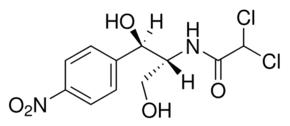
Antibacterial Agent in Molecular Biology
Chloramphenicol is used for selective bacterial growth inhibition at concentrations of 10-20 μg/mL. It is an effective agent for selecting transformed cells that carry chloramphenicol resistance genes.
Plant Cell Culture Supplement
This compound is designated as suitable for use in plant cell culture applications. It can be incorporated to manage microbial contamination or for specific selective processes within plant biotechnology.
Analytical Standard
As an analytical standard, Chloramphenicol is employed in chromatography and other analytical techniques for identification and quantification. Its precise nature makes it valuable for method development and validation.
| Molecular weight | 323.13 |
|---|---|
| Linear formula | Cl2CHCONHCH(CH2OH)CH(OH)C6H4NO2 |
| Grade | analytical standard |
| Impurities tested | Endotoxin, tested |
| Application | Chloramphenicol is a synthetic antibiotic, isolated from strains of Streptomyces venezuelae. It is often used for bacterial selection in molecular biology applications at 10-20 μg/mL and as a selection agent for transformed cells containing chloramphenicol reistance genes. |
| Suitability | suitable for plant cell culture |
| Melting point | 148-150 °C(lit.) |

Hazard statements
- H350May cause cancer
Precautionary statements
- P201Obtain special instructions before use
- P308IF exposed or concerned
| Protective equipment | Eyeshields, full-face particle respirator type N100 (US), Gloves, respirator cartridge type N100 (US), type P1 (EN143) respirator filter, type P3 (EN 143) respirator cartridges |
|---|---|
| Water hazard class (WGK, DE) | 3 |
| Hazard codes (EU) | T |
| Risk statements (R) | 45 |
| Safety statements (S) | 53-45 |
Hazard information is provided for guidance. Always consult the product Safety Data Sheet (SDS), available on request, before handling.
| Packaging | ampule of 1000 mg |
|---|---|
| Gene Information | human ... CYP1A2(1544) |
Documentation
Every batch ships with a Certificate of Analysis covering assay, identity and purity; the grade is confirmed against your enquiry. Safety Data Sheets and technical data sheets are available on request.
Supply & logistics
Samples for technical evaluation; bulk MOQ by grade and packaging. In-stock material ships in 7–10 working days, worldwide, with full export documentation.
What is Chloramphenicol used for?
+
Chloramphenicol is primarily used for bacterial selection in molecular biology, typically at 10-20 μg/mL, and as a selection agent for transformed cells containing chloramphenicol resistance genes. It is also suitable for plant cell culture and used as an analytical standard.
What is the CAS number and formula for Chloramphenicol?
+
The CAS number for Chloramphenicol is 56-75-7. Its linear formula is Cl₂CHCONHCH(CH₂OH)CH(OH)C₆H₄NO₂, and its molecular weight is 323.13 g/mol.
What grade and purity does Tech Serve Solutions supply for Chloramphenicol?
+
Tech Serve Solutions supplies Chloramphenicol as an analytical standard. Specific purity details and assay information are available on the product's Certificate of Analysis.
How should Chloramphenicol be handled and stored safely?
+
Chloramphenicol is classified as a suspected carcinogen (H350) and requires careful handling. Use appropriate personal protective equipment, including eyeshields, gloves, and an N100 respirator. Store in a cool, dry, well-ventilated area, away from incompatible substances, and follow all safety data sheet recommendations.
How is Chloramphenicol packed and exported by TSS?
+
Chloramphenicol is supplied in ampules of 1000 mg. As a global supplier, Tech Serve Solutions expertly handles the packing and export of chemicals, adhering to all relevant international shipping regulations.
How can I request a quote or sample for Chloramphenicol?
+
To request a quote or a sample of Chloramphenicol, please contact our sales team via the website or directly by phone. Our representatives will be pleased to assist you with your inquiry.
▶ Related products
![(±)-(E)-4-Ethyl-2-[(E)-hydroxyimino]-5-nitro-3-hexenamide (C8H13N3O4) — chemical structure, CAS 138472-01-2; Biochemicals & Reagents, fine chemical supplied by Tech Serve Solutions](/_next/image?url=https%3A%2F%2Fpub-f4d920c906024441a773a96f7098e551.r2.dev%2Fimages%2Fproducts%2F138472-01-2.png&w=3840&q=75)
(±)-(E)-4-Ethyl-2-[(E)-hydroxyimino]-5-nitro-3-hexenamide
C8H13N3O4
Biochemicals & Reagents![(±)-(E)-4-Ethyl-2-[(Z)-hydroxyimino]-5-nitro-3-hexen-1-yl-nicotinamide (C14H18N4O4) — chemical structure, CAS 162626-99-5; Biochemicals & Reagents, fine chemical supplied by Tech Serve Solutions](/_next/image?url=https%3A%2F%2Fpub-f4d920c906024441a773a96f7098e551.r2.dev%2Fimages%2Fproducts%2F162626-99-5.png&w=3840&q=75)
(±)-(E)-4-Ethyl-2-[(Z)-hydroxyimino]-5-nitro-3-hexen-1-yl-nicotinamide
C14H18N4O4
Biochemicals & Reagents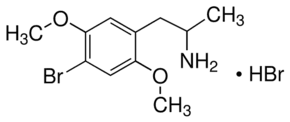
(±)-2,5-Dimethoxy-4-bromoamphetamine hydrobromide
Biochemicals & Reagents
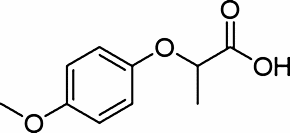
(±)-2-(p-Methoxyphenoxy)propionic acid
C10H12O4
Biochemicals & Reagents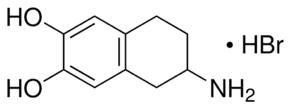
(±)-2-Amino-6,7-dihydroxy-1,2,3,4-tetrahydronaphthalene hydrobromide
C10H13NO2·HBr
Biochemicals & Reagents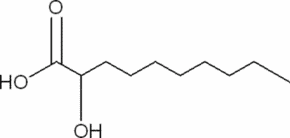
(±)-2-Hydroxydecanoic acid
C10H20O3
Biochemicals & Reagents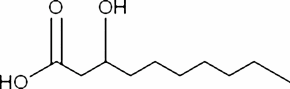
(±)-3-Hydroxydecanoic acid
C10H20O3
Biochemicals & Reagents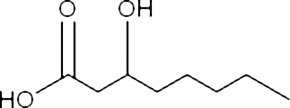
(±)-3-Hydroxyoctanoic acid
C8H16O3
Biochemicals & Reagents▶ Explore more

Bis(cyclopentadienyl)cobalt(III) hexafluorophosphate
C10H10CoF6P
Catalysis & Inorganic
1-(4-Chlorophenyl)biguanide hydrochloride
ClC6H4NHC(NH)NHC(NH)NH2 · HCl
Chemical Synthesis
Bis(cyclopentadienyl)dimethylzirconium(IV)
Catalysis & Inorganic

1-(4-Chlorophenyl)ethanol
ClC6H4CH(CH3)OH
Chemical Synthesis