
CHAPS
CHAPS (CAS: 75621-03-3; C32H58N2O7S; MW: 614.88) is a zwitterionic detergent crucial in membrane biochemistry. Its non-denaturing properties make it ideal for solubilising membrane proteins and disrupting protein-protein interactions. CHAPS finds extensive use in protein purification and is particularly valuable for isoelectric focusing (IEF) and two-dimensional electrophoresis, offering excellent resolution for various biological preparations.
- IUPAC
- 3-[(3-Cholamidopropyl)dimethylammonio]-1-propanesulfonate

Membrane Protein Solubilisation
CHAPS is employed to effectively solubilise integral and peripheral membrane proteins. Its zwitterionic nature allows for the maintenance of protein structure and activity during extraction from lipid bilayers.
Protein-Protein Interaction Studies
This detergent can disrupt non-covalent protein-protein interactions, aiding in the identification and characterisation of protein complexes within cellular membranes.
Isoelectric Focusing (IEF)
CHAPS is widely used in IEF and two-dimensional electrophoresis protocols for its ability to solubilise proteins without denaturation, leading to high-resolution separation based on isoelectric point.
Electrophoresis Applications
It is suitable for both non-denaturing IEF and as an additive in gel formulations for electrophoresis, enhancing protein recovery and resolution.
| Molecular weight | 614.88 |
|---|---|
| Empirical formula | C32H58N2O7S |
| Assay | ≥97.0% |
| Density | 1.01 g/mL at 20 °C |
| Concentration | 100 mM in H2O |
| Storage temperature | 2-8°C |
| Application | CHAPS is a nondenaturing zwitterionic detergent for membrane biochemistry.Useful for solubilizing membrane proteins and breaking protein-protein interactions. CHAPS’ small micellar molecular weight (6,150) and high critical micelle concentration (6-10 mM) allow it to be removed from samples by dialysis. It is also suitable for protein solubilization for isoelectric focusing and two-dimensional electrophoresis. CHAPS is commonly used for non-denaturing (without urea) IEF and has been shown to give excellent resolution of some subcellular preparations and plant proteins. Concentrations between 2-4% (w/v) are typically used in an IEF gel. |

Hazard statements
- H315Causes skin irritation
- H319Causes serious eye irritation
- H335May cause respiratory irritation
Precautionary statements
- P261Avoid breathing dust, fume, gas or vapours
- P305IF IN EYES
| Water hazard class (WGK, DE) | 3 |
|---|---|
| Hazard codes (EU) | Xi |
| Risk statements (R) | 36/37/38 |
| Safety statements (S) | 26 |
Hazard information is provided for guidance. Always consult the product Safety Data Sheet (SDS), available on request, before handling.
| Mol Wt | micellar avg mol wt 6150 |
|---|---|
| Availability | available only in Japan |
| Transition Temp | cloud point >100 °C |
| Aggregation Number | 10 |
| Cmc | 6 mM(20-25°C) |
Documentation
Every batch ships with a Certificate of Analysis covering assay, identity and purity; the grade is confirmed against your enquiry. Safety Data Sheets and technical data sheets are available on request.
Supply & logistics
Samples for technical evaluation; bulk MOQ by grade and packaging. In-stock material ships in 7–10 working days, worldwide, with full export documentation.
What is CHAPS primarily used for?
+
CHAPS is primarily used as a non-denaturing zwitterionic detergent for membrane biochemistry, particularly for solubilising membrane proteins and in electrophoresis techniques like isoelectric focusing.
What are the CAS number and formula for CHAPS?
+
The CAS number for CHAPS is 75621-03-3 and its empirical formula is C32H58N2O7S.
What grade and purity does Tech Serve Solutions supply?
+
Tech Serve Solutions supplies CHAPS with an assay of ≥97.0%. This product is intended for research purposes and is not represented as USP, BP, EP, or pharmacopoeia grade.
What are the safety precautions for handling CHAPS?
+
CHAPS is a Warning substance that may cause skin irritation (H315), serious eye irritation (H319), and respiratory irritation (H335). Handle with appropriate personal protective equipment, including gloves and eye protection, and ensure adequate ventilation. Avoid breathing dust/fume/gas/mist/vapours/spray. In case of contact with eyes, rinse cautiously with water for several minutes.
Is CHAPS available for export?
+
Yes, Tech Serve Solutions exports CHAPS globally. Please note that this specific product is available only in Japan according to the data.
How can I request a quote or sample for CHAPS?
+
To request a quote or sample, please contact our sales team through the website or by phone, providing the product name and CAS number.
▶ Related products
![(±)-(E)-4-Ethyl-2-[(E)-hydroxyimino]-5-nitro-3-hexenamide (C8H13N3O4) — chemical structure, CAS 138472-01-2; Biochemicals & Reagents, fine chemical supplied by Tech Serve Solutions](/_next/image?url=https%3A%2F%2Fpub-f4d920c906024441a773a96f7098e551.r2.dev%2Fimages%2Fproducts%2F138472-01-2.png&w=3840&q=75)
(±)-(E)-4-Ethyl-2-[(E)-hydroxyimino]-5-nitro-3-hexenamide
C8H13N3O4
Biochemicals & Reagents![(±)-(E)-4-Ethyl-2-[(Z)-hydroxyimino]-5-nitro-3-hexen-1-yl-nicotinamide (C14H18N4O4) — chemical structure, CAS 162626-99-5; Biochemicals & Reagents, fine chemical supplied by Tech Serve Solutions](/_next/image?url=https%3A%2F%2Fpub-f4d920c906024441a773a96f7098e551.r2.dev%2Fimages%2Fproducts%2F162626-99-5.png&w=3840&q=75)
(±)-(E)-4-Ethyl-2-[(Z)-hydroxyimino]-5-nitro-3-hexen-1-yl-nicotinamide
C14H18N4O4
Biochemicals & Reagents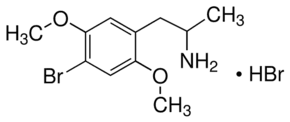
(±)-2,5-Dimethoxy-4-bromoamphetamine hydrobromide
Biochemicals & Reagents
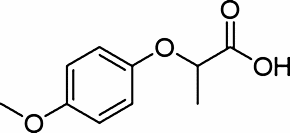
(±)-2-(p-Methoxyphenoxy)propionic acid
C10H12O4
Biochemicals & Reagents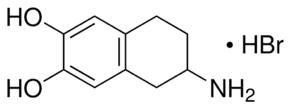
(±)-2-Amino-6,7-dihydroxy-1,2,3,4-tetrahydronaphthalene hydrobromide
C10H13NO2·HBr
Biochemicals & Reagents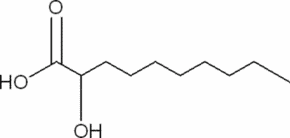
(±)-2-Hydroxydecanoic acid
C10H20O3
Biochemicals & Reagents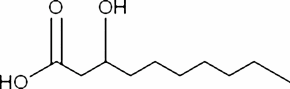
(±)-3-Hydroxydecanoic acid
C10H20O3
Biochemicals & Reagents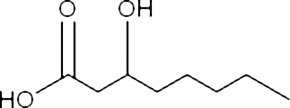
(±)-3-Hydroxyoctanoic acid
C8H16O3
Biochemicals & Reagents▶ Explore more

Bis(cyclopentadienyl)cobalt(III) hexafluorophosphate
C10H10CoF6P
Catalysis & Inorganic
1-(4-Chlorophenyl)biguanide hydrochloride
ClC6H4NHC(NH)NHC(NH)NH2 · HCl
Chemical Synthesis
Bis(cyclopentadienyl)dimethylzirconium(IV)
Catalysis & Inorganic

1-(4-Chlorophenyl)ethanol
ClC6H4CH(CH3)OH
Chemical Synthesis