
Boron trifluoride
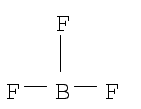
Boron trifluoride (CAS 7637-07-2), a colourless gas with formula BF3 and a molar mass of 67.81 g/mol, is a potent Lewis acid. It is extensively employed as a catalyst in organic synthesis, particularly in Friedel-Crafts reactions, polymerisation processes, and isomerisation. Its ability to form strong complexes makes it invaluable in various industrial chemical applications. TSS supplies high-purity Boron trifluoride for demanding research and industrial uses.
Catalysis in Organic Synthesis
Boron trifluoride serves as a powerful Lewis acid catalyst for a wide range of organic transformations. It is critical in promoting Friedel-Crafts alkylation and acylation reactions, facilitating isomerisation of hydrocarbons, and catalysing the polymerisation of olefins and other unsaturated compounds.
Polymerisation Initiator
As an initiator for cationic and ionic polymerisation, BF3 plays a key role in the synthesis of various polymers and resins. It is particularly effective in the polymerisation of isobutylene to produce butyl rubber and other polyisobutylene derivatives.
Chemical Synthesis Reagent
Beyond catalysis, Boron trifluoride is used as a reagent in numerous synthetic pathways. It is a source of the BF3 moiety for introducing boron into organic molecules and is used in the preparation of organoboron compounds.
Specialty Gas Applications
Boron trifluoride is supplied as a specialty gas for specific industrial processes. Its reactive nature and unique chemical properties make it suitable for niche applications in materials science and chemical manufacturing.
| Molecular weight | 67.81 |
|---|---|
| Empirical formula | BF3 |
| Assay | ≥99.5% |
| Form | gas |
| Boiling point | −100 °C(lit.) |
| Vapour density | 2.38 (21 °C, vs air) |
| Impurities tested | ≤0.1% SiF4≤0.5% SO2≤1.0% inert gases |
| Melting point | −127 °C(lit.) |


Hazard statements
- H280Contains gas under pressure; may explode if heated
- H314Causes severe skin burns and eye damage
- H330Fatal if inhaled
Precautionary statements
- P260Do not breathe dust, fume, gas, mist, vapours or spray
- P280Wear protective gloves, clothing and eye/face protection
- P284Wear respiratory protection
- P305IF IN EYES
- P310Immediately call a POISON CENTER or doctor
- P410Protect from sunlight
| Protective equipment | Faceshields, Gloves, Goggles, half-mask respirator (EU), half-mask respirator (US), multi-purpose combination respirator cartridge (US) |
|---|---|
| Transport (UN / ADR) | UN 1008 8(2.3) |
| Water hazard class (WGK, DE) | 1 |
| Hazard codes (EU) | T+,C |
| Risk statements (R) | 14-26-35 |
| Safety statements (S) | 9-26-28-36/37/39-45 |
| Supplemental hazards | Reacts violently with water. |
Hazard information is provided for guidance. Always consult the product Safety Data Sheet (SDS), available on request, before handling.
| Transition Temp | critical temperature −12.3 °C |
|---|
Documentation
Every batch ships with a Certificate of Analysis covering assay, identity and purity; the grade is confirmed against your enquiry. Safety Data Sheets and technical data sheets are available on request.
Supply & logistics
Samples for technical evaluation; bulk MOQ by grade and packaging. In-stock material ships in 7–10 working days, worldwide, with full export documentation.
What is Boron trifluoride (CAS 7637-07-2) primarily used for?
+
Boron trifluoride (CAS 7637-07-2) is primarily used as a catalyst in organic synthesis, a polymerisation initiator, and a reagent in chemical synthesis. It is also employed in specialty gas applications.
What are the CAS number and formula for Boron trifluoride?
+
The CAS number for Boron trifluoride is 7637-07-2, and its formula is BF3.
What grade and purity does Tech Serve Solutions supply for Boron trifluoride?
+
Tech Serve Solutions supplies Boron trifluoride with an assay of ≥99.5%. We do not represent this product as meeting any pharmacopoeia standards such as USP, BP, or EP unless explicitly stated in the product documentation.
How is Boron trifluoride (BF3) safely handled?
+
Boron trifluoride (BF3) is a toxic and corrosive gas that reacts violently with water. It requires specialised handling procedures. Users must wear appropriate personal protective equipment, including a faceshield, gloves, goggles, and a suitable respirator. Work should be conducted in well-ventilated areas or fume hoods. Refer to the Safety Data Sheet for comprehensive handling information.
How is Boron trifluoride packaged and shipped?
+
Boron trifluoride is supplied as a gas and is packaged in specialised cylinders designed for compressed gases. TSS ensures compliance with all relevant regulations for its export and shipment.
How can I request a quote or sample for Boron trifluoride?
+
To request a quote or sample for Boron trifluoride, please contact our sales team through the website or by phone. Provide your specific requirements, and we will assist you promptly.
▶ Related products

5-Sulfosalicylic acid dihydrate
HO3SC6H3-2-(OH)CO2H 2H2O
Acids & Bases
Calcium hydroxide
Ca(OH)2
Acids & Bases
Acetic acid-12C2
12CH312CO2H
Acids & Bases
Acetic acid-13C2
13CH313CO2H
Acids & Bases
Acetic acid-13C2,d4
Acids & Bases

Acetic acid-17O2
CH3C17O2H
Acids & Bases
Acetic acid-18O2
CH3C18O2H
Acids & Bases
Acetic acid-2,2,2-d3
2-d3
Acids & Bases▶ Explore more

Bis(cyclopentadienyl)cobalt(III) hexafluorophosphate
C10H10CoF6P
Catalysis & Inorganic
1-(4-Chlorophenyl)biguanide hydrochloride
ClC6H4NHC(NH)NHC(NH)NH2 · HCl
Chemical Synthesis
Bis(cyclopentadienyl)dimethylzirconium(IV)
Catalysis & Inorganic

1-(4-Chlorophenyl)ethanol
ClC6H4CH(CH3)OH
Chemical Synthesis