ARC 239 dihydrochloride hydrate
ARC 239 dihydrochloride hydrate (CAS: 67339-62-2) is a potent alpha-adrenoceptor antagonist with the empirical formula C24H29N3O3·2HCl · xH2O and a molecular weight of 480.43 g/mol (anhydrous basis). This white to off-white powder competitively inhibits pressor responses to adrenaline and noradrenaline. ARC 239 is primarily utilised in biochemical research, cell biology studies, and neuroscience to investigate adrenoceptor function and neurotransmission pathways.
- IUPAC
- (2-[2-[4-(o-Methoxyphenyl)piperazin-1-yl]ethyl]-4,4-dimethyl-1,3-(2H,4H)-isoquinolinedione dihydrochloride hydrate
.png&w=3840&q=75)
Adrenoceptor Research
ARC 239 acts as a potent competitive antagonist at alpha-adrenoceptors. It is valuable for in vitro and in vivo studies investigating the roles of alpha-adrenergic signalling in physiological processes.
Neuroscience Investigations
Utilised in neuroscience research, ARC 239 aids in studying neurotransmission, particularly the effects of adrenergic antagonists on neuronal signalling and responses.
Pharmacological Tool
As a selective antagonist, ARC 239 serves as a key pharmacological tool for researchers characterising adrenoceptor subtypes and their associated downstream effects.
GPCR Pathway Studies
This compound is relevant for research involving G-protein coupled receptors (GPCRs), specifically those in the adrenergic system, to understand modulatory effects.
| Molecular weight | 480.43 (anhydrous basis) |
|---|---|
| Empirical formula | C24H29N3O3·2HCl · xH2O |
| Assay | ≥98% (HPLC) |
| Form | powder |
| Colour | white to off-white |
| Solubility | H2O: >5 mg/mL |
| Storage temperature | 2-8°C |
| Application | ARC 239 is a potent α-adrenoceptor blocking drug, competitively antagonizing pressor responses to adrenaline and inhibiting pressor responses to noradrenaline, phenylephrine, tyramine, and dimethylphenylpiperazinium. |


Hazard statements
- H302Harmful if swallowed
- H400Very toxic to aquatic life
Precautionary statements
- P273Avoid release to the environment
| Transport (UN / ADR) | UN 3077 9 / PGIII |
|---|---|
| Water hazard class (WGK, DE) | 3 |
| Hazard codes (EU) | Xn,N |
| Risk statements (R) | 22-50/53 |
| Safety statements (S) | 60-61 |
Hazard information is provided for guidance. Always consult the product Safety Data Sheet (SDS), available on request, before handling.
Documentation
Every batch ships with a Certificate of Analysis covering assay, identity and purity; the grade is confirmed against your enquiry. Safety Data Sheets and technical data sheets are available on request.
Supply & logistics
Samples for technical evaluation; bulk MOQ by grade and packaging. In-stock material ships in 7–10 working days, worldwide, with full export documentation.
What is ARC 239 dihydrochloride hydrate used for?
+
ARC 239 dihydrochloride hydrate is used as a potent alpha-adrenoceptor antagonist in research settings, particularly in neuroscience and cell biology, to study adrenergic signalling and neurotransmission.
What are the CAS number and formula for ARC 239 dihydrochloride hydrate?
+
The CAS number for the free base is 67339-62-2. The empirical formula is C24H29N3O3·2HCl · xH2O.
What grade and purity does Tech Serve Solutions supply?
+
Tech Serve Solutions supplies ARC 239 dihydrochloride hydrate with an assay of ≥98% (HPLC). We do not represent this product as USP, BP, EP, or other pharmacopoeia grades.
How should ARC 239 dihydrochloride hydrate be handled and stored?
+
ARC 239 dihydrochloride hydrate is classified as harmful if swallowed (H302) and very toxic to aquatic life (H400). Handle with appropriate personal protective equipment and avoid release into the environment. Store at 2-8°C.
How is ARC 239 dihydrochloride hydrate shipped?
+
ARC 239 dihydrochloride hydrate is shipped as a UN 3077, Class 9, Packing Group III substance due to its environmental hazards. We export globally following all relevant regulations.
How can I request a sample or quote for ARC 239 dihydrochloride hydrate?
+
To request a sample or quote, please contact our sales team via the website or by phone, providing the product name and your contact details.
▶ Related products
![(±)-(E)-4-Ethyl-2-[(E)-hydroxyimino]-5-nitro-3-hexenamide (C8H13N3O4) — chemical structure, CAS 138472-01-2; Biochemicals & Reagents, fine chemical supplied by Tech Serve Solutions](/_next/image?url=https%3A%2F%2Fpub-f4d920c906024441a773a96f7098e551.r2.dev%2Fimages%2Fproducts%2F138472-01-2.png&w=3840&q=75)
(±)-(E)-4-Ethyl-2-[(E)-hydroxyimino]-5-nitro-3-hexenamide
C8H13N3O4
Biochemicals & Reagents![(±)-(E)-4-Ethyl-2-[(Z)-hydroxyimino]-5-nitro-3-hexen-1-yl-nicotinamide (C14H18N4O4) — chemical structure, CAS 162626-99-5; Biochemicals & Reagents, fine chemical supplied by Tech Serve Solutions](/_next/image?url=https%3A%2F%2Fpub-f4d920c906024441a773a96f7098e551.r2.dev%2Fimages%2Fproducts%2F162626-99-5.png&w=3840&q=75)
(±)-(E)-4-Ethyl-2-[(Z)-hydroxyimino]-5-nitro-3-hexen-1-yl-nicotinamide
C14H18N4O4
Biochemicals & Reagents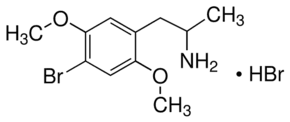
(±)-2,5-Dimethoxy-4-bromoamphetamine hydrobromide
Biochemicals & Reagents
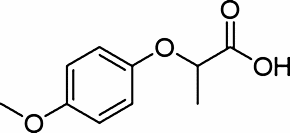
(±)-2-(p-Methoxyphenoxy)propionic acid
C10H12O4
Biochemicals & Reagents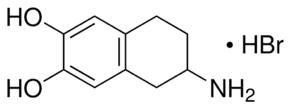
(±)-2-Amino-6,7-dihydroxy-1,2,3,4-tetrahydronaphthalene hydrobromide
C10H13NO2·HBr
Biochemicals & Reagents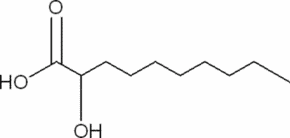
(±)-2-Hydroxydecanoic acid
C10H20O3
Biochemicals & Reagents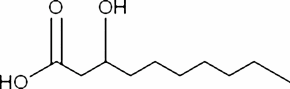
(±)-3-Hydroxydecanoic acid
C10H20O3
Biochemicals & Reagents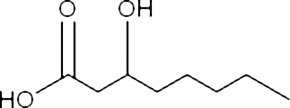
(±)-3-Hydroxyoctanoic acid
C8H16O3
Biochemicals & Reagents