
Adenosine 2′:3′-cyclic monophosphate sodium salt
Adenosine 2′:3′-cyclic monophosphate sodium salt (CAS 37063-35-7, C₁₀H₁1N₅O₆PNa) is a valuable biochemical reagent. This compound is recognised for its role as an extracellular source of adenosine, often released in response to cellular injury. It is utilised in scientific research to investigate the distribution and specificity of degrading enzymes, study apoptosis mechanisms, and explore its inhibitory effects on vascular smooth muscle and glomerular mesangial cells via A2B receptors.
- IUPAC
- 2′,3′-cAMP sodium salt
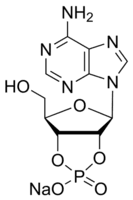
Extracellular Adenosine Source
Adenosine 2′:3′-cyclic monophosphate sodium salt serves as an extracellular source of adenosine, typically released following cellular injury. This makes it a key molecule for studying adenosine signalling pathways.
Enzyme Activity Studies
The compound can be employed to investigate the distribution and specificity of enzymes that degrade cyclic nucleotides, offering insights into cellular enzymatic processes.
Apoptosis Research
Adenosine 2′:3′-cyclic monophosphate sodium salt aids in the study of apoptosis, particularly mechanisms involving mitochondrial permeability transition pores.
Cell Proliferation Inhibition
It is converted into 2′-AMP and 3′-AMP, which have been shown to inhibit the proliferation of vascular smooth muscle and glomerular mesangial cells through A2B receptor interactions.
| Molecular weight | 351.19 |
|---|---|
| Linear formula | C10H11N5O6PNa |
| Assay | ≥97% |
| Storage temperature | −20°C |
| Application | Adenosine 2′,3′-cyclic monophosphate (2′,3′-cAMP) is believed to serve as an extracellular source of adenosine. The release of extracellular 2′,3′-cAMP occurs in response to injury. 2′,3′-cAMP may be used to study the distribution and specificity of its degrading enzymes in the context of unique biological activities. 2′,3′-cAMP may also be used to study apoptosis induced at the level of mitochondrial permeability transition pores. 2′,3′-cAMP is converted into 2′-AMP and 3′-AMP which inhibit proliferation of preglomerular vascular smooth muscle cells and glomerular mesangial cells via A2B receptors. |
Documentation
Every batch ships with a Certificate of Analysis covering assay, identity and purity; the grade is confirmed against your enquiry. Safety Data Sheets and technical data sheets are available on request.
Supply & logistics
Samples for technical evaluation; bulk MOQ by grade and packaging. In-stock material ships in 7–10 working days, worldwide, with full export documentation.
What is Adenosine 2′:3′-cyclic monophosphate sodium salt used for?
+
Adenosine 2′:3′-cyclic monophosphate sodium salt is used in biochemical research as an extracellular source of adenosine, to study enzyme activity, investigate apoptosis, and examine its effects on cell proliferation.
What is the CAS number and formula for Adenosine 2′:3′-cyclic monophosphate sodium salt?
+
The CAS number is 37063-35-7 and the linear formula is C₁₀H₁₁N₅O₆PNa.
What grade and purity does Tech Serve Solutions supply?
+
Tech Serve Solutions supplies Adenosine 2′:3′-cyclic monophosphate sodium salt with an assay of ≥97%. We do not represent this product as meeting pharmacopoeia standards such as USP, BP, or EP.
How should Adenosine 2′:3′-cyclic monophosphate sodium salt be handled and stored?
+
This compound has a WGK Germany rating of 3, indicating it is hazardous for the environment. It should be stored at -20°C. Always consult the Safety Data Sheet (SDS) for comprehensive handling guidelines.
Is Adenosine 2′:3′-cyclic monophosphate sodium salt available for export?
+
Yes, Tech Serve Solutions is a global supplier and exporter of fine chemicals, including Adenosine 2′:3′-cyclic monophosphate sodium salt.
How can I request a sample or quote for Adenosine 2′:3′-cyclic monophosphate sodium salt?
+
Please contact our sales team via the website or directly to request a sample or a formal quotation for Adenosine 2′:3′-cyclic monophosphate sodium salt.
▶ Related products
![(±)-(E)-4-Ethyl-2-[(E)-hydroxyimino]-5-nitro-3-hexenamide (C8H13N3O4) — chemical structure, CAS 138472-01-2; Biochemicals & Reagents, fine chemical supplied by Tech Serve Solutions](/_next/image?url=https%3A%2F%2Fpub-f4d920c906024441a773a96f7098e551.r2.dev%2Fimages%2Fproducts%2F138472-01-2.png&w=3840&q=75)
(±)-(E)-4-Ethyl-2-[(E)-hydroxyimino]-5-nitro-3-hexenamide
C8H13N3O4
Biochemicals & Reagents![(±)-(E)-4-Ethyl-2-[(Z)-hydroxyimino]-5-nitro-3-hexen-1-yl-nicotinamide (C14H18N4O4) — chemical structure, CAS 162626-99-5; Biochemicals & Reagents, fine chemical supplied by Tech Serve Solutions](/_next/image?url=https%3A%2F%2Fpub-f4d920c906024441a773a96f7098e551.r2.dev%2Fimages%2Fproducts%2F162626-99-5.png&w=3840&q=75)
(±)-(E)-4-Ethyl-2-[(Z)-hydroxyimino]-5-nitro-3-hexen-1-yl-nicotinamide
C14H18N4O4
Biochemicals & Reagents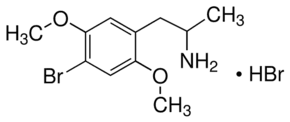
(±)-2,5-Dimethoxy-4-bromoamphetamine hydrobromide
Biochemicals & Reagents
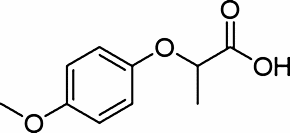
(±)-2-(p-Methoxyphenoxy)propionic acid
C10H12O4
Biochemicals & Reagents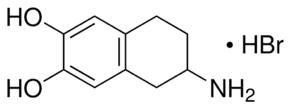
(±)-2-Amino-6,7-dihydroxy-1,2,3,4-tetrahydronaphthalene hydrobromide
C10H13NO2·HBr
Biochemicals & Reagents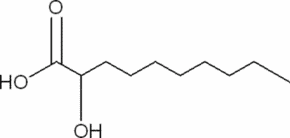
(±)-2-Hydroxydecanoic acid
C10H20O3
Biochemicals & Reagents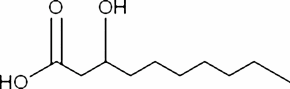
(±)-3-Hydroxydecanoic acid
C10H20O3
Biochemicals & Reagents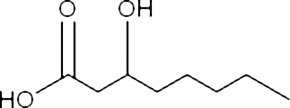
(±)-3-Hydroxyoctanoic acid
C8H16O3
Biochemicals & Reagents▶ Explore more

Bis(cyclopentadienyl)cobalt(III) hexafluorophosphate
C10H10CoF6P
Catalysis & Inorganic
1-(4-Chlorophenyl)biguanide hydrochloride
ClC6H4NHC(NH)NHC(NH)NH2 · HCl
Chemical Synthesis
Bis(cyclopentadienyl)dimethylzirconium(IV)
Catalysis & Inorganic

1-(4-Chlorophenyl)ethanol
ClC6H4CH(CH3)OH
Chemical Synthesis