
Acridine Orange hydrochloride hydrate
Acridine Orange hydrochloride hydrate (CAS: 65-61-2), with the formula C17H19N3 · HCl · xH2O and an anhydrous molar mass of 301.81 g/mol, is a vital fluorescent stain. It is primarily used for the detection of nucleic acids within gel electrophoresis and as a probe in the study of cellular processes such as apoptosis. Its specific spectral properties enable sensitive visualisation in biological research.
- IUPAC
- 3,6-Bis(dimethylamino)acridine hydrochloride
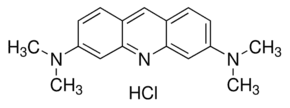
Nucleic Acid Staining in Gel Electrophoresis
Acridine Orange hydrochloride hydrate serves as a sensitive fluorescent stain for visualizing nucleic acids, DNA and RNA, in both agarose and polyacrylamide gels. Its ability to intercalate into nucleic acid structures allows for clear detection after electrophoresis.
Apoptosis Research
This compound has been utilised as a probe to study apoptosis, a critical process in cell biology. Its fluorescent properties facilitate the assessment of cellular changes associated with programmed cell death in various biological models.
Cell Biology Research
As a versatile fluorescent dye, Acridine Orange hydrochloride hydrate finds application in diverse cell biology studies. It aids in understanding cellular mechanisms and can be used to investigate cell cycle progression and other vital cellular functions.
| Molecular weight | 301.81 (anhydrous basis) |
|---|---|
| Empirical formula | C17H19N3 · HCl · xH2O |
| Assay | 99% (HPLC) |
| Concentration | 10 mg/mL in H2O |
| Application | Fluorescent stain for nucleic acids in agarose and polyacrylamide gels. Has been used to study apoptosis in various cell culture and tissue models. |
| Melting point | 284-287 °C(lit.) |
| Protective equipment | Eyeshields, Gloves, type N95 (US), type P1 (EN143) respirator filter |
|---|---|
| Water hazard class (WGK, DE) | 3 |
Hazard information is provided for guidance. Always consult the product Safety Data Sheet (SDS), available on request, before handling.
| Colour Index Number | 46005 |
|---|---|
| Absorption | λmax 492 nm |
Documentation
Every batch ships with a Certificate of Analysis covering assay, identity and purity; the grade is confirmed against your enquiry. Safety Data Sheets and technical data sheets are available on request.
Supply & logistics
Samples for technical evaluation; bulk MOQ by grade and packaging. In-stock material ships in 7–10 working days, worldwide, with full export documentation.
What is Acridine Orange hydrochloride hydrate used for?
+
Acridine Orange hydrochloride hydrate is primarily used as a fluorescent stain for nucleic acids in gel electrophoresis and as a probe in apoptosis research and other cell biology studies.
What are the CAS number and formula for Acridine Orange hydrochloride hydrate?
+
The CAS number is 65-61-2, and the formula is C17H19N3 · HCl · xH2O.
What grade and purity does Tech Serve Solutions supply?
+
Tech Serve Solutions supplies Acridine Orange hydrochloride hydrate with an assay of 99% (HPLC). We do not represent this product as USP, BP, or EP grade.
How should Acridine Orange hydrochloride hydrate be handled safely?
+
Safe handling requires appropriate personal protective equipment, including eyeshields and gloves. A type N95 (US) or type P1 (EN143) respirator filter is recommended. Observe WGK Germany classification of 3 for environmental precautions.
How is Acridine Orange hydrochloride hydrate packed and exported?
+
Acridine Orange hydrochloride hydrate is carefully packed for stable transport and available for global export by Tech Serve Solutions.
How can I request a quote or sample?
+
To request a quote or a sample of Acridine Orange hydrochloride hydrate, please contact our sales team through our website or by phone.
▶ Related products
![(±)-(E)-4-Ethyl-2-[(E)-hydroxyimino]-5-nitro-3-hexenamide (C8H13N3O4) — chemical structure, CAS 138472-01-2; Biochemicals & Reagents, fine chemical supplied by Tech Serve Solutions](/_next/image?url=https%3A%2F%2Fpub-f4d920c906024441a773a96f7098e551.r2.dev%2Fimages%2Fproducts%2F138472-01-2.png&w=3840&q=75)
(±)-(E)-4-Ethyl-2-[(E)-hydroxyimino]-5-nitro-3-hexenamide
C8H13N3O4
Biochemicals & Reagents![(±)-(E)-4-Ethyl-2-[(Z)-hydroxyimino]-5-nitro-3-hexen-1-yl-nicotinamide (C14H18N4O4) — chemical structure, CAS 162626-99-5; Biochemicals & Reagents, fine chemical supplied by Tech Serve Solutions](/_next/image?url=https%3A%2F%2Fpub-f4d920c906024441a773a96f7098e551.r2.dev%2Fimages%2Fproducts%2F162626-99-5.png&w=3840&q=75)
(±)-(E)-4-Ethyl-2-[(Z)-hydroxyimino]-5-nitro-3-hexen-1-yl-nicotinamide
C14H18N4O4
Biochemicals & Reagents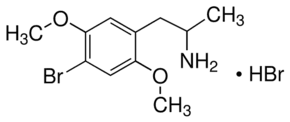
(±)-2,5-Dimethoxy-4-bromoamphetamine hydrobromide
Biochemicals & Reagents
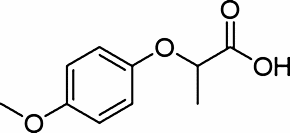
(±)-2-(p-Methoxyphenoxy)propionic acid
C10H12O4
Biochemicals & Reagents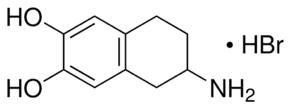
(±)-2-Amino-6,7-dihydroxy-1,2,3,4-tetrahydronaphthalene hydrobromide
C10H13NO2·HBr
Biochemicals & Reagents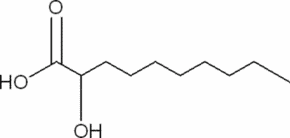
(±)-2-Hydroxydecanoic acid
C10H20O3
Biochemicals & Reagents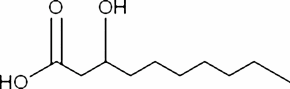
(±)-3-Hydroxydecanoic acid
C10H20O3
Biochemicals & Reagents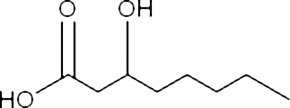
(±)-3-Hydroxyoctanoic acid
C8H16O3
Biochemicals & Reagents▶ Explore more

Bis(cyclopentadienyl)cobalt(III) hexafluorophosphate
C10H10CoF6P
Catalysis & Inorganic
1-(4-Chlorophenyl)biguanide hydrochloride
ClC6H4NHC(NH)NHC(NH)NH2 · HCl
Chemical Synthesis
Bis(cyclopentadienyl)dimethylzirconium(IV)
Catalysis & Inorganic

1-(4-Chlorophenyl)ethanol
ClC6H4CH(CH3)OH
Chemical Synthesis