
Acetylcholine bromide
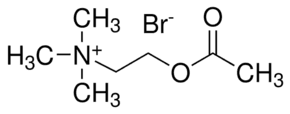
Acetylcholine bromide (CAS 66-23-9) is a vital neurotransmitter with the linear formula (CH₃)₃N(Br)CH₂CH₂OCOCH₃ and a molecular weight of 226.11 g/mol. It functions as an acetylcholine receptor agonist, crucial for inducing muscle contractions by amplifying sarcolemma action potentials. This compound is also utilised as an inhibitor in the identification and characterisation of natural and mutated butyrylcholinesterases, playing a key role in neuroscience research and diagnostics.
- IUPAC
- ACh
Acetylcholine Receptor Studies
Acts as an acetylcholine receptor agonist for identifying, characterising, and differentiating various types of cholinergic receptors. Essential for understanding neurotransmission and receptor pharmacology.
Enzyme Characterisation
Utilised as an inhibitor to identify and characterise both natural and mutated forms of butyrylcholinesterase. Aids in the study of enzyme kinetics and inhibition mechanisms.
Neuroscience Research
Serves as a key biochemical reagent in neuroscience, particularly for investigating cholinergic pathways and neurotransmitter functions. Supports research in cell signaling and neurodegenerative diseases.
| Molecular weight | 226.11 |
|---|---|
| Linear formula | (CH3)3N(Br)CH2CH2OCOCH3 |
| Assay | ≥99% |
| Storage temperature | −20°C |
| Application | Acetylcholine is an endogenous neurotransmitter at cholinergic synapses that amplifies action potential of the sarcolemma thereby inducing muscle contractions. Acetylcholine bromide is used as an acetylcholine receptor agonist to identify, characterize and differentiate among types of cholinergic receptors. Acetylcholine bromide is used as an inhibitor to identify and characterize natural and mutated butyrylcholinesterase(s). |
| Melting point | 140-143 °C(lit.) |

Hazard statements
- H315Causes skin irritation
- H319Causes serious eye irritation
- H335May cause respiratory irritation
Precautionary statements
- P261Avoid breathing dust, fume, gas or vapours
- P305IF IN EYES
| Protective equipment | dust mask type N95 (US), Eyeshields, Gloves |
|---|---|
| Water hazard class (WGK, DE) | 3 |
| Hazard codes (EU) | Xi |
| Risk statements (R) | 36/37/38 |
| Safety statements (S) | 26-36 |
Hazard information is provided for guidance. Always consult the product Safety Data Sheet (SDS), available on request, before handling.
Documentation
Every batch ships with a Certificate of Analysis covering assay, identity and purity; the grade is confirmed against your enquiry. Safety Data Sheets and technical data sheets are available on request.
Supply & logistics
Samples for technical evaluation; bulk MOQ by grade and packaging. In-stock material ships in 7–10 working days, worldwide, with full export documentation.
What is Acetylcholine bromide used for?
+
Acetylcholine bromide is used as an acetylcholine receptor agonist for identifying and characterising cholinergic receptors and as an inhibitor for identifying and characterising butyrylcholinesterase variants.
What is the CAS number and formula for Acetylcholine bromide?
+
The CAS number for Acetylcholine bromide is 66-23-9 and its linear formula is (CH₃)₃N(Br)CH₂CH₂OCOCH₃.
What grade and purity does Tech Serve Solutions supply?
+
Tech Serve Solutions supplies Acetylcholine bromide with a minimum assay of 99%. This product is intended for research and technical use and is not represented as USP, BP, EP, or pharmacopoeia grade.
How should Acetylcholine bromide be handled safely?
+
Handle Acetylcholine bromide with appropriate personal protective equipment, including a dust mask (N95 type), eyeshields, and gloves. It is a Warning substance that causes skin irritation, serious eye irritation, and may cause respiratory irritation (H315-H319-H335).
Is Acetylcholine bromide a controlled substance?
+
The provided data does not indicate that Acetylcholine bromide is a controlled substance.
How is Acetylcholine bromide supplied and exported?
+
Acetylcholine bromide is supplied by Tech Serve Solutions, a global supplier and exporter of fine chemicals, pharmaceutical intermediates, and laboratory reagents.
How can I request a quote or sample for Acetylcholine bromide?
+
To request a quote or sample for Acetylcholine bromide, please contact Tech Serve Solutions directly through our website or sales representatives.
▶ Related products
![(±)-(E)-4-Ethyl-2-[(E)-hydroxyimino]-5-nitro-3-hexenamide (C8H13N3O4) — chemical structure, CAS 138472-01-2; Biochemicals & Reagents, fine chemical supplied by Tech Serve Solutions](/_next/image?url=https%3A%2F%2Fpub-f4d920c906024441a773a96f7098e551.r2.dev%2Fimages%2Fproducts%2F138472-01-2.png&w=3840&q=75)
(±)-(E)-4-Ethyl-2-[(E)-hydroxyimino]-5-nitro-3-hexenamide
C8H13N3O4
Biochemicals & Reagents![(±)-(E)-4-Ethyl-2-[(Z)-hydroxyimino]-5-nitro-3-hexen-1-yl-nicotinamide (C14H18N4O4) — chemical structure, CAS 162626-99-5; Biochemicals & Reagents, fine chemical supplied by Tech Serve Solutions](/_next/image?url=https%3A%2F%2Fpub-f4d920c906024441a773a96f7098e551.r2.dev%2Fimages%2Fproducts%2F162626-99-5.png&w=3840&q=75)
(±)-(E)-4-Ethyl-2-[(Z)-hydroxyimino]-5-nitro-3-hexen-1-yl-nicotinamide
C14H18N4O4
Biochemicals & Reagents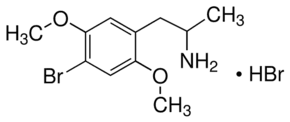
(±)-2,5-Dimethoxy-4-bromoamphetamine hydrobromide
Biochemicals & Reagents
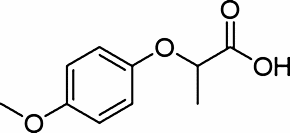
(±)-2-(p-Methoxyphenoxy)propionic acid
C10H12O4
Biochemicals & Reagents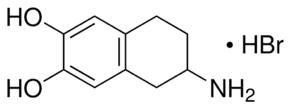
(±)-2-Amino-6,7-dihydroxy-1,2,3,4-tetrahydronaphthalene hydrobromide
C10H13NO2·HBr
Biochemicals & Reagents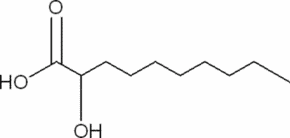
(±)-2-Hydroxydecanoic acid
C10H20O3
Biochemicals & Reagents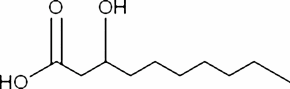
(±)-3-Hydroxydecanoic acid
C10H20O3
Biochemicals & Reagents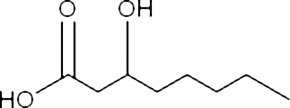
(±)-3-Hydroxyoctanoic acid
C8H16O3
Biochemicals & Reagents▶ Explore more

Bis(cyclopentadienyl)cobalt(III) hexafluorophosphate
C10H10CoF6P
Catalysis & Inorganic
1-(4-Chlorophenyl)biguanide hydrochloride
ClC6H4NHC(NH)NHC(NH)NH2 · HCl
Chemical Synthesis
Bis(cyclopentadienyl)dimethylzirconium(IV)
Catalysis & Inorganic

1-(4-Chlorophenyl)ethanol
ClC6H4CH(CH3)OH
Chemical Synthesis