
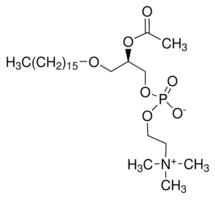
β-Acetyl-γ-O-alkyl-L-α-phosphatidylcholine from bovine heart lecithin
β-Acetyl-γ-O-alkyl-L-α-phosphatidylcholine (CAS 65154-06-5) is a complex lipid derived from bovine heart lecithin. As a glycerophospholipid, it plays roles in cell biology and signaling pathways. This compound is typically supplied as a solution in chloroform, with an assay of approximately 99%. Its primary applications lie in biochemical research, particularly in studies related to cell membranes, ether lipid metabolism, and neuroscience.
- IUPAC
- 1-O-Alkyl-2-acetyl-sn-glycero-3-phosphocholine,2-Acetyl-1-alkyl-sn-glycero-3-phosphocholine,AcGEPC,PAF,Platelet activating factor
- Synonyms
- 1-O-Alkyl-2-acetyl-sn-glycero-3-phosphocholine, 2-Acetyl-1-alkyl-sn-glycero-3-phosphocholine, AcGEPC, PAF, Platelet activating factor
Biochemical Research
Utilised in laboratory settings for investigating cellular processes, membrane structure, and function. Its complex lipid nature makes it valuable for understanding lipid-protein interactions.
Cell Signaling Studies
Serves as a tool in researching cell communication pathways. It is particularly relevant for studies involving lipid mediators and their role in signal transduction.
Ether Lipid Metabolism
A key compound for understanding the metabolic pathways involving ether lipids, contributing to research in cellular energy production and membrane biogenesis.
Neuroscience Research
Applied in the study of the nervous system, where lipids play crucial roles in neuronal function, membrane integrity, and signaling processes.
| Assay | ~99% |
|---|---|
| Concentration | 2 mg/mL in chloroform |
| Storage temperature | −20°C |


Hazard statements
- H302Harmful if swallowed
- H315Causes skin irritation
- H319Causes serious eye irritation
- H336May cause drowsiness or dizziness
- H351Suspected of causing cancer
- H361D
- H373May cause damage to organs through prolonged exposure
Precautionary statements
- P261Avoid breathing dust, fume, gas or vapours
- P281Use personal protective equipment as required
- P305IF IN EYES
| Protective equipment | Eyeshields, Faceshields, full-face respirator (US), Gloves, multi-purpose combination respirator cartridge (US), type ABEK (EN14387) respirator filter |
|---|---|
| Transport (UN / ADR) | UN 1888 6.1 / PGIII |
| Water hazard class (WGK, DE) | 3 |
| Hazard codes (EU) | Xn |
| Risk statements (R) | 22-38-40-48/20/22 |
| Safety statements (S) | 36/37 |
Hazard information is provided for guidance. Always consult the product Safety Data Sheet (SDS), available on request, before handling.
Documentation
Every batch ships with a Certificate of Analysis covering assay, identity and purity; the grade is confirmed against your enquiry. Safety Data Sheets and technical data sheets are available on request.
Supply & logistics
Samples for technical evaluation; bulk MOQ by grade and packaging. In-stock material ships in 7–10 working days, worldwide, with full export documentation.
What is β-Acetyl-γ-O-alkyl-L-α-phosphatidylcholine used for?
+
This compound is primarily used in biochemical research for studying cell biology, cell signaling, ether lipid metabolism, and neuroscience. It serves as a tool to investigate cellular processes and lipid-mediated pathways.
What is the CAS number and formula for this product?
+
The CAS number is 65154-06-5. The chemical formula is not provided in the product data.
What grade and purity does Tech Serve Solutions supply?
+
Tech Serve Solutions supplies this product with an assay of approximately 99%. It is supplied in chloroform and is intended for research purposes. TSS does not represent it as USP, BP, or EP grade.
What are the safety and handling requirements?
+
This product carries a Warning signal word. Hazards include H302 + H332 (Harmful if swallowed or inhaled), H315 (Causes skin irritation), H319 (Causes serious eye irritation), H336 (May cause drowsiness or dizziness), H351 (Suspected of causing cancer), H361d (Suspected of damaging the unborn child), and H373 (May cause damage to organs through prolonged or repeated exposure). Full-face respirator, gloves, and eye protection are recommended. Consult the Safety Data Sheet for comprehensive handling information.
How is this chemical shipped and exported?
+
This product is classified under UN 1888, Hazard Class 6.1, Packing Group III. Tech Serve Solutions is a specialist global supplier and exporter of fine chemicals, capable of handling international shipments in compliance with relevant regulations.
How can I request a sample or quote?
+
Please contact our sales team directly via our website or provide your contact details and requirements through the product inquiry form to receive a prompt response regarding samples or quotes.
▶ Related products
![(±)-(E)-4-Ethyl-2-[(E)-hydroxyimino]-5-nitro-3-hexenamide (C8H13N3O4) — chemical structure, CAS 138472-01-2; Biochemicals & Reagents, fine chemical supplied by Tech Serve Solutions](/_next/image?url=https%3A%2F%2Fpub-f4d920c906024441a773a96f7098e551.r2.dev%2Fimages%2Fproducts%2F138472-01-2.png&w=3840&q=75)
(±)-(E)-4-Ethyl-2-[(E)-hydroxyimino]-5-nitro-3-hexenamide
C8H13N3O4
Biochemicals & Reagents![(±)-(E)-4-Ethyl-2-[(Z)-hydroxyimino]-5-nitro-3-hexen-1-yl-nicotinamide (C14H18N4O4) — chemical structure, CAS 162626-99-5; Biochemicals & Reagents, fine chemical supplied by Tech Serve Solutions](/_next/image?url=https%3A%2F%2Fpub-f4d920c906024441a773a96f7098e551.r2.dev%2Fimages%2Fproducts%2F162626-99-5.png&w=3840&q=75)
(±)-(E)-4-Ethyl-2-[(Z)-hydroxyimino]-5-nitro-3-hexen-1-yl-nicotinamide
C14H18N4O4
Biochemicals & Reagents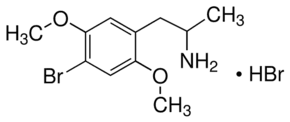
(±)-2,5-Dimethoxy-4-bromoamphetamine hydrobromide
Biochemicals & Reagents
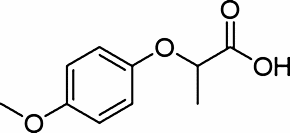
(±)-2-(p-Methoxyphenoxy)propionic acid
C10H12O4
Biochemicals & Reagents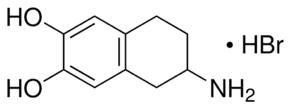
(±)-2-Amino-6,7-dihydroxy-1,2,3,4-tetrahydronaphthalene hydrobromide
C10H13NO2·HBr
Biochemicals & Reagents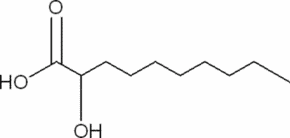
(±)-2-Hydroxydecanoic acid
C10H20O3
Biochemicals & Reagents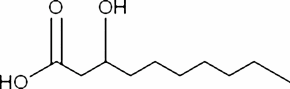
(±)-3-Hydroxydecanoic acid
C10H20O3
Biochemicals & Reagents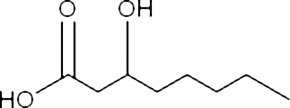
(±)-3-Hydroxyoctanoic acid
C8H16O3
Biochemicals & Reagents▶ Explore more

Bis(cyclopentadienyl)cobalt(III) hexafluorophosphate
C10H10CoF6P
Catalysis & Inorganic
1-(4-Chlorophenyl)biguanide hydrochloride
ClC6H4NHC(NH)NHC(NH)NH2 · HCl
Chemical Synthesis
Bis(cyclopentadienyl)dimethylzirconium(IV)
Catalysis & Inorganic

1-(4-Chlorophenyl)ethanol
ClC6H4CH(CH3)OH
Chemical Synthesis