
Acetone
Acetone (CAS: 67-64-1; Formula: CH₃COCH₃; MW: 58.08) is a volatile, flammable organic solvent. It is a clear, colourless liquid with a characteristic odour. Acetone finds broad application in various industrial and laboratory settings, notably as a solvent, in chemical synthesis, and in the formulation of coatings and cleaning agents. Its luminescence properties are of interest in specific detection methods.
- Synonyms
- 2-PropanoneDimethyl ketoneMethyl ethyl ketone (obsolete)Beta-ketopropane

Solvent Applications
Acetone is a versatile solvent for many plastics and synthetic fibers. It is used extensively in the production of paints, varnishes, lacquers, and as a cleaning agent for laboratory equipment and industrial surfaces.
Chemical Synthesis
It serves as a precursor or intermediate in the synthesis of various organic compounds. Acetone's reactivity allows it to participate in numerous chemical reactions, including aldol condensation.
Luminescence Studies
Acetone's luminescence intensity is influenced by solution components. Its photolysis under UV light produces radicals, making it a subject of study in photochemistry and luminescence-based detection systems.
Dioxin Determination
Acetone is suitable for use in analytical procedures, including the determination of dioxins, due to its solvent properties and purity.
| Molecular weight | 58.08 |
|---|---|
| Linear formula | CH3COCH3 |
| Assay | ≥99.5% (GC) |
| Boiling point | 56 °C/760 mmHg(lit.) |
| Density | 0.791 g/mL at 25 °C(lit.) |
| Refractive index | n20/D 1.359(lit.) |
| Vapour pressure | 184 mmHg (20 °C) |
| Melting point | −94 °C(lit.) |
| Vapour density | 2 (vs air) |
| Application | Acetone′s luminesence intensity is dependent upon the solution components 1. The absorption of UV light by acetone, results in its photolysis and the production of radials 1. |
| Suitability | suitable for determination of dioxins |


Hazard statements
- H225Highly flammable liquid and vapour
- H319Causes serious eye irritation
- H336May cause drowsiness or dizziness
Precautionary statements
- P210Keep away from heat, sparks and open flames. No smoking
- P261Avoid breathing dust, fume, gas or vapours
- P305IF IN EYES
| Protective equipment | Eyeshields, Faceshields, full-face respirator (US), Gloves, multi-purpose combination respirator cartridge (US) |
|---|---|
| Flash point | -17 °C / 1.4 °F |
| Transport (UN / ADR) | UN 1090 3 / PGII |
| Water hazard class (WGK, DE) | 1 |
| Hazard codes (EU) | F,Xi |
| Risk statements (R) | 11-36-66-67 |
| Safety statements (S) | 9-16-26 |
| Supplemental hazards | Repeated exposure may cause skin dryness or cracking. |
Hazard information is provided for guidance. Always consult the product Safety Data Sheet (SDS), available on request, before handling.
| Uv Absorption | λ: 335 nm Amax: ≤0.30λ: 340 nm Amax: ≤0.08λ: 350 nm Amax: ≤0.003 |
|---|
Documentation
Every batch ships with a Certificate of Analysis covering assay, identity and purity; the grade is confirmed against your enquiry. Safety Data Sheets and technical data sheets are available on request.
Supply & logistics
Samples for technical evaluation; bulk MOQ by grade and packaging. In-stock material ships in 7–10 working days, worldwide, with full export documentation.
What is Acetone primarily used for?
+
Acetone (CAS: 67-64-1) is primarily used as a versatile solvent in industrial and laboratory applications, for chemical synthesis, and in specific luminescence and analytical detection methods.
What is the CAS number and formula for Acetone?
+
The CAS number for Acetone is 67-64-1, and its linear formula is CH₃COCH₃.
What grade and purity does Tech Serve Solutions supply for Acetone?
+
Tech Serve Solutions supplies Acetone with an assay of ≥99.5% (GC). TSS does not represent this product as USP, BP, EP, or other pharmacopoeia grades unless explicitly stated in the product documentation.
What are the main safety hazards associated with Acetone?
+
Acetone is highly flammable (H225) and can cause serious eye irritation (H319) and drowsiness or dizziness (H336). Prolonged or repeated exposure may cause skin dryness or cracking. Always handle in well-ventilated areas, away from ignition sources, and use appropriate personal protective equipment.
Is Acetone a controlled substance?
+
The provided data does not indicate that Acetone is a controlled substance. However, regulations may vary by region.
How is Acetone typically packaged and exported by TSS?
+
Acetone is supplied according to industry standards for flammable liquids. TSS is an experienced global supplier and exporter, ensuring proper packaging and compliance with shipping regulations for international delivery.
How can I request a sample or quote for Acetone?
+
To request a sample or a quote for Acetone, please use the contact form on our website or call our sales department, referencing the product name and CAS number (67-64-1).
▶ Related products
![(±)-(E)-4-Ethyl-2-[(E)-hydroxyimino]-5-nitro-3-hexenamide (C8H13N3O4) — chemical structure, CAS 138472-01-2; Biochemicals & Reagents, fine chemical supplied by Tech Serve Solutions](/_next/image?url=https%3A%2F%2Fpub-f4d920c906024441a773a96f7098e551.r2.dev%2Fimages%2Fproducts%2F138472-01-2.png&w=3840&q=75)
(±)-(E)-4-Ethyl-2-[(E)-hydroxyimino]-5-nitro-3-hexenamide
C8H13N3O4
Biochemicals & Reagents![(±)-(E)-4-Ethyl-2-[(Z)-hydroxyimino]-5-nitro-3-hexen-1-yl-nicotinamide (C14H18N4O4) — chemical structure, CAS 162626-99-5; Biochemicals & Reagents, fine chemical supplied by Tech Serve Solutions](/_next/image?url=https%3A%2F%2Fpub-f4d920c906024441a773a96f7098e551.r2.dev%2Fimages%2Fproducts%2F162626-99-5.png&w=3840&q=75)
(±)-(E)-4-Ethyl-2-[(Z)-hydroxyimino]-5-nitro-3-hexen-1-yl-nicotinamide
C14H18N4O4
Biochemicals & Reagents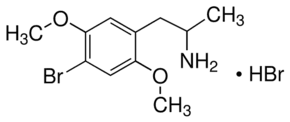
(±)-2,5-Dimethoxy-4-bromoamphetamine hydrobromide
Biochemicals & Reagents
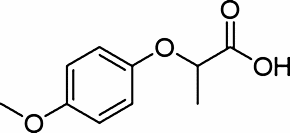
(±)-2-(p-Methoxyphenoxy)propionic acid
C10H12O4
Biochemicals & Reagents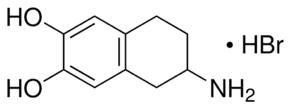
(±)-2-Amino-6,7-dihydroxy-1,2,3,4-tetrahydronaphthalene hydrobromide
C10H13NO2·HBr
Biochemicals & Reagents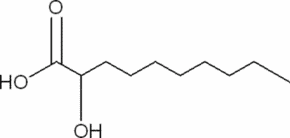
(±)-2-Hydroxydecanoic acid
C10H20O3
Biochemicals & Reagents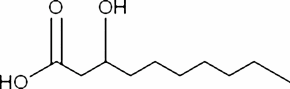
(±)-3-Hydroxydecanoic acid
C10H20O3
Biochemicals & Reagents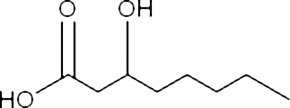
(±)-3-Hydroxyoctanoic acid
C8H16O3
Biochemicals & Reagents▶ Explore more

Bis(cyclopentadienyl)cobalt(III) hexafluorophosphate
C10H10CoF6P
Catalysis & Inorganic
1-(4-Chlorophenyl)biguanide hydrochloride
ClC6H4NHC(NH)NHC(NH)NH2 · HCl
Chemical Synthesis
Bis(cyclopentadienyl)dimethylzirconium(IV)
Catalysis & Inorganic

1-(4-Chlorophenyl)ethanol
ClC6H4CH(CH3)OH
Chemical Synthesis