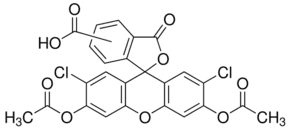
5(6)-Carboxy-2′,7′-dichlorofluorescein diacetate
5(6)-Carboxy-2′,7′-dichlorofluorescein diacetate (CAS 127770-45-0) is a biochemical reagent with the empirical formula C25H14Cl2O9 and a molecular weight of 529.28. This fluorescent probe is primarily utilised for studying the distribution and mechanisms of multidrug resistance-associated protein 2 (Mrp2). Its fluorescence properties make it suitable for various detection applications in biochemical research and analysis, often employed in microscopy and flow cytometry.
- Synonyms
- 5(6)-Carboxy-2',7'-dichlorofluorescein diacetate
Fluorescent Substrate for Mrp2 Studies
5(6)-Carboxy-2′,7′-dichlorofluorescein diacetate serves as a critical fluorescent substrate for investigating the functionality and cellular distribution of multidrug resistance-associated protein 2 (Mrp2). It allows researchers to visualise and quantify Mrp2 activity in biological systems.
Biochemical Detection and Analysis
This compound is employed as a fluorescent probe in various biochemical assays. Its luminescence characteristics enable sensitive detection in research settings, particularly within flow cytometry and microscopy applications.
Enzyme Activity Assays
As a fluorescent enzyme substrate, it can be used to monitor enzymatic reactions. The cleavage of the acetate groups by esterases leads to the release of a fluorescent signal, indicating enzyme activity.
| Molecular weight | 529.28 |
|---|---|
| Empirical formula | C25H14Cl2O9 |
| Assay | ≥85% (HPCE) |
| Solubility | DMF: solubleDMSO: solublemethanol: soluble |
| Storage temperature | −20°C |
| Application | 5(6)-Carboxy-2′,7′-dichlorofluorescein diacetate (CDCF) is used as a fluorescent substrate/probe to study the distribution and mechanism of action of multidrug resistance-associated protein 2 (Mrp2). |
| Suitability | suitable for fluorescence |
| Melting point | 210 °C (dec.)(lit.) |

Hazard statements
- H315Causes skin irritation
- H319Causes serious eye irritation
- H335May cause respiratory irritation
Precautionary statements
- P261Avoid breathing dust, fume, gas or vapours
- P305IF IN EYES
| Protective equipment | dust mask type N95 (US), Eyeshields, Gloves |
|---|---|
| Water hazard class (WGK, DE) | 3 |
| Hazard codes (EU) | Xi |
| Risk statements (R) | 36/37/38 |
| Safety statements (S) | 26 |
Hazard information is provided for guidance. Always consult the product Safety Data Sheet (SDS), available on request, before handling.
| Product Line | BioReagent |
|---|---|
| Fluorescence | λex 470 nm; λem 529 nm in 0.1 M Tris pH 8.0 (esterase) |
Documentation
Every batch ships with a Certificate of Analysis covering assay, identity and purity; the grade is confirmed against your enquiry. Safety Data Sheets and technical data sheets are available on request.
Supply & logistics
Samples for technical evaluation; bulk MOQ by grade and packaging. In-stock material ships in 7–10 working days, worldwide, with full export documentation.
What is 5(6)-Carboxy-2′,7′-dichlorofluorescein diacetate used for?
+
This compound is used as a fluorescent substrate and probe to study the distribution and mechanism of action of multidrug resistance-associated protein 2 (Mrp2), and for general fluorescent detection in biochemical assays.
What is the CAS number and molecular formula for this product?
+
The CAS number is 127770-45-0 and the empirical formula is C25H14Cl2O9.
What grade and purity does Tech Serve Solutions supply?
+
Tech Serve Solutions supplies this product with an assay of ≥85% (HPCE). TSS does not represent this product as USP, BP, or EP grade.
What are the safety considerations for handling 5(6)-Carboxy-2′,7′-dichlorofluorescein diacetate?
+
This compound carries a GHS07 symbol and is classified as a Warning. It is associated with hazard statements H315 (Causes skin irritation), H319 (Causes serious eye irritation), and H335 (May cause respiratory irritation). Appropriate personal protective equipment, including a dust mask (type N95), eyeshields, and gloves, should be worn. Handle in a well-ventilated area.
How is this chemical packed, shipped, and exported?
+
Tech Serve Solutions, established in 1998, is a specialist global supplier and exporter of fine chemicals. Products are carefully packed according to industry standards and regulations for safe domestic and international shipment.
How can I request a sample or a quote for 5(6)-Carboxy-2′,7′-dichlorofluorescein diacetate?
+
To request a sample or obtain a quotation, please contact our sales department through the website or by phone. Our team will be pleased to assist you with your requirements.
▶ Related products
![(±)-(E)-4-Ethyl-2-[(E)-hydroxyimino]-5-nitro-3-hexenamide (C8H13N3O4) — chemical structure, CAS 138472-01-2; Biochemicals & Reagents, fine chemical supplied by Tech Serve Solutions](/_next/image?url=https%3A%2F%2Fpub-f4d920c906024441a773a96f7098e551.r2.dev%2Fimages%2Fproducts%2F138472-01-2.png&w=3840&q=75)
(±)-(E)-4-Ethyl-2-[(E)-hydroxyimino]-5-nitro-3-hexenamide
C8H13N3O4
Biochemicals & Reagents![(±)-(E)-4-Ethyl-2-[(Z)-hydroxyimino]-5-nitro-3-hexen-1-yl-nicotinamide (C14H18N4O4) — chemical structure, CAS 162626-99-5; Biochemicals & Reagents, fine chemical supplied by Tech Serve Solutions](/_next/image?url=https%3A%2F%2Fpub-f4d920c906024441a773a96f7098e551.r2.dev%2Fimages%2Fproducts%2F162626-99-5.png&w=3840&q=75)
(±)-(E)-4-Ethyl-2-[(Z)-hydroxyimino]-5-nitro-3-hexen-1-yl-nicotinamide
C14H18N4O4
Biochemicals & Reagents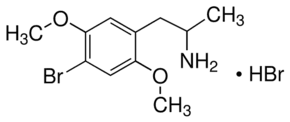
(±)-2,5-Dimethoxy-4-bromoamphetamine hydrobromide
Biochemicals & Reagents
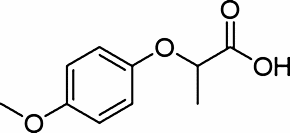
(±)-2-(p-Methoxyphenoxy)propionic acid
C10H12O4
Biochemicals & Reagents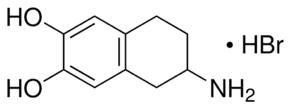
(±)-2-Amino-6,7-dihydroxy-1,2,3,4-tetrahydronaphthalene hydrobromide
C10H13NO2·HBr
Biochemicals & Reagents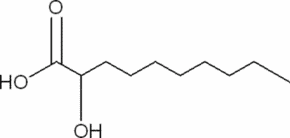
(±)-2-Hydroxydecanoic acid
C10H20O3
Biochemicals & Reagents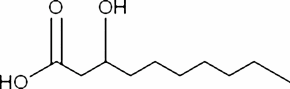
(±)-3-Hydroxydecanoic acid
C10H20O3
Biochemicals & Reagents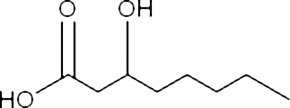
(±)-3-Hydroxyoctanoic acid
C8H16O3
Biochemicals & Reagents