4′,6-Diamidino-2-phenylindole dihydrochloride
4′,6-Diamidino-2-phenylindole dihydrochloride (CAS: 28718-90-3) is a fluorescent stain that exhibits high affinity for adenine-guanine-rich regions of DNA. It is widely utilized as a sensitive DNA stain in various biological applications, including flow cytometry for cell cycle analysis and apoptosis detection, and in microscopy for visualizing nuclear structures. Its fluorescent properties enable precise detection in biochemical and reagent-based assays.
- IUPAC
- 2-(4-Amidinophenyl)-6-indolecarbamidine dihydrochloride,DAPI dihydrochloride
- Synonyms
- 2-(4-Amidinophenyl)-6-indolecarbamidine dihydrochlorideDAPI dihydrochloride

DNA Staining and Visualization
DAPI dihydrochloride is a highly sensitive fluorescent stain for DNA, particularly effective in visualizing nuclear material in cell culture and microscopy. It binds preferentially to AT-rich regions of DNA.
Flow Cytometry
Utilized in flow cytometry for cell cycle analysis, apoptosis detection, and DNA content determination. Its fluorescence allows for quantitative analysis of cellular DNA.
Detection of Mycoplasma Contamination
A sensitive and specific method for detecting Mycoplasma contamination in cell cultures, offering reliable identification of microbial presence.
Blotting Applications
Can be employed to detect annealed probes in blotting applications, specifically visualizing double-stranded DNA complexes.
| Molecular weight | 350.25 |
|---|---|
| Empirical formula | C16H15N5 · 2HCl |
| Assay | ≥98% (HPLC and TLC) |
| Solubility | H2O: soluble20 mg/mL (Heat or sonication may be required. Solutions stored in the dark at room temperature or 4 °C should be stable for 2 to 3 weeks.)PBS: insoluble |
| Storage temperature | 2-8°C |
| Application | DAPI is several times more sensitive than ethidium bromide for staining DNA in agarose gels. It may be used for photofootprinting of DNA, to detect annealed probes in blotting applications by specifically visualizing the double-stranded complex, and to study the changes in DNA and analyze DNA content during apoptosis using flow cytometry. DAPI staining has also been shown to be a sensitive and specific detection method for mycoplasma. |
| Suitability | suitable for cell culturesuitable for fluorescence |
| Protective equipment | Eyeshields, Gloves, type N95 (US), type P1 (EN143) respirator filter |
|---|---|
| Water hazard class (WGK, DE) | 3 |
Hazard information is provided for guidance. Always consult the product Safety Data Sheet (SDS), available on request, before handling.
| Product Line | BioReagent |
|---|---|
| Absorption | ε/263 nm, H2O 30 |
| Fluorescence | λex 340 nm; λem 488 nm (nur DAPI)λex 364 nm; λem 454 nm (DAPI-DNA-Komplex) |
Documentation
Every batch ships with a Certificate of Analysis covering assay, identity and purity; the grade is confirmed against your enquiry. Safety Data Sheets and technical data sheets are available on request.
Supply & logistics
Samples for technical evaluation; bulk MOQ by grade and packaging. In-stock material ships in 7–10 working days, worldwide, with full export documentation.
What is 4′,6-Diamidino-2-phenylindole dihydrochloride used for?
+
This compound is primarily used as a fluorescent stain for DNA, enabling visualization in microscopy and quantitative analysis in flow cytometry. It is also effective for detecting Mycoplasma contamination and for certain blotting applications.
What is the CAS number and formula for 4′,6-Diamidino-2-phenylindole dihydrochloride?
+
The CAS number is 28718-90-3, and the empirical formula is C16H15N5 · 2HCl.
What grade and purity does Tech Serve Solutions supply?
+
Tech Serve Solutions supplies 4′,6-Diamidino-2-phenylindole dihydrochloride with an assay of ≥98% (HPLC and TLC). TSS does not represent this product as USP, BP, or EP grade.
What are the safety and handling precautions for this chemical?
+
Handling requires personal protective equipment including eyeshields, gloves, and a type N95 (US) or type P1 (EN143) respirator filter. It is classified with WGK Germany 3, indicating a high hazard to water.
How is this chemical packed, shipped, and exported?
+
This chemical is typically stored at 2-8°C. Tech Serve Solutions is a specialist global supplier and exporter of fine chemicals, ensuring appropriate packaging and handling for international shipment.
How can I request a sample or a quote for 4′,6-Diamidino-2-phenylindole dihydrochloride?
+
Please contact our sales team directly via our website or by phone to request a sample or a formal quotation for 4′,6-Diamidino-2-phenylindole dihydrochloride.
▶ Related products
![(±)-(E)-4-Ethyl-2-[(E)-hydroxyimino]-5-nitro-3-hexenamide (C8H13N3O4) — chemical structure, CAS 138472-01-2; Biochemicals & Reagents, fine chemical supplied by Tech Serve Solutions](/_next/image?url=https%3A%2F%2Fpub-f4d920c906024441a773a96f7098e551.r2.dev%2Fimages%2Fproducts%2F138472-01-2.png&w=3840&q=75)
(±)-(E)-4-Ethyl-2-[(E)-hydroxyimino]-5-nitro-3-hexenamide
C8H13N3O4
Biochemicals & Reagents![(±)-(E)-4-Ethyl-2-[(Z)-hydroxyimino]-5-nitro-3-hexen-1-yl-nicotinamide (C14H18N4O4) — chemical structure, CAS 162626-99-5; Biochemicals & Reagents, fine chemical supplied by Tech Serve Solutions](/_next/image?url=https%3A%2F%2Fpub-f4d920c906024441a773a96f7098e551.r2.dev%2Fimages%2Fproducts%2F162626-99-5.png&w=3840&q=75)
(±)-(E)-4-Ethyl-2-[(Z)-hydroxyimino]-5-nitro-3-hexen-1-yl-nicotinamide
C14H18N4O4
Biochemicals & Reagents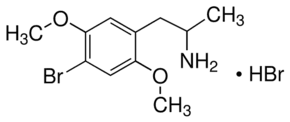
(±)-2,5-Dimethoxy-4-bromoamphetamine hydrobromide
Biochemicals & Reagents
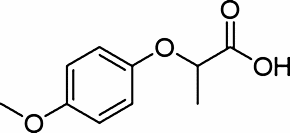
(±)-2-(p-Methoxyphenoxy)propionic acid
C10H12O4
Biochemicals & Reagents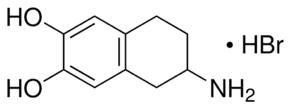
(±)-2-Amino-6,7-dihydroxy-1,2,3,4-tetrahydronaphthalene hydrobromide
C10H13NO2·HBr
Biochemicals & Reagents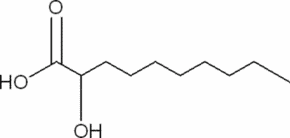
(±)-2-Hydroxydecanoic acid
C10H20O3
Biochemicals & Reagents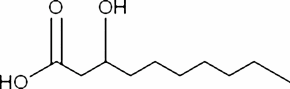
(±)-3-Hydroxydecanoic acid
C10H20O3
Biochemicals & Reagents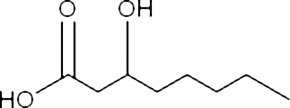
(±)-3-Hydroxyoctanoic acid
C8H16O3
Biochemicals & Reagents