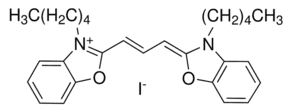
3,3′-Dipentyloxacarbocyanine iodide
3,3′-Dipentyloxacarbocyanine iodide (CAS: 53213-81-3) is a lipophilic fluorescent probe with a molecular weight of 544.47. It is primarily employed in biological research for measuring membrane potential and for the localization of the endoplasmic reticulum within cells. Its fluorescent properties make it a valuable tool in cell biology studies, particularly for investigating cellular structures and functions related to membrane dynamics.
- IUPAC
- DiOC5(3)
- Synonyms
- C27H33IN2O2DiOC5(3)
Membrane Potential Measurement
This compound acts as a probe to assess and quantify changes in membrane potential in biological systems. Its lipophilic nature allows it to integrate into cell membranes, enabling dynamic studies of electrical activity.
Endoplasmic Reticulum Localization
3,3′-Dipentyloxacarbocyanine iodide is utilised to identify and study the endoplasmic reticulum. Its fluorescent signature helps researchers visualise this critical organelle and understand its spatial arrangement within the cell.
Cellular Imaging and Probing
As a fluorescent indicator, it serves as a versatile tool in various cell biology applications, aiding in the visualisation of cellular structures and processes. It is particularly useful for studies involving lipophilic compartments and membrane dynamics.
| Molecular weight | 544.47 |
|---|---|
| Empirical formula | C27H33IN2O2 |
| Assay | ≥95% |
| Application | Probe for measuring membrane potential and localization of endoplasmic reticulum |


Hazard statements
- H315Causes skin irritation
- H319Causes serious eye irritation
- H335May cause respiratory irritation
- H360May damage fertility or the unborn child
Precautionary statements
- P201Obtain special instructions before use
- P261Avoid breathing dust, fume, gas or vapours
- P305IF IN EYES
- P308IF exposed or concerned
| Protective equipment | Eyeshields, Gloves, type P2 (EN 143) respirator cartridges |
|---|---|
| Water hazard class (WGK, DE) | 3 |
| Hazard codes (EU) | T |
| Risk statements (R) | 61-36/37/38 |
| Safety statements (S) | 53-22-36/37/39-45 |
Hazard information is provided for guidance. Always consult the product Safety Data Sheet (SDS), available on request, before handling.
Documentation
Every batch ships with a Certificate of Analysis covering assay, identity and purity; the grade is confirmed against your enquiry. Safety Data Sheets and technical data sheets are available on request.
Supply & logistics
Samples for technical evaluation; bulk MOQ by grade and packaging. In-stock material ships in 7–10 working days, worldwide, with full export documentation.
What is 3,3′-Dipentyloxacarbocyanine iodide used for?
+
3,3′-Dipentyloxacarbocyanine iodide is used as a fluorescent probe for measuring membrane potential and for the localization of the endoplasmic reticulum within cells. It is a valuable tool in cell biology research for visualising cellular structures and membrane dynamics.
What are the CAS number and formula for 3,3′-Dipentyloxacarbocyanine iodide?
+
The CAS number for 3,3′-Dipentyloxacarbocyanine iodide is 53213-81-3. The empirical formula is C27H33IN2O2.
What grade and purity does Tech Serve Solutions supply?
+
Tech Serve Solutions supplies 3,3′-Dipentyloxacarbocyanine iodide with an assay of ≥95%. We do not represent this product as USP, BP, EP, or any other pharmacopoeia grade.
What are the primary safety concerns when handling 3,3′-Dipentyloxacarbocyanine iodide?
+
This compound is classified as dangerous, with hazards including skin irritation (H315), serious eye irritation (H319), respiratory irritation (H335), and potential reproductive toxicity (H360). Always use appropriate personal protective equipment, including eyeshields, gloves, and a P2 respirator cartridge, and handle in a well-ventilated area. Seek medical attention if exposed, as indicated by the Danger signal word and hazard statements.
Is 3,3′-Dipentyloxacarbocyanine iodide available for export?
+
Yes, Tech Serve Solutions is a specialist global supplier and exporter of fine chemicals, including 3,3′-Dipentyloxacarbocyanine iodide, serving research and industrial clients worldwide.
How can I request a quote or sample for 3,3′-Dipentyloxacarbocyanine iodide?
+
To request a quote or a sample of 3,3′-Dipentyloxacarbocyanine iodide, please contact our sales team through the website or by phone. Provide your requirements, and we will assist you promptly.
▶ Related products
![(±)-(E)-4-Ethyl-2-[(E)-hydroxyimino]-5-nitro-3-hexenamide (C8H13N3O4) — chemical structure, CAS 138472-01-2; Biochemicals & Reagents, fine chemical supplied by Tech Serve Solutions](/_next/image?url=https%3A%2F%2Fpub-f4d920c906024441a773a96f7098e551.r2.dev%2Fimages%2Fproducts%2F138472-01-2.png&w=3840&q=75)
(±)-(E)-4-Ethyl-2-[(E)-hydroxyimino]-5-nitro-3-hexenamide
C8H13N3O4
Biochemicals & Reagents![(±)-(E)-4-Ethyl-2-[(Z)-hydroxyimino]-5-nitro-3-hexen-1-yl-nicotinamide (C14H18N4O4) — chemical structure, CAS 162626-99-5; Biochemicals & Reagents, fine chemical supplied by Tech Serve Solutions](/_next/image?url=https%3A%2F%2Fpub-f4d920c906024441a773a96f7098e551.r2.dev%2Fimages%2Fproducts%2F162626-99-5.png&w=3840&q=75)
(±)-(E)-4-Ethyl-2-[(Z)-hydroxyimino]-5-nitro-3-hexen-1-yl-nicotinamide
C14H18N4O4
Biochemicals & Reagents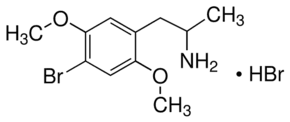
(±)-2,5-Dimethoxy-4-bromoamphetamine hydrobromide
Biochemicals & Reagents
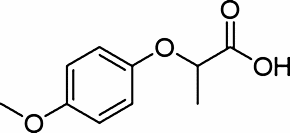
(±)-2-(p-Methoxyphenoxy)propionic acid
C10H12O4
Biochemicals & Reagents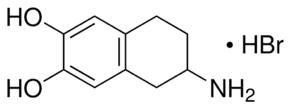
(±)-2-Amino-6,7-dihydroxy-1,2,3,4-tetrahydronaphthalene hydrobromide
C10H13NO2·HBr
Biochemicals & Reagents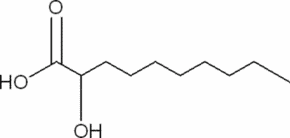
(±)-2-Hydroxydecanoic acid
C10H20O3
Biochemicals & Reagents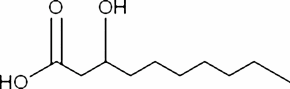
(±)-3-Hydroxydecanoic acid
C10H20O3
Biochemicals & Reagents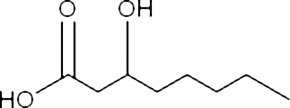
(±)-3-Hydroxyoctanoic acid
C8H16O3
Biochemicals & Reagents