
2′,7′-bis(2-Carboxyethyl)-5(6)-carboxyfluorescein acetoxymethyl ester Mixed isomers
2′,7′-bis(2-Carboxyethyl)-5(6)-carboxyfluorescein acetoxymethyl ester, Mixed isomers (CAS: 117464-70-7) is a vital fluorescent probe and indicator. This acetoxymethyl ester derivative of BCECF is designed for intracellular esterase activity detection, releasing the highly fluorescent BCECF upon hydrolysis. It is widely employed in cell biology and neuroscience research, particularly for monitoring intracellular pH changes and studying ion channel activity. Its utility extends to biochemical assays requiring sensitive fluorescent detection.
- IUPAC
- BCECF-acetoxymethyl
- Synonyms
- BCECF-acetoxymethyl ester, Mixed isomers2',7'-Bis(2-carboxyethyl)-5(6)-carboxyfluorescein, acetoxymethyl ester, mixed isomersBCECF AM, mixed isomers

Intracellular pH Monitoring
This compound serves as a sensitive fluorescent indicator for intracellular pH (pHi) changes. Upon intracellular esterase cleavage, it releases the active BCECF dye, which exhibits pH-dependent fluorescence, enabling real-time monitoring of cellular pH dynamics.
Ion Channel Studies
It is utilized in the investigation of various ion channels, including voltage-gated and monovalent channels. Changes in ion flux can affect intracellular pH, which can be accurately measured using this fluorescent probe, providing insights into channel function.
Cellular Esterase Activity Assays
The acetoxymethyl ester functionality allows for the detection of endogenous esterase activity within cells. Hydrolysis of the ester groups by intracellular esterases liberates the fluorescent dye, making it a valuable tool for assessing cellular metabolic state and enzyme activity.
Neuroscience Research
In neuroscience, this probe aids in studying neuronal function by monitoring pH shifts associated with neural activity, receptor binding, and other cellular processes that influence the intracellular environment.
| Storage temperature | −20°C |
|---|

Hazard statements
- H315Causes skin irritation
- H319Causes serious eye irritation
- H335May cause respiratory irritation
Precautionary statements
- P261Avoid breathing dust, fume, gas or vapours
- P305IF IN EYES
| Protective equipment | dust mask type N95 (US), Eyeshields, Gloves |
|---|---|
| Water hazard class (WGK, DE) | 3 |
| Hazard codes (EU) | Xi |
| Risk statements (R) | 36/37/38 |
| Safety statements (S) | 22-26-36 |
Hazard information is provided for guidance. Always consult the product Safety Data Sheet (SDS), available on request, before handling.
Documentation
Every batch ships with a Certificate of Analysis covering assay, identity and purity; the grade is confirmed against your enquiry. Safety Data Sheets and technical data sheets are available on request.
Supply & logistics
Samples for technical evaluation; bulk MOQ by grade and packaging. In-stock material ships in 7–10 working days, worldwide, with full export documentation.
What is 2′,7′-bis(2-Carboxyethyl)-5(6)-carboxyfluorescein acetoxymethyl ester, Mixed isomers used for?
+
This compound is primarily used as a fluorescent indicator for intracellular pH (pHi) and for detecting intracellular esterase activity. It is valuable in cell biology, neuroscience research, and studies involving ion channels.
What are the CAS number and formula for this product?
+
The CAS number is 117464-70-7. The chemical formula is not provided in the verified data.
What grade and purity does Tech Serve Solutions supply?
+
Tech Serve Solutions supplies this product as BCECF-acetoxymethyl (CAS 117464-70-7). TSS does not specify a pharmacopoeia grade (e.g., USP, BP, EP) and supplies it for research and laboratory use. Purity details should be confirmed with a Certificate of Analysis.
How should 2′,7′-bis(2-Carboxyethyl)-5(6)-carboxyfluorescein acetoxymethyl ester, Mixed isomers be handled and stored?
+
This compound is a Warning substance that may cause skin irritation (H315), serious eye irritation (H319), and respiratory irritation (H335). Handle with a dust mask (N95), eyeshields, and gloves. Store at −20°C. Avoid breathing dust. In case of contact with eyes, rinse cautiously with water for several minutes.
Is this product available for export?
+
Yes, Tech Serve Solutions is a specialist global supplier and exporter of fine chemicals, including this product. Please contact us for export inquiries and shipping details.
How can I request a quote or sample?
+
To request a quote or a sample, please visit the Tech Serve Solutions website or contact our sales department directly with your inquiry, referencing the product name and CAS number 117464-70-7.
▶ Related products
![(±)-(E)-4-Ethyl-2-[(E)-hydroxyimino]-5-nitro-3-hexenamide (C8H13N3O4) — chemical structure, CAS 138472-01-2; Biochemicals & Reagents, fine chemical supplied by Tech Serve Solutions](/_next/image?url=https%3A%2F%2Fpub-f4d920c906024441a773a96f7098e551.r2.dev%2Fimages%2Fproducts%2F138472-01-2.png&w=3840&q=75)
(±)-(E)-4-Ethyl-2-[(E)-hydroxyimino]-5-nitro-3-hexenamide
C8H13N3O4
Biochemicals & Reagents![(±)-(E)-4-Ethyl-2-[(Z)-hydroxyimino]-5-nitro-3-hexen-1-yl-nicotinamide (C14H18N4O4) — chemical structure, CAS 162626-99-5; Biochemicals & Reagents, fine chemical supplied by Tech Serve Solutions](/_next/image?url=https%3A%2F%2Fpub-f4d920c906024441a773a96f7098e551.r2.dev%2Fimages%2Fproducts%2F162626-99-5.png&w=3840&q=75)
(±)-(E)-4-Ethyl-2-[(Z)-hydroxyimino]-5-nitro-3-hexen-1-yl-nicotinamide
C14H18N4O4
Biochemicals & Reagents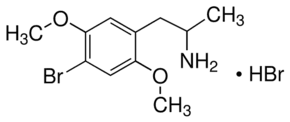
(±)-2,5-Dimethoxy-4-bromoamphetamine hydrobromide
Biochemicals & Reagents
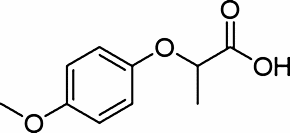
(±)-2-(p-Methoxyphenoxy)propionic acid
C10H12O4
Biochemicals & Reagents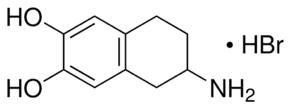
(±)-2-Amino-6,7-dihydroxy-1,2,3,4-tetrahydronaphthalene hydrobromide
C10H13NO2·HBr
Biochemicals & Reagents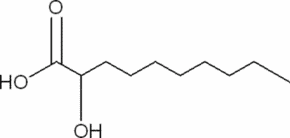
(±)-2-Hydroxydecanoic acid
C10H20O3
Biochemicals & Reagents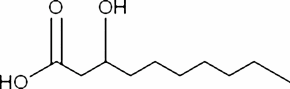
(±)-3-Hydroxydecanoic acid
C10H20O3
Biochemicals & Reagents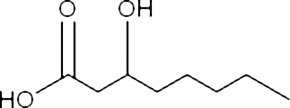
(±)-3-Hydroxyoctanoic acid
C8H16O3
Biochemicals & Reagents▶ Explore more

Bis(cyclopentadienyl)cobalt(III) hexafluorophosphate
C10H10CoF6P
Catalysis & Inorganic
1-(4-Chlorophenyl)biguanide hydrochloride
ClC6H4NHC(NH)NHC(NH)NH2 · HCl
Chemical Synthesis
Bis(cyclopentadienyl)dimethylzirconium(IV)
Catalysis & Inorganic

1-(4-Chlorophenyl)ethanol
ClC6H4CH(CH3)OH
Chemical Synthesis