
[2,6-Bis(2-pyridyl)phenyl-C,N,N′]chloroplatinum(II)
[2,6-Bis(2-pyridyl)phenyl-C,N,N′]chloroplatinum(II), CAS 241818-94-0, with a molecular formula of C16H11ClN2Pt and a molecular weight of 461.80, is a platinum coordination compound. It serves as a valuable reagent in advanced scientific research, particularly in fields requiring sophisticated imaging and analytical techniques. Its properties make it suitable for applications in microscopy and fluorescence-based studies.
- IUPAC
- Chloro[2,6-di(2-pyridinyl-κN)phenyl-κC]platinum(II),TREM-reagent,[1,3-Bis(2-pyridyl)benzene](chloro)platinum coordination compound
- Synonyms
- [1,3-Bis(2-pyridyl)benzene](chloro)platinum coordination compoundChloro[2,6-di(2-pyridinyl-κN)phenyl-κC]platinum(II)TREM-reagent
![[2,6-Bis(2-pyridyl)phenyl-C,N,N′]chloroplatinum(II) (N) — chemical element, CAS 241818-94-0; Life Science, fine chemical supplied by Tech Serve Solutions](/_next/image?url=https%3A%2F%2Fpub-f4d920c906024441a773a96f7098e551.r2.dev%2Fimages%2Fproducts%2F241818-94-0.png&w=3840&q=75)
Confocal Microscopy
This compound is suitable for use in both single photon and multiphoton confocal microscopy, enabling high-resolution imaging of biological samples and materials.
Two-Photon Excitation
Its properties allow for non-linear two-photon excitation, a technique used for deeper tissue penetration and reduced photodamage in fluorescence imaging.
Fluorescence Lifetime Imaging (FLIM)
The compound is applicable in FLIM, facilitating microsecond timescale measurements for the study of dynamic biological processes and molecular interactions.
Förster Resonance Energy Transfer (FRET)
It can be employed in FRET studies, a technique sensitive to molecular proximity and conformational changes, useful for analysing biomolecular interactions.
| Molecular weight | 461.80 |
|---|---|
| Empirical formula | C16H11ClN2Pt |
| Assay | ≥97% (NMR) |
| Storage temperature | 2-8°C |
| Application | Typical applications include:• Confocal single photon and multiphoton microscopy• Non-linear two-photon excitation• FLIM (microsecond applications)• FRET• Real-time observation of dynamic processes |

Hazard statements
- H315Causes skin irritation
- H319Causes serious eye irritation
- H335May cause respiratory irritation
Precautionary statements
- P261Avoid breathing dust, fume, gas or vapours
- P305IF IN EYES
| Water hazard class (WGK, DE) | 3 |
|---|---|
| Hazard codes (EU) | Xi |
| Risk statements (R) | 36/37/38 |
| Safety statements (S) | 26 |
Hazard information is provided for guidance. Always consult the product Safety Data Sheet (SDS), available on request, before handling.
Documentation
Every batch ships with a Certificate of Analysis covering assay, identity and purity; the grade is confirmed against your enquiry. Safety Data Sheets and technical data sheets are available on request.
Supply & logistics
Samples for technical evaluation; bulk MOQ by grade and packaging. In-stock material ships in 7–10 working days, worldwide, with full export documentation.
What are the primary applications of [2,6-Bis(2-pyridyl)phenyl-C,N,N′]chloroplatinum(II)?
+
This compound is primarily used in advanced imaging techniques such as confocal single photon and multiphoton microscopy, non-linear two-photon excitation, FLIM (microsecond applications), FRET, and real-time observation of dynamic processes.
What is the CAS number and molecular formula for this platinum compound?
+
The CAS number is 241818-94-0, and the empirical formula (Hill notation) is C16H11ClN2Pt.
What grade and purity does Tech Serve Solutions supply?
+
Tech Serve Solutions supplies this product with an assay of ≥97% (NMR). We do not represent this product as USP, BP, EP, or pharmacopoeia grade.
What are the safety considerations when handling this chemical?
+
This compound is classified with a GHS07 symbol and a Warning signal word. It carries hazard statements H315 (Causes skin irritation), H319 (Causes serious eye irritation), and H335 (May cause respiratory irritation). Handle with appropriate personal protective equipment in a well-ventilated area. Precautionary statements include P261 (Avoid breathing dust/fume/gas/mist/vapours/spray) and P305 + P351 + P338 (IF IN EYES: Rinse cautiously with water for several minutes. Remove contact lenses, if present and easy to do. Continue rinsing).
How is this product typically stored and shipped?
+
The recommended storage temperature is 2-8°C. As a global supplier, Tech Serve Solutions adheres to all regulations for the safe packing, shipping, and export of laboratory chemicals.
How can I request a sample or a quote for this product?
+
Please use the contact form on our website or call our sales department to request a sample or a quote for [2,6-Bis(2-pyridyl)phenyl-C,N,N′]chloroplatinum(II).
▶ Related products
![(±)-(E)-4-Ethyl-2-[(E)-hydroxyimino]-5-nitro-3-hexenamide (C8H13N3O4) — chemical structure, CAS 138472-01-2; Biochemicals & Reagents, fine chemical supplied by Tech Serve Solutions](/_next/image?url=https%3A%2F%2Fpub-f4d920c906024441a773a96f7098e551.r2.dev%2Fimages%2Fproducts%2F138472-01-2.png&w=3840&q=75)
(±)-(E)-4-Ethyl-2-[(E)-hydroxyimino]-5-nitro-3-hexenamide
C8H13N3O4
Biochemicals & Reagents![(±)-(E)-4-Ethyl-2-[(Z)-hydroxyimino]-5-nitro-3-hexen-1-yl-nicotinamide (C14H18N4O4) — chemical structure, CAS 162626-99-5; Biochemicals & Reagents, fine chemical supplied by Tech Serve Solutions](/_next/image?url=https%3A%2F%2Fpub-f4d920c906024441a773a96f7098e551.r2.dev%2Fimages%2Fproducts%2F162626-99-5.png&w=3840&q=75)
(±)-(E)-4-Ethyl-2-[(Z)-hydroxyimino]-5-nitro-3-hexen-1-yl-nicotinamide
C14H18N4O4
Biochemicals & Reagents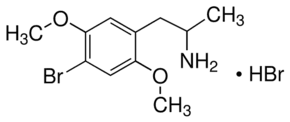
(±)-2,5-Dimethoxy-4-bromoamphetamine hydrobromide
Biochemicals & Reagents
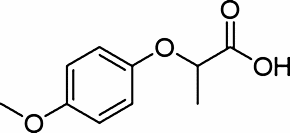
(±)-2-(p-Methoxyphenoxy)propionic acid
C10H12O4
Biochemicals & Reagents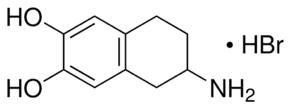
(±)-2-Amino-6,7-dihydroxy-1,2,3,4-tetrahydronaphthalene hydrobromide
C10H13NO2·HBr
Biochemicals & Reagents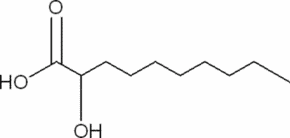
(±)-2-Hydroxydecanoic acid
C10H20O3
Biochemicals & Reagents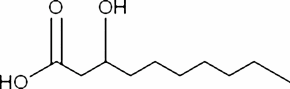
(±)-3-Hydroxydecanoic acid
C10H20O3
Biochemicals & Reagents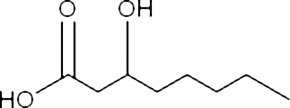
(±)-3-Hydroxyoctanoic acid
C8H16O3
Biochemicals & Reagents▶ Explore more

Bis(cyclopentadienyl)cobalt(III) hexafluorophosphate
C10H10CoF6P
Catalysis & Inorganic
1-(4-Chlorophenyl)biguanide hydrochloride
ClC6H4NHC(NH)NHC(NH)NH2 · HCl
Chemical Synthesis
Bis(cyclopentadienyl)dimethylzirconium(IV)
Catalysis & Inorganic

1-(4-Chlorophenyl)ethanol
ClC6H4CH(CH3)OH
Chemical Synthesis