
Thallium
Thallium (CAS 7440-28-0, Tl) is a soft, grey, metallic element with a high density and a melting point of 303°C. Known for its extreme toxicity, thallium's primary industrial applications are limited, often serving as a component in specialized alloys, optical glass, and as a precursor in the synthesis of certain inorganic compounds. Its unique physical properties are leveraged in niche scientific and industrial processes.

Optical Glass Manufacturing
Thallium compounds are used to increase the refractive index and dispersion of optical glass, enabling the production of specialized lenses and optical instruments requiring high performance. This application leverages thallium's high atomic number and density.
Alloy Component
Due to its low melting point, thallium is used in alloys for specific applications, such as low-melting point solders and specialized metal mixtures. These alloys can find use in temperature-sensitive applications or where specific thermal expansion properties are needed.
Semiconductor Research
Thallium-based compounds have been investigated for their potential in semiconductor applications, particularly in infrared detectors and thermoelectric materials. Its electronic properties make it a subject of research in advanced materials science.
Chemical Synthesis Precursor
Thallium serves as a starting material for the synthesis of various inorganic thallium salts and compounds. These compounds may then be used in other industrial processes or laboratory research.
| Molecular weight | 204.38 |
|---|---|
| Empirical formula | Tl |
| Assay | 99.99% trace metals basis |
| Form | granular |
| Boiling point | 1457 °C(lit.) |
| Melting point | 303 °C(lit.) |


Hazard statements
- H300Fatal if swallowed
- H330Fatal if inhaled
- H373May cause damage to organs through prolonged exposure
- H413May cause long-lasting harmful effects to aquatic life
Precautionary statements
- P260Do not breathe dust, fume, gas, mist, vapours or spray
- P264Wash thoroughly after handling
- P284Wear respiratory protection
- P301IF SWALLOWED
- P310Immediately call a POISON CENTER or doctor
| Protective equipment | Eyeshields, Faceshields, full-face particle respirator type N100 (US), Gloves, respirator cartridge type N100 (US), type P1 (EN143) respirator filter, type P3 (EN 143) respirator cartridges |
|---|---|
| Transport (UN / ADR) | UN 3288 6.1 / PGII |
| Water hazard class (WGK, DE) | 3 |
| Hazard codes (EU) | T+ |
| Risk statements (R) | 26/28-33-53 |
| Safety statements (S) | 13-28-45-61 |
Hazard information is provided for guidance. Always consult the product Safety Data Sheet (SDS), available on request, before handling.
| Resistivity | 18 μΩ-cm, 20°C |
|---|
Documentation
Every batch ships with a Certificate of Analysis covering assay, identity and purity; the grade is confirmed against your enquiry. Safety Data Sheets and technical data sheets are available on request.
Supply & logistics
Samples for technical evaluation; bulk MOQ by grade and packaging. In-stock material ships in 7–10 working days, worldwide, with full export documentation.
What is Thallium used for?
+
Thallium's primary uses are in specialized applications such as optical glass, certain alloys, and as a precursor in chemical synthesis, although its extreme toxicity limits widespread application.
What is the CAS number and formula for Thallium?
+
The CAS number for Thallium is 7440-28-0 and its chemical formula is Tl.
What grade and purity does Tech Serve Solutions supply?
+
Tech Serve Solutions supplies Thallium with an assay of 99.99% on a trace metals basis. We do not represent this product as USP, BP, or EP grade.
How should Thallium be handled?
+
Thallium is extremely toxic and requires strict handling procedures. Use appropriate personal protective equipment, including eyeshields, face shields, full-face particle respirators (N100), gloves, and P3 particulate respirator filters. Handle only in well-ventilated areas or under a fume hood.
Is Thallium a controlled substance?
+
Thallium compounds are highly toxic and subject to strict regulations. It is classified under UN 3288, hazard class 6.1, Packing Group II.
How is Thallium shipped or exported?
+
Thallium is shipped as a hazardous material under UN 3288, class 6.1, Packing Group II, adhering to all international shipping and export regulations for toxic substances.
How can I request a quote or sample?
+
Please contact our sales team through the website or by phone to request a quote or sample of Thallium. Provide your contact details and the quantity required.
▶ Related products
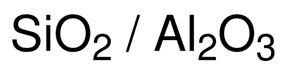
Aluminosilicate, mesostructured
Metal & Ceramic Science
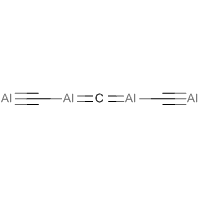
Aluminum carbide
Al4C3
Metal & Ceramic Science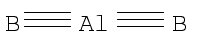
Aluminum diboride
AlB2
Metal & Ceramic Science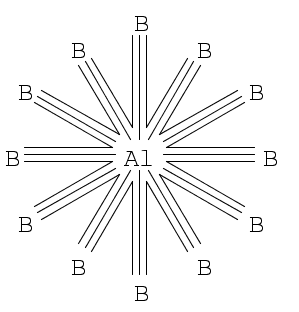
Aluminum dodecaboride
AlB12
Metal & Ceramic Science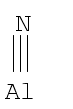
Aluminum nitride
AlN
Metal & Ceramic Science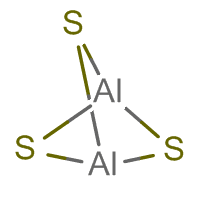
Aluminum sulfide
Al2S3
Metal & Ceramic Science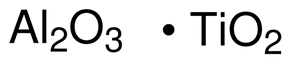
Aluminum titanate
Al2O3·TiO2
Metal & Ceramic Science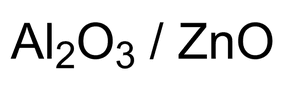
Aluminum zinc oxide
Al2O3/ZnO
Metal & Ceramic Science▶ Explore more

Bis(cyclopentadienyl)cobalt(III) hexafluorophosphate
C10H10CoF6P
Catalysis & Inorganic
1-(4-Chlorophenyl)biguanide hydrochloride
ClC6H4NHC(NH)NHC(NH)NH2 · HCl
Chemical Synthesis
Bis(cyclopentadienyl)dimethylzirconium(IV)
Catalysis & Inorganic

1-(4-Chlorophenyl)ethanol
ClC6H4CH(CH3)OH
Chemical Synthesis