
Poly(9H-carbazole-9-ethyl acrylate)
Poly(9H-carbazole-9-ethyl acrylate) (CAS: 69678-49-5) is a polymer synthesised from carbazole and acrylate functionalities, offering unique electronic and optical properties. Its polymerisation leads to materials with potential applications in organic electronics and non-linear optics. With a glass transition temperature (Tg) of 79 °C, this compound exhibits solubility in chloroform, making it amenable to various processing techniques. It absorbs light at a maximum wavelength of 246 nm.
- IUPAC
- Poly[2-(9H-Carbazol-9-yl)ethyl acrylate]
- Synonyms
- Poly[2-(9H-Carbazol-9-yl)ethyl acrylate]
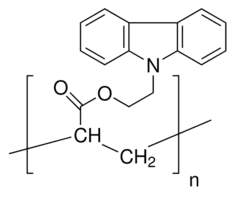
Organic Electronics
This polymer is investigated for its potential use in organic electronic devices due to the electroactive carbazole moiety. Its properties make it suitable for applications like organic light-emitting diodes (OLEDs) and organic field-effect transistors (OFETs).
Non-Linear Optical (NLO) Materials
The compound's structure is conducive to exhibiting non-linear optical properties. It is therefore of interest for applications in photonics, optical switching, and frequency doubling.
Photonic Materials
As a material with specific optical absorption characteristics, it can be employed in the development of advanced photonic components and devices.
| Linear formula | (C17H15NO2)n |
|---|---|
| Solubility | chloroform: soluble |
| Protective equipment | Eyeshields, Gloves, type N95 (US), type P1 (EN143) respirator filter |
|---|---|
| Water hazard class (WGK, DE) | 3 |
Hazard information is provided for guidance. Always consult the product Safety Data Sheet (SDS), available on request, before handling.
| Transition Temp | Tg (DSC) 79 °C (onset) |
|---|---|
| Absorption | λmax 246 nm |
Documentation
Every batch ships with a Certificate of Analysis covering assay, identity and purity; the grade is confirmed against your enquiry. Safety Data Sheets and technical data sheets are available on request.
Supply & logistics
Samples for technical evaluation; bulk MOQ by grade and packaging. In-stock material ships in 7–10 working days, worldwide, with full export documentation.
What is Poly(9H-carbazole-9-ethyl acrylate) used for?
+
Poly(9H-carbazole-9-ethyl acrylate) is primarily explored for its applications in organic electronics and non-linear optical (NLO) materials, as well as a component in photonic materials.
What are the CAS number and formula for Poly(9H-carbazole-9-ethyl acrylate)?
+
The CAS number for Poly(9H-carbazole-9-ethyl acrylate) is 69678-49-5. Its linear formula is (C17H15NO2)n.
What grade and purity does Tech Serve Solutions supply?
+
Tech Serve Solutions supplies this compound for research and development purposes. The specific grade and purity are detailed on the product's Certificate of Analysis. TSS does not represent this product as USP, BP, or EP grade.
What are the safety considerations when handling this chemical?
+
When handling Poly(9H-carbazole-9-ethyl acrylate), it is essential to use appropriate personal protective equipment, including eyeshields and gloves. A type N95 (US) or type P1 (EN143) respirator filter is recommended. This compound is classified under WGK Germany 3, indicating a high hazard to water.
How is this chemical packed, shipped, and exported?
+
Tech Serve Solutions packages chemicals securely in accordance with international transport regulations. We offer global export services for laboratory reagents and fine chemicals. Please contact us for specific shipping details and documentation.
How can I request a sample or quote?
+
To request a sample or a quotation for Poly(9H-carbazole-9-ethyl acrylate), please visit the product page on our website and use the 'Request Quote' or 'Request Sample' form, or contact our sales team directly.
▶ Related products
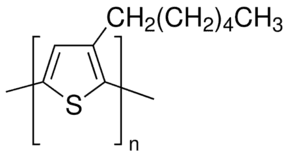
Poly(3-hexylthiophene-2,5-diyl)
Organic & Printed Electronics
![[6,6]-Phenyl C71 butyric acid methyl ester, mixture of isomers — chemical structure, CAS 609771-63-3; Organic & Printed Electronics, fine chemical supplied by Tech Serve Solutions](/_next/image?url=https%3A%2F%2Fpub-f4d920c906024441a773a96f7098e551.r2.dev%2Fimages%2Fproducts%2F609771-63-3.png&w=3840&q=75)
[6,6]-Phenyl C71 butyric acid methyl ester, mixture of isomers
Organic & Printed Electronics
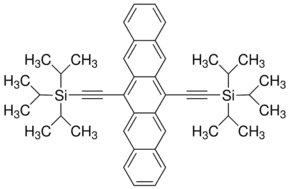
6,13-Bis(triisopropylsilylethynyl)pentacene
Organic & Printed Electronics
![[6,6]-Phenyl C61 butyric acid methyl ester — chemical structure, CAS 160848-22-6; Organic & Printed Electronics, fine chemical supplied by Tech Serve Solutions](/_next/image?url=https%3A%2F%2Fpub-f4d920c906024441a773a96f7098e551.r2.dev%2Fimages%2Fproducts%2F160848-22-6.png&w=3840&q=75)
[6,6]-Phenyl C61 butyric acid methyl ester
Organic & Printed Electronics
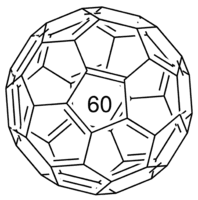
Fullerene-C60
C60
Organic & Printed Electronics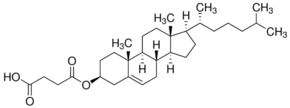
Cholesteryl hemisuccinate
C31H50O4
Organic & Printed Electronics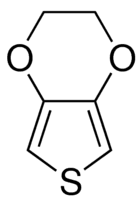
3,4-Ethylenedioxythiophene
Organic & Printed Electronics
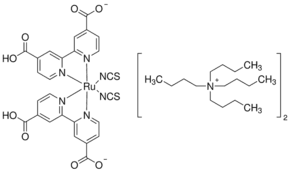
Di-tetrabutylammonium cis-bis(isothiocyanato)bis(2,2′-bipyridyl-4,4′-dicarboxylato)ruthenium(II)
Organic & Printed Electronics
▶ Explore more
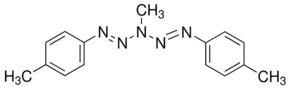
3-Methyl-1,5-di-p-tolyl-1,4-pentazadiene
Chemical Synthesis

3-Methyl-1,5-pentanediol
Chemical Synthesis
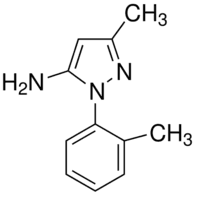
3-Methyl-1-(2-methylphenyl)-1H-pyrazol-5-amine
C11H13N3
Chemical Synthesis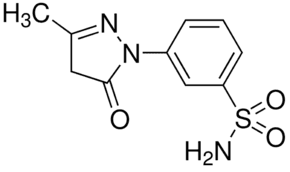
3-Methyl-1-(3′-sulfoamidophenyl)-5-pyrazolone
C10H11N3O3S
Chemical Synthesis