
Poly(3-octylthiophene-2,5-diyl)
Poly(3-octylthiophene-2,5-diyl) (CAS: 104934-51-2), an organic semiconductor with a CAS number of 104934-51-2, is a π-conjugated polymer of average molecular weight ~25,000. It exhibits p-type semiconducting properties and is widely utilised in organic electronics, including as a component in organic photovoltaic (OPV) devices and organic field-effect transistors (OFETs). TSS supplies this material in electronic grade purity.
- IUPAC
- P3OT
- Synonyms
- (C12H18S)nP3OT

Organic Field-Effect Transistors (OFETs)
Poly(3-octylthiophene-2,5-diyl) serves as an active layer material in OFETs due to its p-type semiconducting behaviour and charge carrier mobility. It enables the development of flexible and low-cost electronic devices.
Organic Photovoltaics (OPVs)
This conductive polymer is a key donor material in bulk heterojunction solar cells. Its properties contribute to efficient light absorption and charge separation, facilitating power conversion.
Sensors
The material's conductivity and responsiveness to chemical or optical stimuli make it suitable for use in chemical and optical sensor applications. It can be integrated into devices for detecting specific analytes.
Electrochromic Devices
Poly(3-octylthiophene-2,5-diyl) can be employed in electrochromic devices, where its colour changes in response to an applied voltage. This property is useful for smart windows and displays.
| Linear formula | (C12H18S)n |
|---|---|
| Assay | 99.995% trace metals basis |
| Grade | electronic grade |
| Form | solid |
| Application | Conducting polymer.Rechargeable battery electrodes, electrochromic devices, chemical and optical sensors, light-emitting diodes, microelectrical amplifiers, field-effect transistors and non-linear optical materials. |
| Melting point | 190 °C198-211 °C |
| Protective equipment | Eyeshields, Gloves, type N95 (US), type P1 (EN143) respirator filter |
|---|---|
| Water hazard class (WGK, DE) | 3 |
Hazard information is provided for guidance. Always consult the product Safety Data Sheet (SDS), available on request, before handling.
| Mol Wt | average Mn ~25,000 |
|---|---|
| Fluorescence | λex 442 nm; λem 562 nm in chloroform |
| Conductivity | 1 × 10⁻⁶ S/cm~1 × 103 S/cm (when doped with iodine) |
| Semiconductor Properties | P-type (mobility=1E-4-1E-1) |
| Orbital Energy | HOMO 5.25 eV LUMO 3.55 eV |
| Opv Device Performance | ITO/PEDOT:PSS/P3OT:PC61BM (1:2)/LiF/Al2• Short-circuit current density (Jsc): 5.55 mA/cm2• Open-circuit voltage (Voc): 0.5 V• Fill Factor (FF): 0.33• Power Conversion Efficiency (PCE): 0.91 % |
Documentation
Every batch ships with a Certificate of Analysis covering assay, identity and purity; the grade is confirmed against your enquiry. Safety Data Sheets and technical data sheets are available on request.
Supply & logistics
Samples for technical evaluation; bulk MOQ by grade and packaging. In-stock material ships in 7–10 working days, worldwide, with full export documentation.
What is Poly(3-octylthiophene-2,5-diyl) used for?
+
Poly(3-octylthiophene-2,5-diyl) is primarily used in organic electronics as a p-type semiconductor. Key applications include organic field-effect transistors (OFETs), organic photovoltaic (OPV) devices, sensors, and electrochromic devices.
What is the CAS number and formula for Poly(3-octylthiophene-2,5-diyl)?
+
The CAS number for Poly(3-octylthiophene-2,5-diyl) is 104934-51-2. Its linear formula is (C12H18S)n, indicating it is a polymer.
What grade and purity does Tech Serve Solutions supply for Poly(3-octylthiophene-2,5-diyl)?
+
Tech Serve Solutions supplies Poly(3-octylthiophene-2,5-diyl) in electronic grade with an assay of 99.995% trace metals basis and an average Mn of ~25,000.
How should Poly(3-octylthiophene-2,5-diyl) be handled safely?
+
When handling Poly(3-octylthiophene-2,5-diyl), it is essential to wear appropriate personal protective equipment, including eyeshields and gloves. A type N95 (US) or type P1 (EN143) respirator filter should be used if airborne exposure is possible. Refer to the Safety Data Sheet for full details.
How is Poly(3-octylthiophene-2,5-diyl) typically packed and shipped?
+
Poly(3-octylthiophene-2,5-diyl) is supplied as a solid. TSS ensures appropriate packaging for safe transport and export, adhering to international shipping regulations for chemical substances.
How can I request a sample or quote for Poly(3-octylthiophene-2,5-diyl)?
+
To request a sample or obtain a quotation for Poly(3-octylthiophene-2,5-diyl), please contact our sales team through the TSS website or by phone. Provide the product name and CAS number (104934-51-2) for prompt service.
▶ Related products
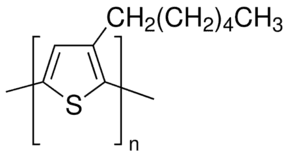
Poly(3-hexylthiophene-2,5-diyl)
Organic & Printed Electronics
![[6,6]-Phenyl C71 butyric acid methyl ester, mixture of isomers — chemical structure, CAS 609771-63-3; Organic & Printed Electronics, fine chemical supplied by Tech Serve Solutions](/_next/image?url=https%3A%2F%2Fpub-f4d920c906024441a773a96f7098e551.r2.dev%2Fimages%2Fproducts%2F609771-63-3.png&w=3840&q=75)
[6,6]-Phenyl C71 butyric acid methyl ester, mixture of isomers
Organic & Printed Electronics
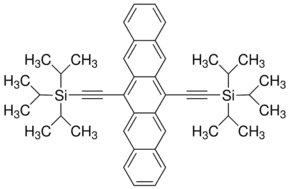
6,13-Bis(triisopropylsilylethynyl)pentacene
Organic & Printed Electronics
![[6,6]-Phenyl C61 butyric acid methyl ester — chemical structure, CAS 160848-22-6; Organic & Printed Electronics, fine chemical supplied by Tech Serve Solutions](/_next/image?url=https%3A%2F%2Fpub-f4d920c906024441a773a96f7098e551.r2.dev%2Fimages%2Fproducts%2F160848-22-6.png&w=3840&q=75)
[6,6]-Phenyl C61 butyric acid methyl ester
Organic & Printed Electronics
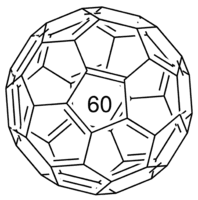
Fullerene-C60
C60
Organic & Printed Electronics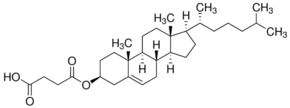
Cholesteryl hemisuccinate
C31H50O4
Organic & Printed Electronics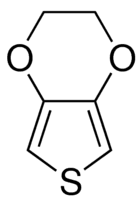
3,4-Ethylenedioxythiophene
Organic & Printed Electronics
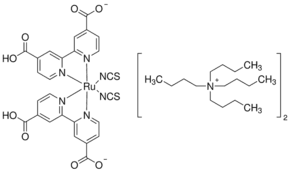
Di-tetrabutylammonium cis-bis(isothiocyanato)bis(2,2′-bipyridyl-4,4′-dicarboxylato)ruthenium(II)
Organic & Printed Electronics
▶ Explore more
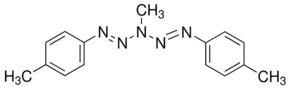
3-Methyl-1,5-di-p-tolyl-1,4-pentazadiene
Chemical Synthesis

3-Methyl-1,5-pentanediol
Chemical Synthesis
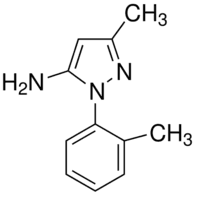
3-Methyl-1-(2-methylphenyl)-1H-pyrazol-5-amine
C11H13N3
Chemical Synthesis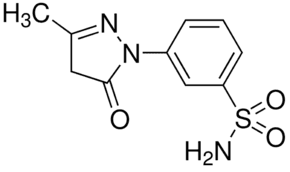
3-Methyl-1-(3′-sulfoamidophenyl)-5-pyrazolone
C10H11N3O3S
Chemical Synthesis