
L-Canavanine
L-Canavanine (CAS: 543-38-4), with the molecular formula C5H12N4O3 and a molecular weight of 176.17 g/mol, is a naturally occurring non-proteinogenic amino acid isolated from the seeds of Canavalia ensiformis. It functions as an inhibitor of nitric oxide synthase (NOS). L-Canavanine is widely utilized in biochemical research, particularly for studying enzyme inhibition and cell signaling pathways. Available as a powder, TSS supplies this compound with an assay of ≥98% (TLC).
- IUPAC
- L-α-Amino-γ-(guanidinooxy)-n-butyric acid

Nitric Oxide Synthase (NOS) Inhibition
L-Canavanine is recognized for its ability to inhibit nitric oxide synthase enzymes. This property makes it a valuable tool in research focused on understanding the roles of nitric oxide in various biological processes.
Biochemical Research
As a non-proteinogenic amino acid, L-Canavanine serves as a research chemical for investigating amino acid metabolism and protein synthesis, particularly in studies involving plant biochemistry and comparative biology.
Cell Signaling Studies
The compound's interaction with cellular pathways makes it useful for exploring mechanisms of cell signaling and the downstream effects of enzyme modulation in experimental settings.
| Molecular weight | 176.17 |
|---|---|
| Empirical formula | C5H12N4O3 |
| Assay | ≥98% (TLC) |
| Form | powder |
| Solubility | H2O: <100 mg/mL |
| Storage temperature | 2-8°C |
| Biological source | from Canavalia ensiformis |

Hazard statements
- H302Harmful if swallowed
- H312Harmful in contact with skin
- H332Harmful if inhaled
Precautionary statements
- P280Wear protective gloves, clothing and eye/face protection
| Protective equipment | dust mask type N95 (US), Eyeshields, Gloves |
|---|---|
| Water hazard class (WGK, DE) | 3 |
| Hazard codes (EU) | Xn |
| Risk statements (R) | 20/21/22 |
| Safety statements (S) | 36 |
Hazard information is provided for guidance. Always consult the product Safety Data Sheet (SDS), available on request, before handling.
Documentation
Every batch ships with a Certificate of Analysis covering assay, identity and purity; the grade is confirmed against your enquiry. Safety Data Sheets and technical data sheets are available on request.
Supply & logistics
Samples for technical evaluation; bulk MOQ by grade and packaging. In-stock material ships in 7–10 working days, worldwide, with full export documentation.
What is L-Canavanine primarily used for?
+
L-Canavanine is primarily used in biochemical research as an inhibitor of nitric oxide synthase (NOS) and for studies related to cell signaling and amino acid metabolism.
What are the CAS number and formula for L-Canavanine?
+
The CAS number for L-Canavanine is 543-38-4, and its molecular formula is C5H12N4O3.
What grade and purity does Tech Serve Solutions supply?
+
Tech Serve Solutions supplies L-Canavanine with an assay of ≥98% (TLC). We do not represent this product as USP, BP, EP, or any pharmacopoeia grade unless explicitly stated.
What are the safety considerations when handling L-Canavanine?
+
L-Canavanine is classified as harmful if swallowed, in contact with skin, or if inhaled (H302-H312-H332). Appropriate personal protective equipment, including a dust mask (type N95 US), eyeshields, and gloves, should be used. Handle in a well-ventilated area, and wear protective clothing (P280).
How is L-Canavanine packed and shipped?
+
L-Canavanine is typically supplied as a powder and is stored under refrigeration at 2-8°C. TSS offers global export services for this chemical.
How can I request a quote or sample for L-Canavanine?
+
To request a quote or sample for L-Canavanine, please contact our sales department via the website or direct inquiry. We will be pleased to assist you.
▶ Related products
triphosphatelithiumsalthydrate.png&w=3840&q=75)
Adenosine 5′-(β,γ-imido)triphosphate lithium salt hydrate
Biochemicals & Reagents
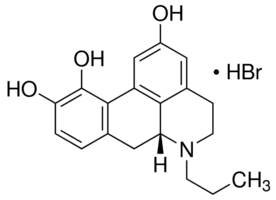
R(−)-2,10,11-Trihydroxy-N-propyl-noraporphine hydrobromide hydrate
Biochemicals & Reagents
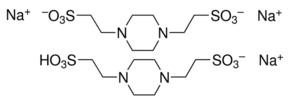
PIPES sesquisodium salt
C8H16.5N2Na1.5O6S2
Biochemicals & Reagents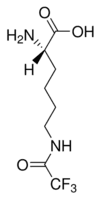
Nε-Trifluoroacetyl-L-lysine
C8H13F3N2O3
Biochemicals & Reagents
Methyl pristanate
C20H40O2
Biochemicals & Reagents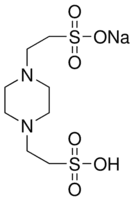
PIPES sodium salt
C8H17N2O6S2Na
Biochemicals & Reagents
Desmosine chloride
C24H40ClN5O8
Biochemicals & Reagents
Sodium decanoate
Biochemicals & Reagents


