Hydridotetrakis(triphenylphosphine)rhodium(I)
Hydridotetrakis(triphenylphosphine)rhodium(I) (CAS: 18284-36-1), with the formula [(C6H5)3P]4RhH and a molecular weight of 1153.06 g/mol, is a rhodium complex widely utilised as a catalyst. It is particularly effective in catalysing the hydrogenation of alkenes and the hydrosilylation of alkynes. This compound is a key reagent in organic synthesis, offering efficient reaction pathways for chemical transformations.
- IUPAC
- HRh(PPh3)4,Tetrakis(triphenylphosphine)rhodium hydride
- Synonyms
- HRh(PPh3)4Tetrakis(triphenylphosphine)rhodium hydride

Hydrogenation Catalyst
This rhodium complex serves as an efficient catalyst for the hydrogenation of alkenes, enabling the conversion of unsaturated hydrocarbons to saturated alkanes under mild conditions.
Hydrosilylation of Alkynes
It catalyses the hydrosilylation of alkynes, a crucial reaction in organic synthesis for introducing silicon-containing groups into organic molecules, forming vinylsilanes.
Organic Synthesis Reagent
As a versatile rhodium-based catalyst, it facilitates various organic transformations, contributing to the synthesis of complex molecules in research and development.
| Molecular weight | 1153.06 |
|---|---|
| Linear formula | [(C6H5)3P]4RhH |
| Application | Catalyst for hydrogenation of alkenes and hydrosilylation of alkynes. |
| Melting point | 140-146 °C(lit.) |

Hazard statements
- H315Causes skin irritation
- H319Causes serious eye irritation
- H335May cause respiratory irritation
Precautionary statements
- P261Avoid breathing dust, fume, gas or vapours
- P305IF IN EYES
| Protective equipment | dust mask type N95 (US), Eyeshields, Gloves |
|---|---|
| Water hazard class (WGK, DE) | 3 |
| Hazard codes (EU) | Xi |
| Risk statements (R) | 36/37/38 |
| Safety statements (S) | 26-37/39 |
Hazard information is provided for guidance. Always consult the product Safety Data Sheet (SDS), available on request, before handling.
Documentation
Every batch ships with a Certificate of Analysis covering assay, identity and purity; the grade is confirmed against your enquiry. Safety Data Sheets and technical data sheets are available on request.
Supply & logistics
Samples for technical evaluation; bulk MOQ by grade and packaging. In-stock material ships in 7–10 working days, worldwide, with full export documentation.
What is Hydridotetrakis(triphenylphosphine)rhodium(I) used for?
+
Hydridotetrakis(triphenylphosphine)rhodium(I) is primarily used as a catalyst for the hydrogenation of alkenes and the hydrosilylation of alkynes.
What is the CAS number and chemical formula for this compound?
+
The CAS number is 18284-36-1, and the chemical formula is [(C6H5)3P]4RhH.
What grade and purity does Tech Serve Solutions supply?
+
Tech Serve Solutions supplies this compound for research and laboratory use. The specific grade and purity are available upon request. It is not represented as USP, BP, or EP grade.
How should Hydridotetrakis(triphenylphosphine)rhodium(I) be handled safely?
+
This compound may cause skin irritation (H315), serious eye irritation (H319), and respiratory irritation (H335). Handle with appropriate personal protective equipment, including a dust mask (N95 US), eyeshields, and gloves, in a well-ventilated area.
Is this chemical suitable for export?
+
Yes, Tech Serve Solutions is a specialist global supplier and exporter of fine chemicals, including Hydridotetrakis(triphenylphosphine)rhodium(I), and can arrange for export.
How can I request a sample or quote?
+
To request a sample or a quote for Hydridotetrakis(triphenylphosphine)rhodium(I), please contact our sales team through the website or by phone.
▶ Related products
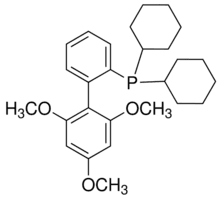
2′-Dicyclohexylphosphino-2,4,6-trimethoxybiphenyl
Catalysis & Inorganic
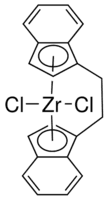
Dichloro[rac-ethylenebis(indenyl)]zirconium(IV)
C20H16Cl2Zr
Catalysis & Inorganic
Dichloro[rac-ethylenebis(4,5,6,7-tetrahydro-1-indenyl)]zirconium(IV)
C20H24Cl2Zr
Catalysis & Inorganic
Cadmium nitrate tetrahydrate
Cd(NO3)2 · 4H2O
Catalysis & Inorganic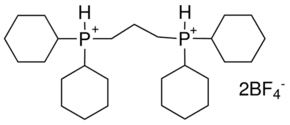
1,3-Bis(dicyclohexylphosphino)propane bis(tetrafluoroborate)
Catalysis & Inorganic

Neodymium(III) chloride
Catalysis & Inorganic

Platinum(II) chloride
Catalysis & Inorganic

Tin(II) chloride dihydrate
Catalysis & Inorganic