
HBTU
HBTU (CAS: 94790-37-1), with the molecular formula C11H16F6N5OP and a molecular weight of 379.24 g/mol, is a vital coupling reagent in peptide synthesis. It facilitates the formation of peptide bonds with remarkable efficiency, characterised by minimal racemization, simple reaction conditions, rapid reaction times, and high yields. Its application extends to chemical biology and general chemical synthesis, positioning it as a key reagent for advanced organic chemistry research and development.
- IUPAC
- N,N,N′,N′-Tetramethyl-O-(1H-benzotriazol-1-yl)uronium hexafluorophosphate,O-(Benzotriazol-1-yl)-N,N,N′,N′-tetramethyluronium hexafluorophosphate
- Synonyms
- O-(Benzotriazol-1-yl)-N,N,N′,N′-tetramethyluronium hexafluorophosphateN,N,N′,N′-Tetramethyl-O-(1H-benzotriazol-1-yl)uronium hexafluorophosphate

Peptide Bond Formation
HBTU is extensively utilised for efficient peptide bond formation. Its phosphonium/uronium nature enables rapid activation of carboxylic acids, leading to high yields and low racemization, crucial for synthesising complex peptides.
General Peptide Synthesis
As a versatile coupling agent, HBTU is employed in various peptide synthesis strategies. Its advantages, including simple reaction conditions and short reaction times, make it a preferred choice for both research and production scales.
Chemical Synthesis Reagent
Beyond peptide chemistry, HBTU serves as a valuable synthetic reagent in broader organic synthesis. It can be employed in the formation of amide bonds and other coupling reactions requiring efficient activation of carboxylic acid functionalities.
Chemical Biology Research
In chemical biology, HBTU aids in the synthesis of modified peptides and peptidomimetics. This facilitates the study of biological processes and the development of novel therapeutic agents.
| Molecular weight | 379.24 |
|---|---|
| Empirical formula | C11H16F6N5OP |
| Assay | ≥98.0% (T) |
| Solubility | acetonitrile: soluble0.1 g/mL, clear |
| Storage temperature | 2-8°C |
| Application | Recent studies show that crystal as well as solution structure of this coupling agent is a guanidinium N-oxide and not an uronium compound;1 Coupling reagent for peptide synthesis; advantages are: very low racemization, simple reaction conditions, very short reaction time, and high yields.2,3 |
| Melting point | 200 °C (dec.)(lit.) |

Hazard statements
- H315Causes skin irritation
- H319Causes serious eye irritation
- H335May cause respiratory irritation
Precautionary statements
- P261Avoid breathing dust, fume, gas or vapours
- P305IF IN EYES
| Protective equipment | dust mask type N95 (US), Eyeshields, Gloves |
|---|---|
| Water hazard class (WGK, DE) | 3 |
| Hazard codes (EU) | Xi |
| Risk statements (R) | 36/37/38 |
| Safety statements (S) | 26 |
Hazard information is provided for guidance. Always consult the product Safety Data Sheet (SDS), available on request, before handling.
Documentation
Every batch ships with a Certificate of Analysis covering assay, identity and purity; the grade is confirmed against your enquiry. Safety Data Sheets and technical data sheets are available on request.
Supply & logistics
Samples for technical evaluation; bulk MOQ by grade and packaging. In-stock material ships in 7–10 working days, worldwide, with full export documentation.
What is HBTU primarily used for?
+
HBTU is primarily used as a coupling reagent in peptide synthesis to facilitate the formation of peptide bonds with high efficiency, low racemization, and rapid reaction times.
What is the CAS number and chemical formula for HBTU?
+
The CAS number for HBTU is 94790-37-1, and its chemical formula is C11H16F6N5OP.
What grade and purity does Tech Serve Solutions supply for HBTU?
+
Tech Serve Solutions supplies HBTU with a purity of ≥98.0% (T). We do not represent this product as USP, BP, EP, or pharmacopoeia grade unless explicitly stated in the product specifications.
What are the safety and handling considerations for HBTU?
+
HBTU is classified with GHS07 symbol and a Warning signal word, indicated by hazard statements H315, H319, and H335. It is recommended to use a dust mask type N95 (US), eyeshields, and gloves. Handle in a well-ventilated area to avoid inhalation of dust. Refer to the Safety Data Sheet for comprehensive handling information.
How is HBTU shipped and exported by TSS?
+
As a specialist global supplier, Tech Serve Solutions expertly handles the packing, shipping, and export of HBTU worldwide, adhering to all relevant international regulations for chemical transport.
How can I request a quote or sample for HBTU?
+
To request a quote or a sample of HBTU, please contact our sales team through the website or provide your details via the 'Enquire Now' form.
▶ Related products

1-(2-Fluorobenzyl)piperazine
C11H15FN2
Chemical Synthesis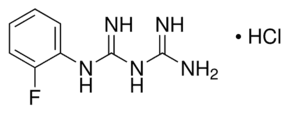
1-(2-Fluorophenyl)biguanide hydrochloride
Chemical Synthesis

1-(2-Fluorophenyl)cyclopropanecarboxylic acid
C10H9FO2
Chemical Synthesis
1-(2-Fluorophenyl)piperazine
C10H13FN2
Chemical Synthesis
1-(2-Fluorophenyl)piperazine monohydrochloride
C10H13FN2 · HCl
Chemical Synthesis
1-(2-Furoyl)-1H-benzotriazole
C11H7N3O2
Chemical Synthesis
1-(2-Furoyl)piperazine
C9H12N2O2
Chemical Synthesis
1-(2-Hydroxy-5-methylphenyl)-3-phenyl-1,3-propanedione
Chemical Synthesis
▶ Explore more
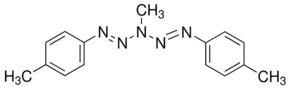
3-Methyl-1,5-di-p-tolyl-1,4-pentazadiene
Chemical Synthesis

3-Methyl-1,5-pentanediol
Chemical Synthesis

3-Methyl-1-(2-methylphenyl)-1H-pyrazol-5-amine
C11H13N3
Chemical Synthesis
3-Methyl-1-(3′-sulfoamidophenyl)-5-pyrazolone
C10H11N3O3S
Chemical Synthesis