
2,5-Dibromo-3-octylthiophene
2,5-Dibromo-3-octylthiophene (CAS: 149703-84-4) is a thiophene derivative with the molecular formula C12H18Br2S and a molecular weight of 354.14 g/mol. This compound serves as a key precursor in the synthesis of advanced materials, particularly for applications in organic and printed electronics. Its structure facilitates the creation of conducting polymers with tailored electronic properties.
- Synonyms
- C12H18Br2S
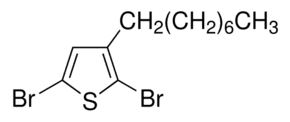
Conducting Polymer Precursor
2,5-Dibromo-3-octylthiophene is primarily used as a monomer or building block for synthesizing conjugated polymers. These polymers are essential components in organic electronic devices due to their semiconductor properties.
Organic and Printed Electronics
It finds application in the research and development of organic field-effect transistors (OFETs), organic photovoltaic cells (OPVs), and organic light-emitting diodes (OLEDs). The octyl side chain enhances solubility and processability of the resulting polymers.
Synthetic Intermediate
As a difunctional thiophene, it acts as a versatile intermediate for further chemical modifications and the creation of more complex molecular architectures for materials science research.
| Molecular weight | 354.14 |
|---|---|
| Empirical formula | C12H18Br2S |
| Assay | 96% |
| Boiling point | 316 °C(lit.) |
| Density | 1.44 g/mL at 25 °C(lit.) |
| Refractive index | n20/D 1.548(lit.) |
| Storage temperature | 2-8°C |
| Application | Conducting polymer precursor. |
| Protective equipment | Eyeshields, Gloves, half-mask respirator (EU), half-mask respirator (US), multi-purpose combination respirator cartridge (US) |
|---|---|
| Flash point | 110 °C / 230 °F |
| Water hazard class (WGK, DE) | 3 |
Hazard information is provided for guidance. Always consult the product Safety Data Sheet (SDS), available on request, before handling.
Documentation
Every batch ships with a Certificate of Analysis covering assay, identity and purity; the grade is confirmed against your enquiry. Safety Data Sheets and technical data sheets are available on request.
Supply & logistics
Samples for technical evaluation; bulk MOQ by grade and packaging. In-stock material ships in 7–10 working days, worldwide, with full export documentation.
What is 2,5-Dibromo-3-octylthiophene used for?
+
2,5-Dibromo-3-octylthiophene is primarily used as a precursor for conducting polymers in organic electronics, such as in OFETs and OPVs, and as a versatile synthetic intermediate.
What is the CAS number and formula for 2,5-Dibromo-3-octylthiophene?
+
The CAS number is 149703-84-4 and the molecular formula is C12H18Br2S.
What grade and purity does Tech Serve Solutions supply?
+
Tech Serve Solutions supplies 2,5-Dibromo-3-octylthiophene with an assay of 96%. This product is typically considered for research and industrial applications and is not represented as USP, BP, or EP grade.
What are the safety and handling recommendations for 2,5-Dibromo-3-octylthiophene?
+
This compound is combustible with a flash point of 110 °C (230 °F). It requires appropriate personal protective equipment, including eyeshields, gloves, and respiratory protection (half-mask respirator or multi-purpose combination respirator cartridge). It is classified under WGK Germany 3, indicating a high hazard to water.
Is 2,5-Dibromo-3-octylthiophene a controlled substance?
+
The provided data does not indicate that 2,5-Dibromo-3-octylthiophene is a controlled substance.
How is 2,5-Dibromo-3-octylthiophene packed and shipped?
+
2,5-Dibromo-3-octylthiophene is typically stored at 2-8°C. TSS ensures appropriate packaging for domestic and international export, adhering to all relevant shipping regulations for chemical compounds.
How can I request a quote or sample of 2,5-Dibromo-3-octylthiophene?
+
To request a quote or sample, please contact our sales team through the website or by phone. Provide the product name and CAS number (149703-84-4) for prompt service.
▶ Related products
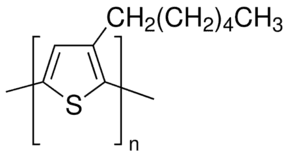
Poly(3-hexylthiophene-2,5-diyl)
Organic & Printed Electronics
![[6,6]-Phenyl C71 butyric acid methyl ester, mixture of isomers — chemical structure, CAS 609771-63-3; Organic & Printed Electronics, fine chemical supplied by Tech Serve Solutions](/_next/image?url=https%3A%2F%2Fpub-f4d920c906024441a773a96f7098e551.r2.dev%2Fimages%2Fproducts%2F609771-63-3.png&w=3840&q=75)
[6,6]-Phenyl C71 butyric acid methyl ester, mixture of isomers
Organic & Printed Electronics
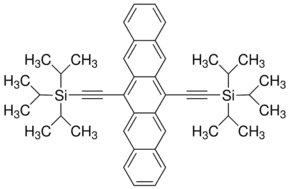
6,13-Bis(triisopropylsilylethynyl)pentacene
Organic & Printed Electronics
![[6,6]-Phenyl C61 butyric acid methyl ester — chemical structure, CAS 160848-22-6; Organic & Printed Electronics, fine chemical supplied by Tech Serve Solutions](/_next/image?url=https%3A%2F%2Fpub-f4d920c906024441a773a96f7098e551.r2.dev%2Fimages%2Fproducts%2F160848-22-6.png&w=3840&q=75)
[6,6]-Phenyl C61 butyric acid methyl ester
Organic & Printed Electronics
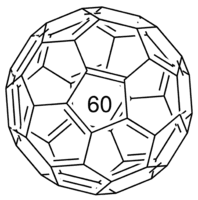
Fullerene-C60
C60
Organic & Printed Electronics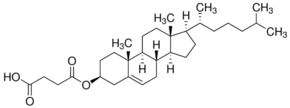
Cholesteryl hemisuccinate
C31H50O4
Organic & Printed Electronics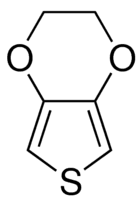
3,4-Ethylenedioxythiophene
Organic & Printed Electronics
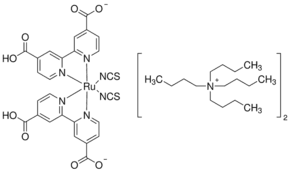
Di-tetrabutylammonium cis-bis(isothiocyanato)bis(2,2′-bipyridyl-4,4′-dicarboxylato)ruthenium(II)
Organic & Printed Electronics
▶ Explore more
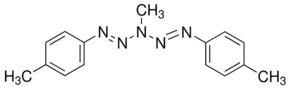
3-Methyl-1,5-di-p-tolyl-1,4-pentazadiene
Chemical Synthesis

3-Methyl-1,5-pentanediol
Chemical Synthesis
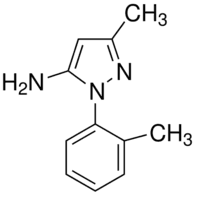
3-Methyl-1-(2-methylphenyl)-1H-pyrazol-5-amine
C11H13N3
Chemical Synthesis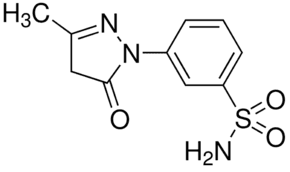
3-Methyl-1-(3′-sulfoamidophenyl)-5-pyrazolone
C10H11N3O3S
Chemical Synthesis