Tris(2-aminoethyl)amine
Tris(2-aminoethyl)amine (CAS 4097-89-6) is a versatile organic compound with the linear formula (NH2CH2CH2)3N and a molecular weight of 146.23 g/mol. This tertiary amine serves as a critical building block in materials science and polymer chemistry. Its primary amine functionalities make it valuable in synthesising complex molecules, including cryptands and proazaphosphatrane bases, finding utility in advanced chemical research and development.
- IUPAC
- 2,2′,2′′-Nitrilotriethylamine,2,2′,2′′-Triaminotriethylamine,TAEA
- Synonyms
- 2,2′,2′′-Nitrilotriethylamine2,2′,2′′-TriaminotriethylamineTAEA
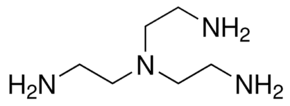
Cryptand Synthesis
Tris(2-aminoethyl)amine is employed as a key building block in the synthesis of cryptands, which are macrocyclic compounds known for their ability to selectively bind metal cations.
Precursor to Strong Bases
It acts as a precursor in the preparation of proazaphosphatrane, a powerful, non-ionic base used in specialised organic synthesis reactions.
Monomer in Polymer Science
As an amine monomer, it can be incorporated into polymer chains, contributing to the development of novel polymeric materials with specific properties.
Materials Science Intermediate
Its reactive amine groups allow for its use as an intermediate in the synthesis of various advanced materials and functional molecules.
| Molecular weight | 146.23 |
|---|---|
| Linear formula | (NH2CH2CH2)3N |
| Assay | 96% |
| Boiling point | 114 °C/15 mmHg(lit.) |
| Density | 0.976 g/mL at 20 °C(lit.) |
| Refractive index | n20/D 1.497(lit.) |
| Vapour pressure | 0.02 mmHg (20 °C) |
| Vapour density | 5 (vs air) |
| Application | Building block for cryptands;1 precursor to a proazaphosphatrane, a stong, nonionic base.2 |


Hazard statements
- H301Toxic if swallowed
- H310Fatal in contact with skin
- H314Causes severe skin burns and eye damage
Precautionary statements
- P280Wear protective gloves, clothing and eye/face protection
- P302IF ON SKIN
- P305IF IN EYES
- P310Immediately call a POISON CENTER or doctor
| Protective equipment | Faceshields, full-face respirator (US), Gloves, Goggles, multi-purpose combination respirator cartridge (US), type ABEK (EN14387) respirator filter |
|---|---|
| Flash point | 113 °C / 235.4 °F |
| Transport (UN / ADR) | UN 2922 6.1(8) / PGII |
| Water hazard class (WGK, DE) | 3 |
| Hazard codes (EU) | T |
| Risk statements (R) | 22-24-34 |
| Safety statements (S) | 26-36/37/39-45 |
Hazard information is provided for guidance. Always consult the product Safety Data Sheet (SDS), available on request, before handling.
Documentation
Every batch ships with a Certificate of Analysis covering assay, identity and purity; the grade is confirmed against your enquiry. Safety Data Sheets and technical data sheets are available on request.
Supply & logistics
Samples for technical evaluation; bulk MOQ by grade and packaging. In-stock material ships in 7–10 working days, worldwide, with full export documentation.
What is Tris(2-aminoethyl)amine used for?
+
Tris(2-aminoethyl)amine is used as a building block for cryptands and as a precursor to strong, non-ionic bases like proazaphosphatrane. It also functions as an amine monomer in polymer science and an intermediate in materials science.
What is the CAS number and formula for Tris(2-aminoethyl)amine?
+
The CAS number is 4097-89-6 and its linear formula is (NH2CH2CH2)3N.
What grade and purity does Tech Serve Solutions supply?
+
Tech Serve Solutions supplies Tris(2-aminoethyl)amine with an assay of 96%. This is typically a technical or research grade; we do not represent it as USP, BP, or EP grade.
What are the safety hazards associated with Tris(2-aminoethyl)amine?
+
Tris(2-aminoethyl)amine is classified as Danger, with hazards including toxicity if swallowed (H301), toxicity in contact with skin (H310), and severe skin burns and eye damage (H314). Appropriate personal protective equipment, including gloves, eye protection, and respiratory protection, must be used.
How is Tris(2-aminoethyl)amine packaged and shipped?
+
Tris(2-aminoethyl)amine is shipped as a hazardous material, UN 2922, Class 6.1 (8), PGII. Packaging adheres to stringent regulations for hazardous chemical transport.
How can I request a quote or sample?
+
To request a quote or sample, please use the 'Request Quote' or 'Request Sample' function on our website, providing your contact details and the product information.
▶ Related products
(2,3-Epoxypropyl)benzene
Polymer Science
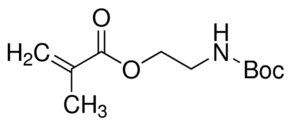
(2-Boc-amino)ethyl methacrylate
C11H19NO4
Polymer Science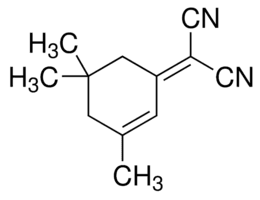
(3,5,5-Trimethylcyclohex-2-enylidene)malononitrile
Polymer Science
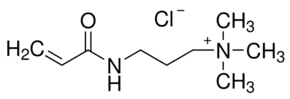
(3-Acrylamidopropyl)trimethylammonium chloride solution
Polymer Science
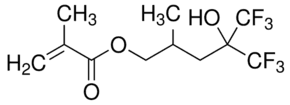
1,1,1-Trifluoro-2-(trifluoromethyl)-2-hydroxy-4-methyl-5-pentyl methacrylate
Polymer Science
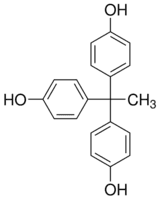
1,1,1-Tris(4-hydroxyphenyl)ethane
Polymer Science
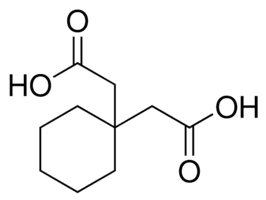
1,1-Cyclohexanediacetic acid
Polymer Science

1,12-Diisocyanatododecane
Polymer Science