
Tris(2,3-epoxypropyl) isocyanurate
Tris(2,3-epoxypropyl) isocyanurate (CAS 2451-62-9), also known as triglycidyl isocyanurate (TGIC), is a trifunctional epoxide monomer with a molecular weight of 297.26 g/mol. It is a key crosslinking agent and building block in the synthesis of high-performance polymers, coatings, and adhesives, prized for its ability to impart excellent thermal stability and mechanical properties to cured materials. Its unique structure enables versatile applications in advanced material science.
- IUPAC
- 1,3,5-Tris(oxiran-2-ylmethyl)-1,3,5-triazinane-2,4,6-trione,TGIC,Triglycidyl isocyanurate
- Synonyms
- Triglycidyl isocyanurateTGIC1,3,5-Tris(oxiran-2-ylmethyl)-1,3,5-triazinane-2,4,6-trione
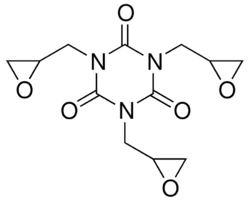
Epoxy Resin Crosslinking
Triglycidyl isocyanurate (TGIC) serves as a highly effective trifunctional crosslinker for epoxy resins. It enhances the thermal stability, chemical resistance, and mechanical strength of the cured polymer network, making it ideal for demanding applications.
Powder Coatings
This compound is extensively used as a curing agent in polyester-based powder coatings. It contributes to excellent weatherability, hardness, and gloss retention in finished coatings for automotive, architectural, and industrial applications.
Adhesives and Sealants
TGIC can be incorporated into formulations for high-performance adhesives and sealants. Its crosslinking capabilities result in durable bonds with superior thermal and chemical resistance, suitable for aerospace and electronic component assembly.
Composite Materials
As a monomer in polymer synthesis, it is utilised in the production of advanced composite materials. The resulting polymers exhibit exceptional thermal and mechanical properties, finding use in aerospace structures and high-performance sporting goods.
| Molecular weight | 297.26 |
|---|---|
| Empirical formula | C12H15N3O6 |


Hazard statements
- H301Toxic if swallowed
- H317May cause an allergic skin reaction
- H318Causes serious eye damage
- H340May cause genetic defects
- H373May cause damage to organs through prolonged exposure
- H412Harmful to aquatic life with long-lasting effects
Precautionary statements
- P201Obtain special instructions before use
- P261Avoid breathing dust, fume, gas or vapours
- P273Avoid release to the environment
- P280Wear protective gloves, clothing and eye/face protection
- P301IF SWALLOWED
- P305IF IN EYES
| Protective equipment | Eyeshields, Faceshields, full-face particle respirator type N100 (US), Gloves, respirator cartridge type N100 (US), type P1 (EN143) respirator filter, type P3 (EN 143) respirator cartridges |
|---|---|
| Transport (UN / ADR) | UN 2811 6.1 / PGIII |
| Water hazard class (WGK, DE) | 3 |
| Hazard codes (EU) | T |
| Risk statements (R) | 46-23/25-41-43-48/22-52/53 |
| Safety statements (S) | 53-45-61 |
Hazard information is provided for guidance. Always consult the product Safety Data Sheet (SDS), available on request, before handling.
Documentation
Every batch ships with a Certificate of Analysis covering assay, identity and purity; the grade is confirmed against your enquiry. Safety Data Sheets and technical data sheets are available on request.
Supply & logistics
Samples for technical evaluation; bulk MOQ by grade and packaging. In-stock material ships in 7–10 working days, worldwide, with full export documentation.
What is Tris(2,3-epoxypropyl) isocyanurate used for?
+
Tris(2,3-epoxypropyl) isocyanurate (TGIC) is primarily used as a crosslinking agent in epoxy resins and polyester powder coatings. It enhances thermal stability, chemical resistance, and mechanical properties in cured materials, finding applications in adhesives, sealants, and composites.
What are the CAS number and formula for Tris(2,3-epoxypropyl) isocyanurate?
+
The CAS number for Tris(2,3-epoxypropyl) isocyanurate is 2451-62-9, and its empirical formula (Hill notation) is C12H15N3O6.
What grade and purity does Tech Serve Solutions supply?
+
Tech Serve Solutions supplies Tris(2,3-epoxypropyl) isocyanurate as a technical or research grade material. We do not represent this product as meeting USP, BP, or EP pharmacopoeia standards.
What are the main safety hazards associated with Tris(2,3-epoxypropyl) isocyanurate?
+
This compound presents significant hazards, indicated by GHS symbols GHS05, GHS06, and GHS08. It is acutely toxic if swallowed or inhaled (H301 + H331), causes skin sensitisation (H317), serious eye damage (H318), may cause genetic defects (H340), may cause damage to organs through prolonged exposure (H373), and is harmful to aquatic life with long-lasting effects (H412). Strict adherence to safety protocols and use of appropriate PPE, including full-face respirators and protective gloves, is essential.
How is Tris(2,3-epoxypropyl) isocyanurate packed and shipped?
+
Tris(2,3-epoxypropyl) isocyanurate is packed and shipped according to UN 2811 regulations for toxic solids, organic, n.o.s. (Triglycidyl isocyanurate), hazard class 6.1, packing group III. We ensure compliance with all relevant export and shipping regulations.
How can I request a sample or quote for Tris(2,3-epoxypropyl) isocyanurate?
+
To request a sample or quote, please contact our sales department through the website or by phone. Please provide your contact details and the quantity required.
▶ Related products
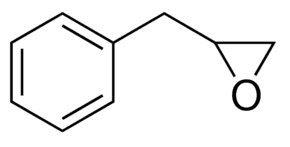
(2,3-Epoxypropyl)benzene
Polymer Science
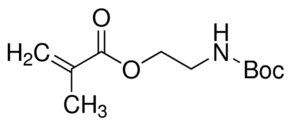
(2-Boc-amino)ethyl methacrylate
C11H19NO4
Polymer Science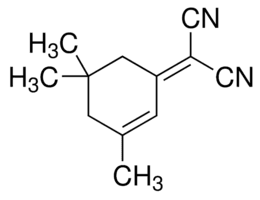
(3,5,5-Trimethylcyclohex-2-enylidene)malononitrile
Polymer Science
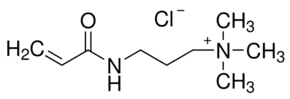
(3-Acrylamidopropyl)trimethylammonium chloride solution
Polymer Science
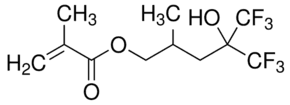
1,1,1-Trifluoro-2-(trifluoromethyl)-2-hydroxy-4-methyl-5-pentyl methacrylate
Polymer Science
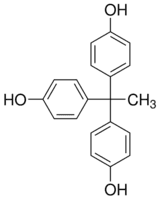
1,1,1-Tris(4-hydroxyphenyl)ethane
Polymer Science
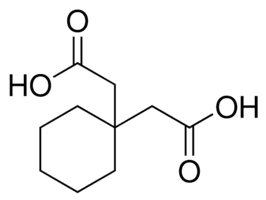
1,1-Cyclohexanediacetic acid
Polymer Science

1,12-Diisocyanatododecane
Polymer Science
▶ Explore more

Bis(cyclopentadienyl)cobalt(III) hexafluorophosphate
C10H10CoF6P
Catalysis & Inorganic
1-(4-Chlorophenyl)biguanide hydrochloride
ClC6H4NHC(NH)NHC(NH)NH2 · HCl
Chemical Synthesis
Bis(cyclopentadienyl)dimethylzirconium(IV)
Catalysis & Inorganic

1-(4-Chlorophenyl)ethanol
ClC6H4CH(CH3)OH
Chemical Synthesis