
Tripropylaluminum
Tripropylaluminum (CAS: 102-67-0) is an organoaluminum compound with the linear formula (CH3CH2CH2)3Al and a molecular weight of 156.24 g/mol. This highly reactive substance is primarily utilised as a reactant in various chemical synthesis applications. It serves as a key component in studies involving the kinetics and mechanisms of transition metal catalysis, as well as in stereoselective organic transformations and the synthesis of complex cyclic compounds.

Catalysis Research
Tripropylaluminum is employed as a reactant in studies focusing on the kinetics and mechanism of zirconium-catalyzed chain growth reactions, contributing to advancements in polymerisation and organometallic chemistry.
Conjugate Addition Reactions
It participates in copper-catalyzed conjugate addition reactions to various unsaturated systems, including nitrodienes, nitroenynes, and oxabicyclohelptadienedicarboxylates, enabling the formation of new carbon-carbon bonds.
Stereoselective Synthesis
The compound is used in copper-catalyzed stereoselective ring-opening and desymmetrisation processes of polycyclic meso-hydrazines and 1,4-dihydro-1,4-naphthalene epoxide, facilitating access to chiral molecules.
Heterocyclic Synthesis
Tripropylaluminum serves as a reagent in the synthesis of β-hydroxylactams through alkylative aldol cyclisation with α,β-unsaturated carboxamides, a valuable route to important heterocyclic scaffolds.
| Molecular weight | 156.24 |
|---|---|
| Linear formula | (CH3CH2CH2)3Al |
| Boiling point | 82-84 °C/2 mmHg(lit.) |
| Density | 0.823 g/mL at 25 °C(lit.) |
| Application | Reactant involved in:• Studies of the kinetics and mechanism of Zr-catalyzed chain growth1• Copper-catalyzed conjugate addition to nitrodienes and nitroenynes2 or oxabicyclohelptadienedicarboxylates3• Copper-catalyzed stereoselective ring opening / desymmetrization of polycyclic meso-hydrazines4 or 1,4-dihydro-1,4-naphthalene epoxide5• Synthesis of β-hydroxylactams via alkylative aldol cyclization with α,β-unsaturated carboxamides6 |
| Melting point | −107 °C(lit.) |


Hazard statements
- H225Highly flammable liquid and vapour
- H250Catches fire spontaneously if exposed to air
- H261In contact with water releases flammable gas
- H314Causes severe skin burns and eye damage
Precautionary statements
- P210Keep away from heat, sparks and open flames. No smoking
- P222Do not allow contact with air
- P231Handle under inert gas
- P280Wear protective gloves, clothing and eye/face protection
- P305IF IN EYES
- P422
| Protective equipment | Faceshields, full-face respirator (US), Gloves, Goggles, multi-purpose combination respirator cartridge (US), type ABEK (EN14387) respirator filter |
|---|---|
| Flash point | -18 °C / -.4 °F |
| Transport (UN / ADR) | UN 3394 4.2/PG 1 |
| Water hazard class (WGK, DE) | nwg |
| Hazard codes (EU) | F,C |
| Risk statements (R) | 14-17-34 |
| Safety statements (S) | 16-43-45 |
Hazard information is provided for guidance. Always consult the product Safety Data Sheet (SDS), available on request, before handling.
Documentation
Every batch ships with a Certificate of Analysis covering assay, identity and purity; the grade is confirmed against your enquiry. Safety Data Sheets and technical data sheets are available on request.
Supply & logistics
Samples for technical evaluation; bulk MOQ by grade and packaging. In-stock material ships in 7–10 working days, worldwide, with full export documentation.
What is Tripropylaluminum used for?
+
Tripropylaluminum is used as a reactant in chemical synthesis, including studies of catalysis, conjugate addition reactions, stereoselective transformations, and the synthesis of heterocyclic compounds.
What is the CAS number and formula for Tripropylaluminum?
+
The CAS number for Tripropylaluminum is 102-67-0, and its linear formula is (CH3CH2CH2)3Al.
What grade and purity does Tech Serve Solutions supply?
+
Tech Serve Solutions supplies Tripropylaluminum typically as a technical or research grade. We do not represent this product as USP, BP, EP, or pharmacopoeia grade unless explicitly stated in the product specifications.
How should Tripropylaluminum be handled safely?
+
Tripropylaluminum is highly flammable and pyrophoric, reacting violently with water. It is corrosive and causes severe skin burns and eye damage. Handling requires extreme caution, appropriate personal protective equipment (including face shields, gloves, and respirators), and strict exclusion of air and moisture.
How is Tripropylaluminum packed, shipped, and exported?
+
Tripropylaluminum is packed and shipped according to strict international regulations for hazardous materials, including pyrophoric and water-reactive substances. As a global supplier, TSS ensures compliance with all export requirements.
How can I request a sample or quote for Tripropylaluminum?
+
To request a sample or a quote for Tripropylaluminum, please contact our sales team through the website or by phone, providing your specific requirements and shipping details.
▶ Related products
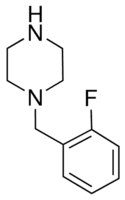
1-(2-Fluorobenzyl)piperazine
C11H15FN2
Chemical Synthesis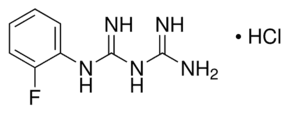
1-(2-Fluorophenyl)biguanide hydrochloride
Chemical Synthesis
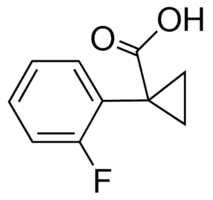
1-(2-Fluorophenyl)cyclopropanecarboxylic acid
C10H9FO2
Chemical Synthesis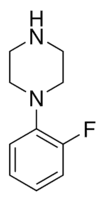
1-(2-Fluorophenyl)piperazine
C10H13FN2
Chemical Synthesis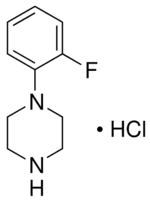
1-(2-Fluorophenyl)piperazine monohydrochloride
C10H13FN2 · HCl
Chemical Synthesis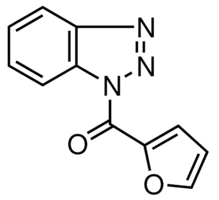
1-(2-Furoyl)-1H-benzotriazole
C11H7N3O2
Chemical Synthesis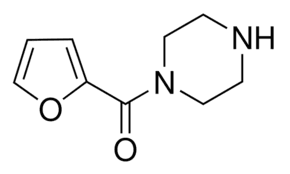
1-(2-Furoyl)piperazine
C9H12N2O2
Chemical Synthesis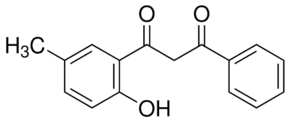
1-(2-Hydroxy-5-methylphenyl)-3-phenyl-1,3-propanedione
Chemical Synthesis
▶ Explore more

Bis(cyclopentadienyl)cobalt(III) hexafluorophosphate
C10H10CoF6P
Catalysis & Inorganic
1-(4-Chlorophenyl)biguanide hydrochloride
ClC6H4NHC(NH)NHC(NH)NH2 · HCl
Chemical Synthesis
Bis(cyclopentadienyl)dimethylzirconium(IV)
Catalysis & Inorganic

1-(4-Chlorophenyl)ethanol
ClC6H4CH(CH3)OH
Chemical Synthesis