
Triphosgene-13C3
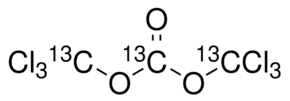
Triphosgene-13C3 (CAS: 1173019-90-3), with the formula Cl3<sup>13</sup>CO<sup>13</sup>COO<sup>13</sup>CCl3 and a molecular weight of 299.73 g/mol, is a stable isotope-labelled phosgene derivative. This compound serves as a valuable reagent in organic synthesis, particularly in reactions requiring precise isotopic tracing. It is primarily employed in research and development settings for the synthesis of complex molecules and as a building block in chemical transformations where isotopic labelling is essential for mechanistic studies.
Isotope Labelling in Organic Synthesis
Triphosgene-13C3 is used to introduce specific carbon-13 isotopes into organic molecules. This is crucial for spectroscopic analysis (e.g., NMR) and reaction mechanism studies in pharmaceutical and chemical research.
Synthesis of Labelled Intermediates
It acts as a precursor for synthesising isotopically enriched intermediates and final products. This allows researchers to track the fate of specific atoms during complex chemical processes.
Reagent in Phosgenation Reactions
As a safer alternative to phosgene gas, it can be employed in phosgenation reactions for the formation of carbonates, chloroformates, and isocyanates, with the added benefit of isotopic labelling.
| Molecular weight | 299.73 |
|---|---|
| Linear formula | Cl313CO13COO13CCl3 |
| Boiling point | 203-206 °C(lit.) |
| Melting point | 79-83 °C(lit.) |


Hazard statements
- H314Causes severe skin burns and eye damage
- H330Fatal if inhaled
Precautionary statements
- P260Do not breathe dust, fume, gas, mist, vapours or spray
- P280Wear protective gloves, clothing and eye/face protection
- P284Wear respiratory protection
- P305IF IN EYES
- P310Immediately call a POISON CENTER or doctor
| Protective equipment | Eyeshields, Faceshields, full-face particle respirator type N100 (US), Gloves, respirator cartridge type N100 (US), type P1 (EN143) respirator filter, type P3 (EN 143) respirator cartridges |
|---|---|
| Transport (UN / ADR) | UN 2928 6.1/PG 2 |
| Water hazard class (WGK, DE) | 3 |
| Hazard codes (EU) | T+ |
| Risk statements (R) | 26-34 |
| Safety statements (S) | 36/37/39-45 |
Hazard information is provided for guidance. Always consult the product Safety Data Sheet (SDS), available on request, before handling.
| Mol Wt | mol wt 299.70 by atom % calculation |
|---|---|
| Isotopic Purity | 99 atom % 13C |
| Mass Shift | M+3 |
Documentation
Every batch ships with a Certificate of Analysis covering assay, identity and purity; the grade is confirmed against your enquiry. Safety Data Sheets and technical data sheets are available on request.
Supply & logistics
Samples for technical evaluation; bulk MOQ by grade and packaging. In-stock material ships in 7–10 working days, worldwide, with full export documentation.
What is Triphosgene-13C3 used for?
+
Triphosgene-13C3 is used in organic synthesis for introducing specific carbon-13 isotopes into molecules, aiding in spectroscopic analysis, reaction mechanism studies, and the synthesis of isotopically enriched compounds.
What is the CAS number and formula for Triphosgene-13C3?
+
The CAS number is 1173019-90-3, and the formula is Cl3<sup>13</sup>CO<sup>13</sup>COO<sup>13</sup>CCl3.
What grade and purity does Tech Serve Solutions supply?
+
Tech Serve Solutions supplies Triphosgene-13C3 with an isotopic purity of 99 atom % 13C. This product is intended for research and development purposes and is not supplied as USP, BP, EP, or any other pharmacopoeia grade.
How should Triphosgene-13C3 be handled?
+
Triphosgene-13C3 is a highly hazardous substance, classified as Danger, causing severe skin burns and eye damage, and is fatal if inhaled (H314, H330). It requires stringent safety precautions, including the use of eyeshields, faceshields, chemical-resistant gloves, and appropriate respiratory protection (e.g., full-face particle respirator type N100 or P3 filter).
Is Triphosgene-13C3 a controlled substance?
+
The provided data does not indicate that Triphosgene-13C3 is a scheduled or controlled substance.
How is Triphosgene-13C3 packed and shipped?
+
Based on UN 2928 classification (corrosive, toxic, solid, n.o.s.), it is packed and shipped according to regulations for hazardous materials, requiring appropriate hazard labelling and documentation for international export.
How can I request a sample or quote for Triphosgene-13C3?
+
To request a sample or a quote, please contact the Tech Serve Solutions sales team via the website or by phone, providing the product name and CAS number.
▶ Related products
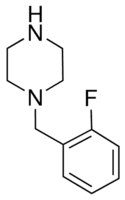
1-(2-Fluorobenzyl)piperazine
C11H15FN2
Chemical Synthesis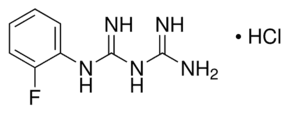
1-(2-Fluorophenyl)biguanide hydrochloride
Chemical Synthesis
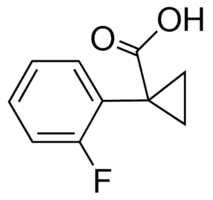
1-(2-Fluorophenyl)cyclopropanecarboxylic acid
C10H9FO2
Chemical Synthesis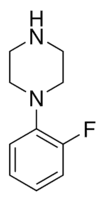
1-(2-Fluorophenyl)piperazine
C10H13FN2
Chemical Synthesis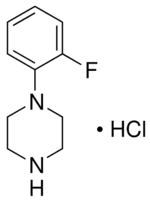
1-(2-Fluorophenyl)piperazine monohydrochloride
C10H13FN2 · HCl
Chemical Synthesis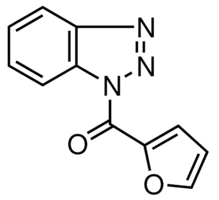
1-(2-Furoyl)-1H-benzotriazole
C11H7N3O2
Chemical Synthesis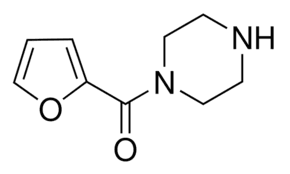
1-(2-Furoyl)piperazine
C9H12N2O2
Chemical Synthesis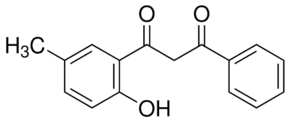
1-(2-Hydroxy-5-methylphenyl)-3-phenyl-1,3-propanedione
Chemical Synthesis
▶ Explore more

Bis(cyclopentadienyl)cobalt(III) hexafluorophosphate
C10H10CoF6P
Catalysis & Inorganic
1-(4-Chlorophenyl)biguanide hydrochloride
ClC6H4NHC(NH)NHC(NH)NH2 · HCl
Chemical Synthesis
Bis(cyclopentadienyl)dimethylzirconium(IV)
Catalysis & Inorganic

1-(4-Chlorophenyl)ethanol
ClC6H4CH(CH3)OH
Chemical Synthesis