
Triphenyltin hydroxide
Triphenyltin hydroxide (CAS: 76-87-9), with the linear formula (C₆H₅)₃SnOH and a molecular weight of 367.03 g/mol, is an organotin compound. It serves as a key reactant in various chemical syntheses, particularly in transmetalation reactions. Its utility extends to the preparation of diverse organotin(IV) complexes studied for potential biological activities, including antitumor and larvicidal properties.
- IUPAC
- Fentin hydroxide,Hydroxytriphenylstannane,NSC 113243
- Synonyms
- Fentin hydroxideHydroxytriphenylstannaneNSC 113243
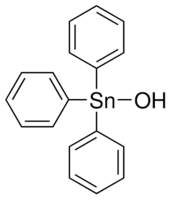
Transmetalation Reactions
Triphenyltin hydroxide acts as a reactant in transmetalation processes, notably with iridium clusters, facilitating the formation of new organometallic species.
Synthesis of Antitumor Agents
It is employed in the synthesis of novel organotin(IV) carboxylates and related complexes, which are investigated for their potential antitumor activities.
Larvicidal Compound Development
This compound is used in the preparation of triorganotin chrysanthemumates, which are studied for their larvicidal properties.
Cytotoxicity Studies
It serves as a precursor in the synthesis of organotin(IV) aminophenylacrylate complexes and biphenylcarboxylic acid derivatives evaluated for in vitro cytotoxicity.
| Molecular weight | 367.03 |
|---|---|
| Linear formula | (C6H5)3SnOH |
| Application | Reactant involved in transmetalation reactions with Ir clusters1Reactant involved in synthesis of:• (E)-(Nitrophenyl)propenoic acid organotin(IV) carboxylates with antitumor activity2• Triorganotin chrysanthemumates for larvicidal studies3• Polynuclear organotin(IV) carboxylates containing ferrocenyl moieties for antitumor investigation4• Organotin(IV) aminophenylacrylate complexes5• 4-Biphenylcarboxylic acid derivatives for in vitro cytotoxicity studies6 |
| Melting point | 124-126 °C(lit.) |


Hazard statements
- H301Toxic if swallowed
- H311Toxic in contact with skin
- H315Causes skin irritation
- H318Causes serious eye damage
- H330Fatal if inhaled
- H335May cause respiratory irritation
- H351Suspected of causing cancer
- H361D
- H372Causes damage to organs through prolonged exposure
- H410Very toxic to aquatic life with long-lasting effects
Precautionary statements
- P260Do not breathe dust, fume, gas, mist, vapours or spray
- P273Avoid release to the environment
- P280Wear protective gloves, clothing and eye/face protection
- P284Wear respiratory protection
- P301IF SWALLOWED
- P305IF IN EYES
| Protective equipment | Eyeshields, Faceshields, full-face particle respirator type N100 (US), Gloves, respirator cartridge type N100 (US), type P1 (EN143) respirator filter, type P3 (EN 143) respirator cartridges |
|---|---|
| Transport (UN / ADR) | UN 3146 6.1 / PGII |
| Water hazard class (WGK, DE) | 3 |
| Hazard codes (EU) | T+,N |
| Risk statements (R) | 63-24/25-26-37/38-40-41-48/23-50/53 |
| Safety statements (S) | 26-28-36/37/39-45-60-61 |
Hazard information is provided for guidance. Always consult the product Safety Data Sheet (SDS), available on request, before handling.
Documentation
Every batch ships with a Certificate of Analysis covering assay, identity and purity; the grade is confirmed against your enquiry. Safety Data Sheets and technical data sheets are available on request.
Supply & logistics
Samples for technical evaluation; bulk MOQ by grade and packaging. In-stock material ships in 7–10 working days, worldwide, with full export documentation.
What is Triphenyltin hydroxide used for?
+
Triphenyltin hydroxide is used as a reactant in transmetalation reactions and in the synthesis of various organotin(IV) compounds investigated for antitumor, larvicidal, and general cytotoxicity studies.
What is the CAS number and formula for Triphenyltin hydroxide?
+
The CAS number is 76-87-9, and the linear formula is (C₆H₅)₃SnOH.
What grade and purity does Tech Serve Solutions supply?
+
Tech Serve Solutions supplies Triphenyltin hydroxide with a purity typically around 97%. This product is intended for research and chemical synthesis purposes and is not supplied as USP, BP, or EP grade.
How should Triphenyltin hydroxide be handled safely?
+
Handling requires stringent safety measures due to its toxicity and corrosive nature. Use in a well-ventilated area or fume hood, wear appropriate personal protective equipment including eyeshields, face shields, gloves, and a particulate respirator (N100 US/P3 EN143). Avoid contact with skin, eyes, and inhalation. Refer to the Safety Data Sheet for detailed guidance.
How is Triphenyltin hydroxide packed, shipped, and exported?
+
Triphenyltin hydroxide is securely packed in compliance with international regulations for hazardous materials. We offer global shipping and export services for this compound.
How can I request a sample or quote for Triphenyltin hydroxide?
+
To request a sample or a quote, please contact our sales team via the 'Request a Quote' or 'Sample Request' form on our website, or call us directly.
▶ Related products
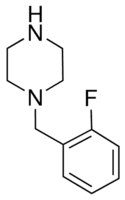
1-(2-Fluorobenzyl)piperazine
C11H15FN2
Chemical Synthesis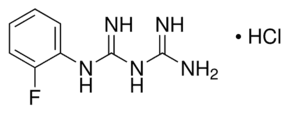
1-(2-Fluorophenyl)biguanide hydrochloride
Chemical Synthesis
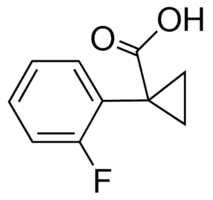
1-(2-Fluorophenyl)cyclopropanecarboxylic acid
C10H9FO2
Chemical Synthesis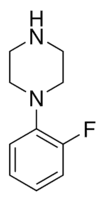
1-(2-Fluorophenyl)piperazine
C10H13FN2
Chemical Synthesis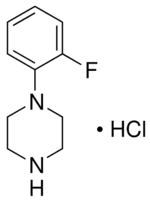
1-(2-Fluorophenyl)piperazine monohydrochloride
C10H13FN2 · HCl
Chemical Synthesis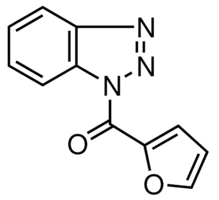
1-(2-Furoyl)-1H-benzotriazole
C11H7N3O2
Chemical Synthesis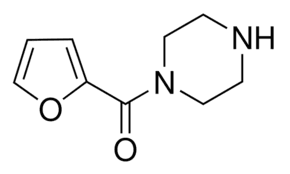
1-(2-Furoyl)piperazine
C9H12N2O2
Chemical Synthesis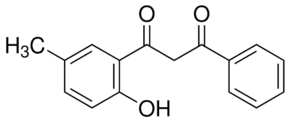
1-(2-Hydroxy-5-methylphenyl)-3-phenyl-1,3-propanedione
Chemical Synthesis
▶ Explore more

Bis(cyclopentadienyl)cobalt(III) hexafluorophosphate
C10H10CoF6P
Catalysis & Inorganic
1-(4-Chlorophenyl)biguanide hydrochloride
ClC6H4NHC(NH)NHC(NH)NH2 · HCl
Chemical Synthesis
Bis(cyclopentadienyl)dimethylzirconium(IV)
Catalysis & Inorganic

1-(4-Chlorophenyl)ethanol
ClC6H4CH(CH3)OH
Chemical Synthesis