Triphenyltin chloride
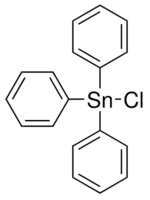
Triphenyltin chloride (CAS: 639-58-7) is an organotin compound with the formula (C6H5)3SnCl and a molecular weight of 385.47 g/mol. This chemical is primarily utilised as a reagent in organic synthesis, particularly in the preparation of other organotin compounds and as a catalyst. Its applications extend to various chemical research and development activities, demanding precise control in its handling due to its hazardous nature.
- IUPAC
- Chlorotriphenylstannane,Fentin chloride
- Synonyms
- ChlorotriphenylstannaneFentin chlorideTriphenylstannyl chloride
Reagent in Organic Synthesis
Triphenyltin chloride serves as a valuable reagent for introducing the triphenyltin moiety into organic molecules. It is employed in the synthesis of more complex organotin compounds and as a precursor in various coupling reactions.
Catalysis
This compound can act as a catalyst or co-catalyst in certain organic transformations. Its organometallic nature allows it to facilitate reactions that might otherwise require harsher conditions or different catalytic systems.
Chemical Research and Development
Triphenyltin chloride is utilized in academic and industrial research laboratories for exploring new synthetic routes and developing novel materials. Its specific reactivity makes it a subject of study in organometallic chemistry.
| Molecular weight | 385.47 |
|---|---|
| Linear formula | (C6H5)3SnCl |
| Assay | 95% |
| Boiling point | 240 °C/13.5 mmHg(lit.) |
| Melting point | 108 °C (dec.)(lit.) |


Hazard statements
- H301Toxic if swallowed
- H311Toxic in contact with skin
- H331Toxic if inhaled
- H410Very toxic to aquatic life with long-lasting effects
Precautionary statements
- P261Avoid breathing dust, fume, gas or vapours
- P273Avoid release to the environment
- P280Wear protective gloves, clothing and eye/face protection
- P301IF SWALLOWED
- P311Call a POISON CENTER or doctor
- P501Dispose of contents and container per local regulations
| Transport (UN / ADR) | UN 3146 6.1 / PGIII |
|---|---|
| Water hazard class (WGK, DE) | 3 |
| Hazard codes (EU) | T,N |
| Risk statements (R) | 23/24/25-50/53 |
| Safety statements (S) | 26-27-28-45-60-61 |
Hazard information is provided for guidance. Always consult the product Safety Data Sheet (SDS), available on request, before handling.
Documentation
Every batch ships with a Certificate of Analysis covering assay, identity and purity; the grade is confirmed against your enquiry. Safety Data Sheets and technical data sheets are available on request.
Supply & logistics
Samples for technical evaluation; bulk MOQ by grade and packaging. In-stock material ships in 7–10 working days, worldwide, with full export documentation.
What is Triphenyltin chloride used for?
+
Triphenyltin chloride is primarily used as a reagent in organic synthesis, for the preparation of other organotin compounds, and in catalytic applications within chemical research and development.
What are the CAS number and chemical formula for Triphenyltin chloride?
+
The CAS number for Triphenyltin chloride is 639-58-7, and its linear formula is (C6H5)3SnCl.
What grade and purity does Tech Serve Solutions supply?
+
Tech Serve Solutions supplies Triphenyltin chloride with a minimum assay of 95%. This product is not represented as USP, BP, EP, or any other pharmacopoeia grade. For specific purity requirements, please contact our sales team.
How should Triphenyltin chloride be handled safely?
+
Triphenyltin chloride is toxic if swallowed, in contact with skin, and if inhaled (H301-H311-H331). It is also very toxic to aquatic life with long-lasting effects (H410). Handle with appropriate personal protective equipment in a well-ventilated area, avoiding release to the environment. Refer to the Safety Data Sheet (SDS) for comprehensive safety information.
Is Triphenyltin chloride a controlled substance?
+
The provided data does not indicate that Triphenyltin chloride is a controlled substance. However, users should consult local regulations for any specific restrictions or reporting requirements.
How is Triphenyltin chloride packed and shipped?
+
Triphenyltin chloride is packed according to UN 3146, Class 6.1, Packing Group III regulations for transportation. TSS exports chemicals globally, adhering to all relevant international shipping and handling standards.
How can I request a quote or sample for Triphenyltin chloride?
+
To request a quote or a sample of Triphenyltin chloride, please visit the 'Contact Us' section of our website or email our sales department directly with your inquiry.
▶ Related products
1-(2-Fluorobenzyl)piperazine
C11H15FN2
Chemical Synthesis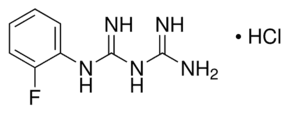
1-(2-Fluorophenyl)biguanide hydrochloride
Chemical Synthesis
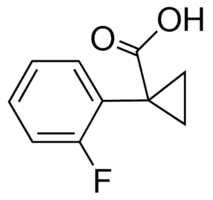
1-(2-Fluorophenyl)cyclopropanecarboxylic acid
C10H9FO2
Chemical Synthesis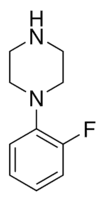
1-(2-Fluorophenyl)piperazine
C10H13FN2
Chemical Synthesis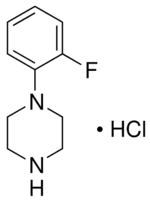
1-(2-Fluorophenyl)piperazine monohydrochloride
C10H13FN2 · HCl
Chemical Synthesis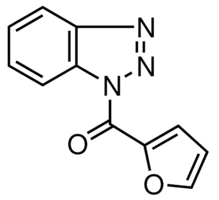
1-(2-Furoyl)-1H-benzotriazole
C11H7N3O2
Chemical Synthesis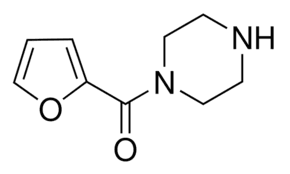
1-(2-Furoyl)piperazine
C9H12N2O2
Chemical Synthesis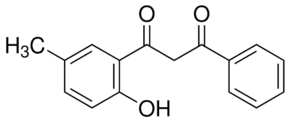
1-(2-Hydroxy-5-methylphenyl)-3-phenyl-1,3-propanedione
Chemical Synthesis