
Triphenylcarbenium tetrafluoroborate
Triphenylcarbenium tetrafluoroborate (CAS 341-02-6) is a stable carbenium salt with the linear formula (C 6 H 5 ) 3 C(BF 4 ) and a molecular weight of 330.13. This compound serves as a valuable reactant and building block in organic synthesis. Its applications range from the preparation of photoswitches and alpha-amino-beta-hydroxy esters to its use in ionic hydrogenation and oxidation reactions. Tech Serve Solutions supplies this chemical for research and development purposes.
- IUPAC
- Trityl fluoroborate,Tritylium tetrafluoroborate
- Synonyms
- Trityl fluoroborateTritylium tetrafluoroborate
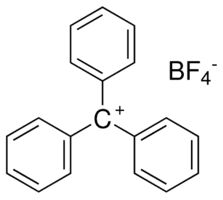
Synthesis of Photoswitches
Triphenylcarbenium tetrafluoroborate is employed as a reactant in the synthesis of substituted dihydroazulene photoswitches, contributing to advancements in photochemical materials.
Carbene-Based Lewis Pairs
This compound is utilised in the development of carbene-based Lewis pairs, enabling novel strategies for hydrogen activation in chemical research.
1,3-Dipolar Cycloaddition Reactions
It acts as a key reagent in 1,3-dipolar cycloaddition reactions, facilitating the preparation of crucial intermediates such as alpha-amino-beta-hydroxy esters.
Oxidation of Allenic Compounds
Triphenylcarbenium tetrafluoroborate is involved in the oxidation of allenic compounds, offering a specific pathway for functional group transformations.
Mukaiyama Aldol Additions
The carbenium salt participates in Mukaiyama aldol addition reactions, a fundamental carbon-carbon bond-forming process in organic synthesis.
Ionic Hydrogenation
It serves as both a counteranion and a ligand source in ionic hydrogenation reactions, a useful method for the reduction of organic substrates.
| Molecular weight | 330.13 |
|---|---|
| Linear formula | (C6H5)3C(BF4) |
| Assay | ≥97.0% (T) |
| Storage temperature | 2-8°C |
| Application | Reactant involved in:• Synthesis of substituted dihydroazulene photoswitches1• Carbene-based Lewis pairs for hydrogen activation2• 1,3-Dipolar cycloaddition reactions for preparation of α−amino-β-hydroxy esters3• Oxidation of allenic compounds4• Mukaiyama aldol addition reactions 5• Ionic hydrogenation as a counteranion and ligand source6 |
| Melting point | 205-215 °C (dec.)(lit.) |

Hazard statements
- H314Causes severe skin burns and eye damage
Precautionary statements
- P280Wear protective gloves, clothing and eye/face protection
- P305IF IN EYES
- P310Immediately call a POISON CENTER or doctor
| Protective equipment | Eyeshields, Faceshields, full-face particle respirator type N100 (US), Gloves, respirator cartridge type N100 (US), type P1 (EN143) respirator filter, type P3 (EN 143) respirator cartridges |
|---|---|
| Transport (UN / ADR) | UN 3261 8 / PGII |
| Water hazard class (WGK, DE) | 3 |
| Hazard codes (EU) | C |
| Risk statements (R) | 14-34 |
| Safety statements (S) | 26-36/37/39-45 |
| Supplemental hazards | Reacts violently with water. |
Hazard information is provided for guidance. Always consult the product Safety Data Sheet (SDS), available on request, before handling.
Documentation
Every batch ships with a Certificate of Analysis covering assay, identity and purity; the grade is confirmed against your enquiry. Safety Data Sheets and technical data sheets are available on request.
Supply & logistics
Samples for technical evaluation; bulk MOQ by grade and packaging. In-stock material ships in 7–10 working days, worldwide, with full export documentation.
What is Triphenylcarbenium tetrafluoroborate used for?
+
Triphenylcarbenium tetrafluoroborate is used as a reactant in various organic syntheses, including the preparation of photoswitches, carbene-based Lewis pairs, alpha-amino-beta-hydroxy esters, and in oxidation and aldol addition reactions.
What are the CAS number and formula for Triphenylcarbenium tetrafluoroborate?
+
The CAS number is 341-02-6, and its linear formula is (C 6 H 5 ) 3 C(BF 4 ).
What grade and purity does Tech Serve Solutions supply?
+
Tech Serve Solutions supplies Triphenylcarbenium tetrafluoroborate with an assay of ≥97.0% (T). We do not represent this product as USP, BP, or EP grade.
How should Triphenylcarbenium tetrafluoroborate be handled safely?
+
Triphenylcarbenium tetrafluoroborate reacts violently with water and causes severe skin burns and eye damage (H314). Handle with appropriate personal protective equipment, including eyeshields, gloves, and a full-face particle respirator. Ensure adequate ventilation and avoid contact with water.
How is Triphenylcarbenium tetrafluoroborate packed and shipped?
+
This product is shipped as a hazardous material (UN 3261, Class 8, PG II). Specific packing and shipping details are available upon request, adhering to all relevant transportation regulations.
How can I request a sample or quote for Triphenylcarbenium tetrafluoroborate?
+
To request a sample or a quote, please contact our sales team through the website or by phone, referencing the product name and CAS number (341-02-6).
▶ Related products
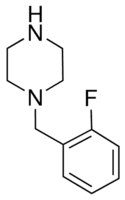
1-(2-Fluorobenzyl)piperazine
C11H15FN2
Chemical Synthesis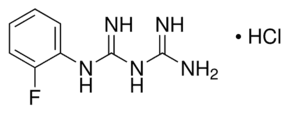
1-(2-Fluorophenyl)biguanide hydrochloride
Chemical Synthesis
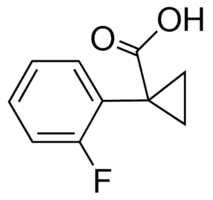
1-(2-Fluorophenyl)cyclopropanecarboxylic acid
C10H9FO2
Chemical Synthesis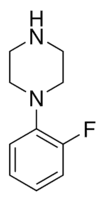
1-(2-Fluorophenyl)piperazine
C10H13FN2
Chemical Synthesis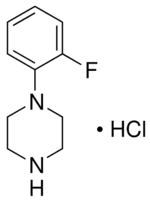
1-(2-Fluorophenyl)piperazine monohydrochloride
C10H13FN2 · HCl
Chemical Synthesis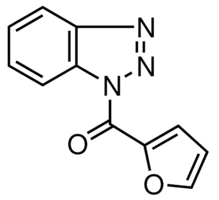
1-(2-Furoyl)-1H-benzotriazole
C11H7N3O2
Chemical Synthesis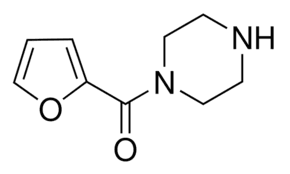
1-(2-Furoyl)piperazine
C9H12N2O2
Chemical Synthesis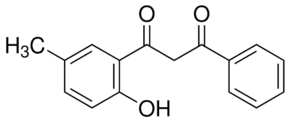
1-(2-Hydroxy-5-methylphenyl)-3-phenyl-1,3-propanedione
Chemical Synthesis
▶ Explore more

Bis(cyclopentadienyl)cobalt(III) hexafluorophosphate
C10H10CoF6P
Catalysis & Inorganic
1-(4-Chlorophenyl)biguanide hydrochloride
ClC6H4NHC(NH)NHC(NH)NH2 · HCl
Chemical Synthesis
Bis(cyclopentadienyl)dimethylzirconium(IV)
Catalysis & Inorganic

1-(4-Chlorophenyl)ethanol
ClC6H4CH(CH3)OH
Chemical Synthesis