
Triisopropylsilane
Triisopropylsilane (CAS 6485-79-6), with the molecular formula [(CH3)2CH]3SiH and a molecular weight of 158.36 g/mol, is a valuable organosilicon compound. It serves as a potent reducing agent and a versatile reagent in organic synthesis. Its sterically hindered nature makes it particularly useful for selective reductions and as a protecting group source in complex molecular constructions.
![Triisopropylsilane ([(CH3)2CH]3SiH) — chemical structure, CAS 6485-79-6; Chemistry, fine chemical supplied by Tech Serve Solutions](/_next/image?url=https%3A%2F%2Fpub-f4d920c906024441a773a96f7098e551.r2.dev%2Fimages%2Fproducts%2F6485-79-6.png&w=3840&q=75)
Selective Reductions
Triisopropylsilane is employed as a highly effective reducing agent for various functional groups. Its steric bulk allows for selective reduction of specific bonds, minimising side reactions and enhancing product yield in complex synthetic pathways.
Protecting Group Chemistry
This silane is utilised in the introduction and manipulation of silyl protecting groups. It can be used to protect alcohols and other functionalities, which can later be removed under specific conditions, facilitating multi-step syntheses.
Organosilicon Synthesis
As an organosilicon compound, triisopropylsilane is a key building block or reagent in the synthesis of more complex silicon-containing molecules. These can find applications in materials science and advanced chemical research.
Hydrosilylation Reactions
Triisopropylsilane can participate in hydrosilylation reactions, where a Si-H bond adds across an unsaturated bond. This process is crucial for forming new carbon-silicon bonds, enabling the synthesis of diverse organosilicon compounds.
| Molecular weight | 158.36 |
|---|---|
| Linear formula | [(CH3)2CH]3SiH |
| Assay | 99% |
| Grade | purum |
| Boiling point | 84-86 °C/35 mmHg(lit.) |
| Density | 0.773 g/mL at 25 °C(lit.) |
| Refractive index | n20/D 1.434(lit.) |


Hazard statements
- H226Flammable liquid and vapour
- H315Causes skin irritation
- H319Causes serious eye irritation
- H335May cause respiratory irritation
Precautionary statements
- P261Avoid breathing dust, fume, gas or vapours
- P305IF IN EYES
| Protective equipment | Eyeshields, Faceshields, full-face respirator (US), Gloves, multi-purpose combination respirator cartridge (US), type ABEK (EN14387) respirator filter |
|---|---|
| Flash point | 38 °C / 100.4 °F |
| Transport (UN / ADR) | UN 1993C 3 / PGIII |
| Water hazard class (WGK, DE) | 3 |
| Hazard codes (EU) | Xi |
| Risk statements (R) | 10-36/37/38 |
| Safety statements (S) | 26-36 |
Hazard information is provided for guidance. Always consult the product Safety Data Sheet (SDS), available on request, before handling.
Documentation
Every batch ships with a Certificate of Analysis covering assay, identity and purity; the grade is confirmed against your enquiry. Safety Data Sheets and technical data sheets are available on request.
Supply & logistics
Samples for technical evaluation; bulk MOQ by grade and packaging. In-stock material ships in 7–10 working days, worldwide, with full export documentation.
What is Triisopropylsilane used for?
+
Triisopropylsilane is primarily used as a selective reducing agent in organic synthesis and for the introduction and manipulation of silyl protecting groups. It is also a reagent in the synthesis of other organosilicon compounds.
What is the CAS number and chemical formula for Triisopropylsilane?
+
The CAS number for Triisopropylsilane is 6485-79-6, and its chemical formula is [(CH3)2CH]3SiH.
What grade and purity does Tech Serve Solutions supply?
+
Tech Serve Solutions supplies Triisopropylsilane at a 'purum' grade with an assay of 99%.
How should Triisopropylsilane be handled safely?
+
Triisopropylsilane is a flammable liquid and vapour (H226) and can cause skin irritation (H315), serious eye irritation (H319), and respiratory irritation (H335). Handle in a well-ventilated area, away from ignition sources, using appropriate personal protective equipment including eyeshields, gloves, and respiratory protection (e.g., type ABEK respirator filter).
Is Triisopropylsilane a controlled substance?
+
The provided data does not indicate that Triisopropylsilane is a controlled substance.
How is Triisopropylsilane packed, shipped, and exported?
+
Triisopropylsilane is shipped as a flammable liquid (UN 1993, Class 3, Packing Group III) and is exported globally by Tech Serve Solutions, adhering to all relevant transportation and export regulations.
How can I request a quote or sample of Triisopropylsilane?
+
To request a quote or sample of Triisopropylsilane, please contact the Tech Serve Solutions sales team through our website or by phone.
▶ Related products
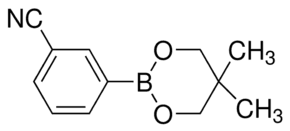
(3-Cyanophenyl)boronic acid, neopentyl glycol ester
Organometallic Reagents
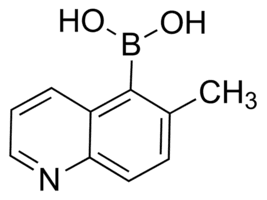
(6-Methyl-5-quinolinyl)boronic acid
C10H10BNO2
Organometallic Reagents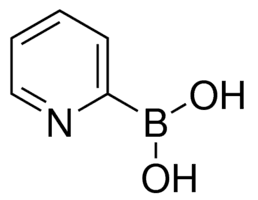
2-Pyridineboronic acid
C5H6BNO2
Organometallic Reagents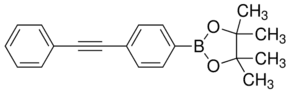
4-(Phenylethynyl)phenylboronic acid pinacol ester
C20H21BO2
Organometallic Reagents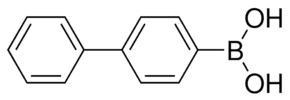
4-Biphenylboronic acid
C6H5C6H4B(OH)2
Organometallic Reagents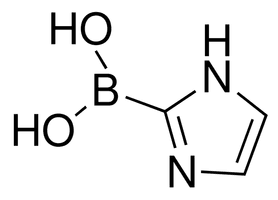
Imidazole-2-boronic acid
C3H5BN2O2
Organometallic Reagents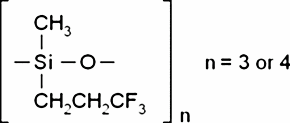
Methyl(3,3,3-trifluoropropyl)cyclopolysiloxanes, mixture of tri- and tetra-
Organometallic Reagents
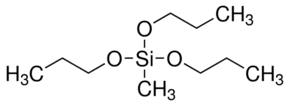
Methyl-tripropoxysilane
CH3Si(OCH2CH2CH3)3
Organometallic Reagents▶ Explore more

Bis(cyclopentadienyl)cobalt(III) hexafluorophosphate
C10H10CoF6P
Catalysis & Inorganic
1-(4-Chlorophenyl)biguanide hydrochloride
ClC6H4NHC(NH)NHC(NH)NH2 · HCl
Chemical Synthesis
Bis(cyclopentadienyl)dimethylzirconium(IV)
Catalysis & Inorganic

1-(4-Chlorophenyl)ethanol
ClC6H4CH(CH3)OH
Chemical Synthesis