
Triisobutylaluminum
Triisobutylaluminum (CAS: 100-99-2) is an organoaluminum compound with the linear formula [(CH3)2CHCH2]3Al and a molecular weight of 198.32. This flammable liquid is a potent reducing agent and a key precursor in various chemical syntheses and materials science applications. It is widely utilized in polymerization processes, organic synthesis, and as a component in Chemical Vapor Deposition (CVD) and Atomic Layer Deposition (ALD) for microelectronics.
- IUPAC
- Aluminumtriisobutanide,TIBA
- Synonyms
- Aluminumtriisobutanide, TIBA
![Triisobutylaluminum ([(CH3)2CHCH2]3Al) — chemical structure, CAS 100-99-2; Chemistry, fine chemical supplied by Tech Serve Solutions](/_next/image?url=https%3A%2F%2Fpub-f4d920c906024441a773a96f7098e551.r2.dev%2Fimages%2Fproducts%2F100-99-2.png&w=3840&q=75)
Polymerization Catalyst Component
Triisobutylaluminum serves as a co-catalyst in Ziegler-Natta and other polymerization systems. It activates transition metal catalysts, enabling the production of polyolefins like polyethylene and polypropylene with controlled properties.
Organic Synthesis Reagent
As a strong reducing agent, it is employed in various organic transformations. Its ability to donate hydride ions makes it valuable for reducing functional groups in complex molecule synthesis.
CVD/ALD Precursor
This compound is used as a precursor in Chemical Vapor Deposition (CVD) and Atomic Layer Deposition (ALD) processes. It facilitates the deposition of aluminum-containing thin films critical for semiconductor manufacturing and microelectronics.
Materials Science
Triisobutylaluminum finds application in materials science for the synthesis of novel organometallic compounds and materials. Its reactivity allows for the creation of specific nanostructures and advanced material compositions.
| Molecular weight | 198.32 |
|---|---|
| Linear formula | [(CH3)2CHCH2]3Al |
| Form | liquid |
| Boiling point | 86 °C/10 mmHg(lit.) |
| Density | 0.786 g/mL at 25 °C(lit.) |
| Refractive index | n20/D 1.4494(lit.) |
| Concentration | 25 wt. % in toluene |
| Melting point | 4-6 °C(lit.) |


Hazard statements
- H250Catches fire spontaneously if exposed to air
- H260In contact with water releases flammable gases
- H314Causes severe skin burns and eye damage
Precautionary statements
- P222Do not allow contact with air
- P223Do not allow contact with water
- P231Handle under inert gas
- P280Wear protective gloves, clothing and eye/face protection
- P370In case of fire
- P422
| Transport (UN / ADR) | UN 3394 4.2/PG 1 |
|---|---|
| Water hazard class (WGK, DE) | nwg |
| Hazard codes (EU) | F,C |
| Risk statements (R) | 14-17-34 |
| Safety statements (S) | 16-43-45 |
| Supplemental hazards | Reacts violently with water. |
Hazard information is provided for guidance. Always consult the product Safety Data Sheet (SDS), available on request, before handling.
Documentation
Every batch ships with a Certificate of Analysis covering assay, identity and purity; the grade is confirmed against your enquiry. Safety Data Sheets and technical data sheets are available on request.
Supply & logistics
Samples for technical evaluation; bulk MOQ by grade and packaging. In-stock material ships in 7–10 working days, worldwide, with full export documentation.
What is Triisobutylaluminum used for?
+
Triisobutylaluminum is primarily used as a co-catalyst in polymerization, a reducing agent in organic synthesis, and a precursor for CVD/ALD in microelectronics and materials science.
What is the CAS number and formula for Triisobutylaluminum?
+
The CAS number for Triisobutylaluminum is 100-99-2 and its linear formula is [(CH3)2CHCH2]3Al.
What grade and purity does Tech Serve Solutions supply?
+
Tech Serve Solutions supplies Triisobutylaluminum typically as a 25 wt.% solution in toluene. Specific purity and assay details are available on the product specification sheet. We do not represent this product as USP, BP, or EP grade.
What are the safety and handling considerations for Triisobutylaluminum?
+
Triisobutylaluminum is a highly reactive and flammable substance that reacts violently with water, causing fire. It is corrosive and requires strict handling under an inert atmosphere to prevent contact with air and moisture. Always consult the Safety Data Sheet (SDS) before handling.
How is Triisobutylaluminum packed and shipped?
+
This product is carefully packed and shipped in compliance with international regulations for hazardous materials, often under an inert atmosphere to maintain stability and safety during transport and export.
How can I request a quote or sample of Triisobutylaluminum?
+
To request a quote or a sample of Triisobutylaluminum, please use the 'Enquire Now' button on our website or contact our sales team directly with your requirements.
▶ Related products
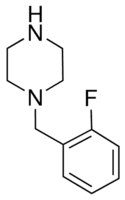
1-(2-Fluorobenzyl)piperazine
C11H15FN2
Chemical Synthesis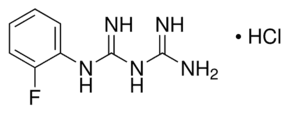
1-(2-Fluorophenyl)biguanide hydrochloride
Chemical Synthesis
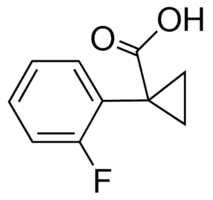
1-(2-Fluorophenyl)cyclopropanecarboxylic acid
C10H9FO2
Chemical Synthesis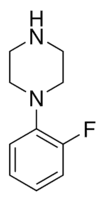
1-(2-Fluorophenyl)piperazine
C10H13FN2
Chemical Synthesis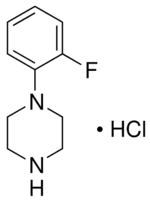
1-(2-Fluorophenyl)piperazine monohydrochloride
C10H13FN2 · HCl
Chemical Synthesis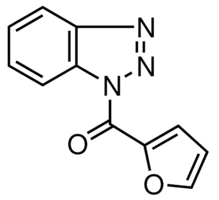
1-(2-Furoyl)-1H-benzotriazole
C11H7N3O2
Chemical Synthesis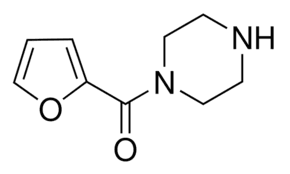
1-(2-Furoyl)piperazine
C9H12N2O2
Chemical Synthesis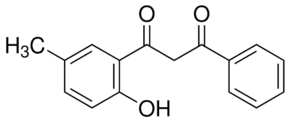
1-(2-Hydroxy-5-methylphenyl)-3-phenyl-1,3-propanedione
Chemical Synthesis
▶ Explore more

Bis(cyclopentadienyl)cobalt(III) hexafluorophosphate
C10H10CoF6P
Catalysis & Inorganic
1-(4-Chlorophenyl)biguanide hydrochloride
ClC6H4NHC(NH)NHC(NH)NH2 · HCl
Chemical Synthesis
Bis(cyclopentadienyl)dimethylzirconium(IV)
Catalysis & Inorganic

1-(4-Chlorophenyl)ethanol
ClC6H4CH(CH3)OH
Chemical Synthesis