
Trihexylsilane
Trihexylsilane (CAS: 2929-52-4), with the molecular formula [CH3(CH2)5]3SiH and a molar mass of 284.60 g/mol, is a versatile organosilicon compound. It serves as a key reactant in various synthetic transformations, including enantioselective Si-H insertion and regio- and stereoselective oxidation. Additionally, it finds application as a catalyst in hydrodefluorination reactions, facilitating the synthesis of hydrocarbons and the hydrosilylation of carbon dioxide.
- IUPAC
- NSC 139856
![Trihexylsilane ([CH3(CH2)5]3SiH) — chemical structure, CAS 2929-52-4; Chemistry, fine chemical supplied by Tech Serve Solutions](/_next/image?url=https%3A%2F%2Fpub-f4d920c906024441a773a96f7098e551.r2.dev%2Fimages%2Fproducts%2F2929-52-4.png&w=3840&q=75)
Enantioselective Si-H Insertion
Trihexylsilane is utilised as a reactant in enantioselective insertion reactions involving silicon-hydrogen bonds, contributing to stereoselective synthesis.
Oxidation into Silanols
This compound enables the regio- and stereoselective oxidation process, yielding valuable silanol derivatives.
Asymmetric Carbenoid Insertion
It participates in asymmetric carbenoid insertion reactions with diazoacetates, specifically targeting the silicon-hydrogen bond for controlled functionalization.
Hydrosilylation of Carbon Dioxide
Trihexylsilane acts as a reactant in the hydrosilylation of carbon dioxide, offering a pathway for CO2 utilization in chemical synthesis.
Hydrodefluorination Catalyst
It functions as a catalyst in hydrodefluorination reactions, which are crucial for the synthesis of various hydrocarbons.
| Molecular weight | 284.60 |
|---|---|
| Linear formula | [CH3(CH2)5]3SiH |
| Assay | 98% |
| Boiling point | 160.5-161 °C(lit.) |
| Density | 0.799 g/mL at 25 °C(lit.) |
| Refractive index | n20/D 1.448(lit.) |
| Application | Reactant for: • Enantioselective Si-H insertion1• Regio- and stereoselective oxidation into silanols2• Asymmetric carbenoid insertion of diazoacetates into the silicon-hydrogen bond3• Hydrosilylation of carbon dioxide4Catalyst for hydrodefluorination leading to the synthesis of hydrocarbons5 |

Hazard statements
- H302Harmful if swallowed
- H315Causes skin irritation
- H319Causes serious eye irritation
- H335May cause respiratory irritation
Precautionary statements
- P261Avoid breathing dust, fume, gas or vapours
- P280Wear protective gloves, clothing and eye/face protection
- P305IF IN EYES
| Flash point | 113 °C / 235.4 °F |
|---|---|
| Water hazard class (WGK, DE) | 1 |
| Hazard codes (EU) | Xn |
| Risk statements (R) | 20/21/22-36/37/38 |
| Safety statements (S) | 26-36/37 |
Hazard information is provided for guidance. Always consult the product Safety Data Sheet (SDS), available on request, before handling.
Documentation
Every batch ships with a Certificate of Analysis covering assay, identity and purity; the grade is confirmed against your enquiry. Safety Data Sheets and technical data sheets are available on request.
Supply & logistics
Samples for technical evaluation; bulk MOQ by grade and packaging. In-stock material ships in 7–10 working days, worldwide, with full export documentation.
What is Trihexylsilane used for?
+
Trihexylsilane (CAS: 2929-52-4) is used as a reactant in enantioselective Si-H insertion, regio- and stereoselective oxidation into silanols, asymmetric carbenoid insertion, and hydrosilylation of carbon dioxide. It also acts as a catalyst for hydrodefluorination.
What are the CAS number and formula for Trihexylsilane?
+
The CAS number for Trihexylsilane is 2929-52-4, and its linear formula is [CH3(CH2)5]3SiH.
What grade and purity does Tech Serve Solutions supply?
+
Tech Serve Solutions supplies Trihexylsilane with a purity of 98%. This is a technical grade and is not represented as USP, BP, EP, or any other pharmacopoeia standard.
What are the safety considerations when handling Trihexylsilane?
+
Trihexylsilane is classified as a Warning. Hazards include being harmful if swallowed, in contact with skin, or if inhaled (H302 + H312 + H332), causing skin irritation (H315), serious eye irritation (H319), and may cause respiratory irritation (H335). Handle with appropriate personal protective equipment in a well-ventilated area.
Can Tech Serve Solutions export Trihexylsilane?
+
Yes, Tech Serve Solutions is a specialist global supplier and exporter of fine chemicals and can export Trihexylsilane.
How can I request a quote or sample for Trihexylsilane?
+
Please contact our sales team directly through our website or by phone to request a quote or a sample of Trihexylsilane.
▶ Related products
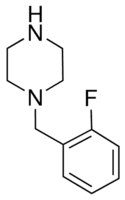
1-(2-Fluorobenzyl)piperazine
C11H15FN2
Chemical Synthesis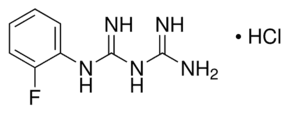
1-(2-Fluorophenyl)biguanide hydrochloride
Chemical Synthesis
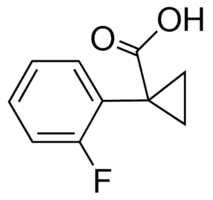
1-(2-Fluorophenyl)cyclopropanecarboxylic acid
C10H9FO2
Chemical Synthesis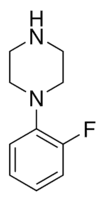
1-(2-Fluorophenyl)piperazine
C10H13FN2
Chemical Synthesis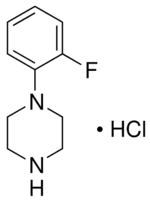
1-(2-Fluorophenyl)piperazine monohydrochloride
C10H13FN2 · HCl
Chemical Synthesis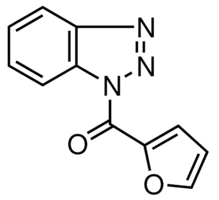
1-(2-Furoyl)-1H-benzotriazole
C11H7N3O2
Chemical Synthesis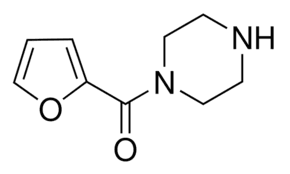
1-(2-Furoyl)piperazine
C9H12N2O2
Chemical Synthesis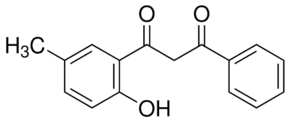
1-(2-Hydroxy-5-methylphenyl)-3-phenyl-1,3-propanedione
Chemical Synthesis
▶ Explore more

Bis(cyclopentadienyl)cobalt(III) hexafluorophosphate
C10H10CoF6P
Catalysis & Inorganic
1-(4-Chlorophenyl)biguanide hydrochloride
ClC6H4NHC(NH)NHC(NH)NH2 · HCl
Chemical Synthesis
Bis(cyclopentadienyl)dimethylzirconium(IV)
Catalysis & Inorganic

1-(4-Chlorophenyl)ethanol
ClC6H4CH(CH3)OH
Chemical Synthesis